Multiple Choice
Passage
Myalgic encephalopathy (ME) , or chronic fatigue syndrome (CFS) , is a physiological disease that affects 0.15% of the human population. Compared with healthy individuals, persons with ME experience reduced phospholipid levels, muscular degeneration, urinary urgency, and other symptoms that contribute to a lower quality of life. Studies in resting subjects have yielded inconsistent data and failed to identify a unique metabolic defect in patients with ME.Analyzing the blood plasma of male and female patients with ME, physicians have observed that male patients display elevated levels of 3-methylhistidine, a marker of protein catabolism. Researchers expanded this finding by measuring the serum concentration of amino acids in blood samples obtained from nonfasting ME patients and healthy controls. Amino acids were classified into separate categories according to their metabolic intermediates.Table 1 Classification of Amino Acids in Blood Plasma
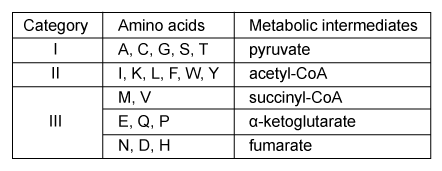
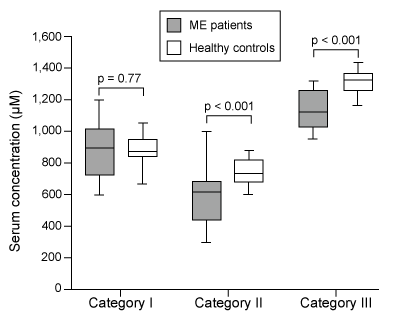 Figure 1 Serum concentrations of amino acids in patients with ME and healthy controls (HC) Next, researchers hypothesized that the inhibition of pyruvate dehydrogenase (PDH) and impairment of fatty acid oxidation were responsible for the fluctuations in amino acid levels. PDH function and lipid metabolism were studied in peripheral blood mononuclear cells (PBMCs) by measuring the gene expression of proteins within regulatory pathways. Researchers monitored the mRNA levels of the inhibitor pyruvate dehydrogenase kinase 1 (PDK1) and of sirtuin 4 (SIRT4) , which removes lipoic acid groups from the PDH complex. They also examined lipid metabolism by measuring the mRNA levels of peroxisome proliferator-activated receptor-α (PPARα) , a transcription factor that upregulates the uptake of fatty acids. The mRNA level of each protein in PBMCs of patients with ME was evaluated against healthy controls, as shown in Figure 2.
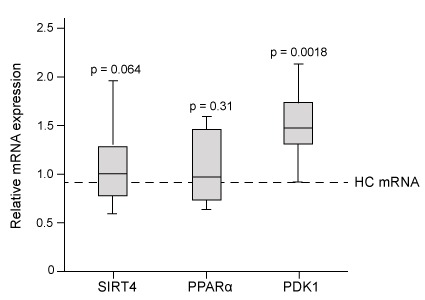 Figure 2 Gene expression of PDK1, SIRT4, and PPARα in PBMCs
Adapted from Fluge Ø, Mella O, Bruland O, et al.. JCI Insight. 2016;1(21) :e89376.
-Based on Figure 2, the availability of ATP in PBMCs is most likely affected by which process?
A) Overexpression of PDH mRNA
B) Removal of lipoic acid cofactors by SIRT4
C) Upregulation of PPARα transcription factors
D) Phosphorylation of PDH by PDK1
Correct Answer:

Verified
Correct Answer:
Verified
Q101: Passage<br>The HIV-derived transactivator of transcription (Tat) is
Q102: Passage<br>Many cephalopods can change color to blend
Q103: Passage<br>Synthesis of coenzyme A (CoA) requires vitamin
Q104: Passage<br>Dystroglycan (Dg) is a transmembrane protein that
Q105: Which factor decreases the stability of a
Q107: An enzyme was assessed for its ability
Q108: Passage<br>The sirtuins are a class of enzymes
Q109: Passage<br>Diabetic nephropathy (kidney disease) is characterized in
Q110: A fatty acid undergoes complete β-oxidation to
Q111: Passage<br>Ribulose-1,5-bisphosphate carboxylase/oxygenase (rubisco) is one of the