Multiple Choice
Passage
Antimicrobial peptides are an important component of innate immunity. Since their discovery in 1939, over 5,000 peptides with antimicrobial properties have been isolated from organisms in every domain of life. They have demonstrated activity against enveloped viruses, bacteria, fungi, and even tumor cells and have recently gained interest for their potential in fighting antibiotic-resistant bacteria. Most known antimicrobial peptides are positively charged, but some with negative charges have also been discovered.Frogs are known to secrete a variety of antimicrobial peptides as a major source of immunity. Secretions from a new species of frog were collected and the peptides were separated by cation exchange chromatography. Four of the isolated peptides demonstrated strong antibacterial activity and were characterized by isoelectric focusing and sequencing:
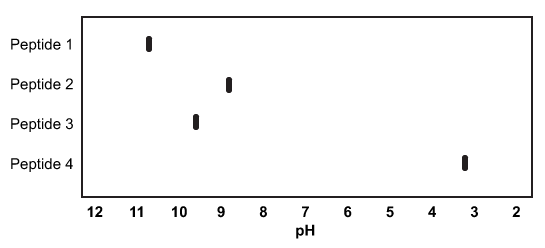 Figure 1 Results of isoelectric focusing of four antimicrobial peptidesTable 1 Amino Acid Compositions of Four Antimicrobial Peptides
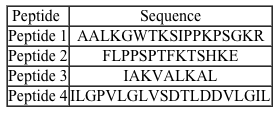 Adapted from Wang Z, Wang G. APD: the Antimicrobial Peptide Database. Nucleic Acids Res. 2004;32(Database issue) :D590-2.
-Antimicrobial peptides can be taken into cells by endocytosis. They are subsequently transported to the lysosome, where the pH decreases to ~5 and peptides are degraded. After lysosomal degradation, researchers found a tripeptide consisting of the last three amino acids of Peptide 2. What is the net charge of this tripeptide at lysosomal pH?
A) −1
B) 0
C) +1
D) +2
Correct Answer:

Verified
Correct Answer:
Verified
Q93: Passage<br>Interactions between positively charged histones and negatively
Q94: Passage<br>The cystic fibrosis transmembrane conductance regulator (CFTR)
Q95: Passage<br>Spinocerebellar ataxia 3 (SCA3) is a neurodegenerative
Q96: Passage<br>Nerve cells must maintain the composition of
Q97: Passage<br>Human gamma-glutamyl transpeptidase (hGGT) is an enzyme
Q99: Passage<br>Interactions between positively charged histones and negatively
Q100: Passage<br>A newborn girl is diagnosed with a
Q101: Passage<br>The HIV-derived transactivator of transcription (Tat) is
Q102: Passage<br>Many cephalopods can change color to blend
Q103: Passage<br>Synthesis of coenzyme A (CoA) requires vitamin