Multiple Choice
Passage
The innate immune system relies heavily on the phagocytic action of neutrophils, mobile white blood cells that engulf and degrade bacteria and viruses as the first line of host defense against invading pathogens. One mechanism for eliminating viruses engulfed in the phagosome involves the degradation of viral proteins by neutrophil serine proteases (NSPs) .NSPs, which form part of the chymotrypsin family of serine proteases, cleave viral proteins using a catalytic triad relay system. Originally discovered in granules released by neutrophils, NSP4 is a novel monomeric serine protease that has been studied to elucidate the catalytic mechanism of NSPs. Prior experimental data suggest that NSP4 alters its tertiary structure upon substrate binding and cleaves viral proteins using the acylation reaction shown in Figure 1.
 Figure 1 Degradation of viral proteins by acylation of NSP4Computational methods were used to identify the energetic parameters of reactions between NSP4 and synthetic viral proteins. To ensure that simulated reactions resembled physiological conditions, algorithms were adjusted to account for the enzyme being in an aqueous environment. The rate-determining step in the acylation reaction was determined by calculating the changes in free energy in both the enzyme and substrate (Figure 2) .
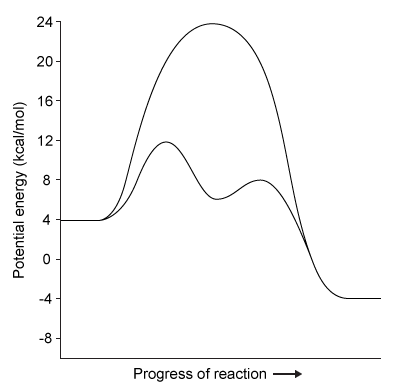 Figure 2 Free energy profiles of synthetic viral protein cleavageKnowledge of amino acid frequency distribution at an enzymatic active site may facilitate the design of novel active sites and enzyme-specific inhibitors. Researchers analyzed the composition of amino acids that form the NSP4 active site during protein folding to study the characteristics of residues involved in active site formation (Figure 3) .
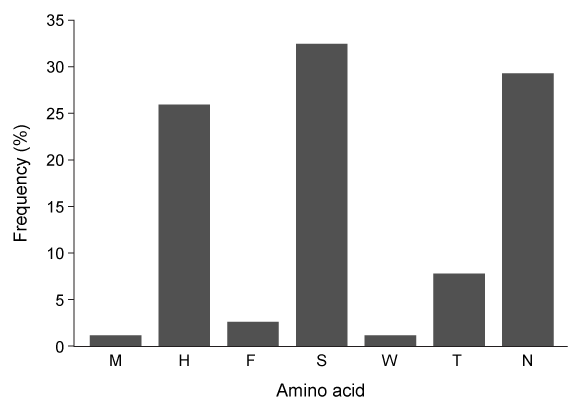 Figure 3 Frequency distribution of amino acid residues at the NSP4 active site
Adapted from Stapels DA, Geisbrecht BV, Rooijakkers SH. Neutrophil serine proteases in antibacterial defense. Curr Opin Microbiol. 2015;23:42-8.
-What is the activation energy for the uncatalyzed reaction in Figure 2?
A) 12 kcal/mol
B) 20 kcal/mol
C) 24 kcal/mol
D) 28 kcal/mol
Correct Answer:

Verified
Correct Answer:
Verified
Q110: A fatty acid undergoes complete β-oxidation to
Q111: Passage<br>Ribulose-1,5-bisphosphate carboxylase/oxygenase (rubisco) is one of the
Q112: Passage<br>Aldehyde dehydrogenase 2 (ALDH2) is essential for
Q113: Passage<br>The K-ras gene codes for a small
Q114: Which of the following molecules could participate
Q116: Passage<br>A newborn girl is diagnosed with a
Q117: Passage<br>Ribulose-1,5-bisphosphate carboxylase/oxygenase (rubisco) is one of the
Q118: Passage<br>Many cephalopods can change color to blend
Q119: Which of the following structures represents the
Q120: Passage<br>The influenza A virus is an enveloped