Multiple Choice
Researchers develop a novel glycopeptide antibiotic similar to vancomycin that is bactericidal against many gram-positive bacteria. From animal studies, they determine that the effective drug dosage is 5 mg/kg/day administered intravenously in divided doses. In a clinical trial, the antibiotic is administered to adult and neonatal patients with gram-positive infections. The drug is found to be effective in adults but not in neonates. During further analysis, plasma concentrations of the drug are measured in both groups, with the results shown in the image below: 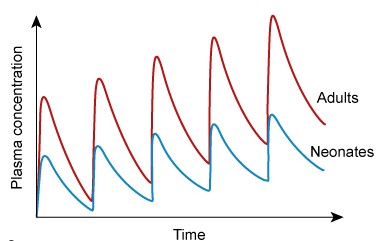 Compared to adults, which of the following neonatal factors is the most likely cause of the difference in drug effectiveness?
A) Decreased cytochrome P450 activity
B) Decreased renal blood flow
C) Elevated plasma protein level
D) High body water content
Correct Answer:

Verified
Correct Answer:
Verified
Q193: A 78-year-old woman is admitted to the
Q194: A 25-year-old graduate student comes to the
Q195: A 29-year-old woman comes to the office
Q196: A 44-year-old man comes to the office
Q197: A 21-year-old woman comes to the office
Q199: A 62-year-old woman is evaluated for refractory
Q200: A 52-year-old, post-menopausal woman comes to the
Q201: A 23-year-old woman comes to the emergency
Q202: A 56-year-old man with type 2 diabetes
Q203: A 44-year-old woman with a history of