Multiple Choice
A 65-year-old man comes to the office due to a few weeks of progressive exertional dyspnea and fatigue. He has had no chest pain, fever, or cough. The patient has a history of mild aortic stenosis, gastroesophageal reflux disease, obesity, hypertension, and hypercholesterolemia. Temperature is 36.7 C (98 F) , blood pressure is 130/78 mm Hg, pulse is 82/min, and respirations are 16/min. BMI is 28 kg/m2. Pulse oximetry shows 96% on room air. Mucosal pallor is present, but there is no jaundice, lymphadenopathy, or jugular venous distension. Cardiopulmonary examination reveals a 2/6 systolic ejection murmur at the second right intercostal area. The abdomen is soft and nontender; there is no palpable hepatosplenomegaly. Peripheral pulses are normal. Laboratory results are as follows: 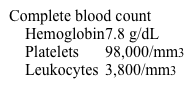 Peripheral blood smear is shown below:
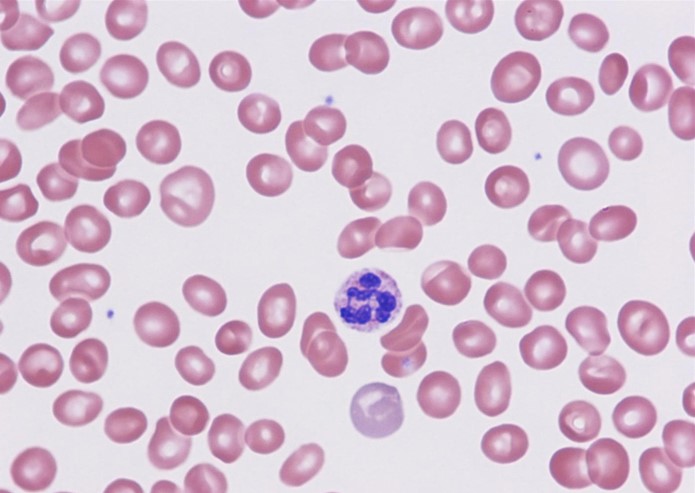 Which of the following is most likely responsible for this patient's current condition?
A) Impaired DNA synthesis
B) Impaired heme production
C) Inadequate erythropoietin production
D) Replacement of bone marrow with fat cells
E) Replacement of bone marrow with fibrosis
F) Traumatic hemolysis
Correct Answer:

Verified
Correct Answer:
Verified
Q217: An 8-hour-old boy is being assessed for
Q218: A 41-year-old woman comes to the office
Q219: A 17-year-old girl is brought to the
Q220: A 14-year-old girl with sickle cell disease
Q221: A 34-year-old man comes to the physician
Q223: A 54-year-old man comes to the office
Q224: A 52-year-old woman is evaluated for a
Q225: A 63-year-old man comes to the emergency
Q226: A 63-year-old woman dies of congestive heart
Q227: A 55-year-old woman, gravida 3 para 3,