Exam 14: Functions of Several Variables and Partial Differentiation

arrow
  • Select Tags
search iconSearch Question
flashcardsStudy Flashcards
  • Select Tags

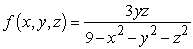
Describe and sketch the domain of the function. Describe and sketch the domain of the function.

(Multiple Choice)
4.8/5
(81)

Use Lagrange multipliers to find the maximum and minimum of the function Use Lagrange multipliers to find the maximum and minimum of the function   subject to the constraint   .    subject to the constraint Use Lagrange multipliers to find the maximum and minimum of the function   subject to the constraint   .    . Use Lagrange multipliers to find the maximum and minimum of the function   subject to the constraint   .    Use Lagrange multipliers to find the maximum and minimum of the function   subject to the constraint   .

(Multiple Choice)
4.9/5
(77)

Find the directions of maximum and minimum changes of Find the directions of maximum and minimum changes of   at   and the values of the maximum and minimum rates of change. at Find the directions of maximum and minimum changes of   at   and the values of the maximum and minimum rates of change. and the values of the maximum and minimum rates of change.

(Essay)
4.9/5
(75)

Compute the directional derivative of f at the given point in the direction of the indicated vector. Compute the directional derivative of f at the given point in the direction of the indicated vector.

(Multiple Choice)
4.7/5
(68)

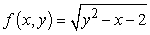
Describe and sketch the domain of the function. Describe and sketch the domain of the function.

(Multiple Choice)
4.9/5
(70)

If the temperature at the point If the temperature at the point   is given by   find the direction from the point   in which the temperature decreases most rapidly. is given by If the temperature at the point   is given by   find the direction from the point   in which the temperature decreases most rapidly. find the direction from the point If the temperature at the point   is given by   find the direction from the point   in which the temperature decreases most rapidly. in which the temperature decreases most rapidly.

(Multiple Choice)
4.9/5
(83)

Find all points at which Find all points at which   .  . Find all points at which   .

(Multiple Choice)
4.9/5
(67)

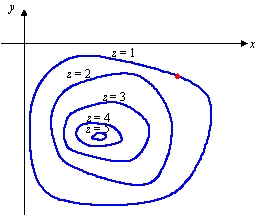
Use the contour plot to estimate Use the contour plot to estimate   and   at the origin.  and Use the contour plot to estimate   and   at the origin.  at the origin. Use the contour plot to estimate   and   at the origin.

(Multiple Choice)
4.9/5
(76)

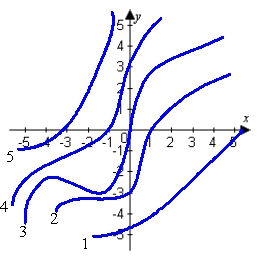
Sketch the path of steepest ascent from the indicated point. Sketch the path of steepest ascent from the indicated point.

(Essay)
4.9/5
(82)

Find the gradient of Find the gradient of   at  at Find the gradient of   at

(Multiple Choice)
4.9/5
(79)

Use the chain rule twice to find Use the chain rule twice to find   for the general composite function involving    for the general composite function involving Use the chain rule twice to find   for the general composite function involving    Use the chain rule twice to find   for the general composite function involving

(Essay)
4.7/5
(86)

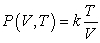
The pressure P of a gas in a leak-tight container can be approximated by The pressure P of a gas in a leak-tight container can be approximated by   , where V is the volume of the container, T is its absolute (Kelvin) temperature, and k is a constant. Find   and   . , where V is the volume of the container, T is its absolute (Kelvin) temperature, and k is a constant. Find The pressure P of a gas in a leak-tight container can be approximated by   , where V is the volume of the container, T is its absolute (Kelvin) temperature, and k is a constant. Find   and   . and The pressure P of a gas in a leak-tight container can be approximated by   , where V is the volume of the container, T is its absolute (Kelvin) temperature, and k is a constant. Find   and   . .
(Multiple Choice)
4.9/5
(72)

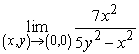
Show that the limit does not exist. Show that the limit does not exist.

(Essay)
4.9/5
(67)

Suppose the production of a firm is modeled by Suppose the production of a firm is modeled by   where k measures capital (in millions of dollars) and l measures the labor force (in thousands of workers). Suppose that   and   the labor force is increasing at the rate of 90 and capital is growing at a rate of $200,000 per year. Determine the rate of change of production. where k measures capital (in millions of dollars) and l measures the labor force (in thousands of workers). Suppose that Suppose the production of a firm is modeled by   where k measures capital (in millions of dollars) and l measures the labor force (in thousands of workers). Suppose that   and   the labor force is increasing at the rate of 90 and capital is growing at a rate of $200,000 per year. Determine the rate of change of production. and Suppose the production of a firm is modeled by   where k measures capital (in millions of dollars) and l measures the labor force (in thousands of workers). Suppose that   and   the labor force is increasing at the rate of 90 and capital is growing at a rate of $200,000 per year. Determine the rate of change of production. the labor force is increasing at the rate of 90 and capital is growing at a rate of $200,000 per year. Determine the rate of change of production.

(Multiple Choice)
4.9/5
(87)

Solid bodies, such as mechanical flywheels, experience stress when rotating. The stress s on a flywheel with uniform density d (kg/m3) and radius r (meters) is approximated by Solid bodies, such as mechanical flywheels, experience stress when rotating. The stress s on a flywheel with uniform density d (kg/m<sup>3</sup>) and radius r (meters) is approximated by   where   is the rotational speed of the flywheel in radians per second. Estimate the percent increase in the stress if the rotational speed of a uniform flywheel is increased from 3205 to 3355 rad/s. [Note: you should be able to answer the question with the given information: no additional information is necessary.] where Solid bodies, such as mechanical flywheels, experience stress when rotating. The stress s on a flywheel with uniform density d (kg/m<sup>3</sup>) and radius r (meters) is approximated by   where   is the rotational speed of the flywheel in radians per second. Estimate the percent increase in the stress if the rotational speed of a uniform flywheel is increased from 3205 to 3355 rad/s. [Note: you should be able to answer the question with the given information: no additional information is necessary.] is the rotational speed of the flywheel in radians per second. Estimate the percent increase in the stress if the rotational speed of a uniform flywheel is increased from 3205 to 3355 rad/s. [Note: you should be able to answer the question with the given information: no additional information is necessary.]

(Multiple Choice)
4.8/5
(93)

Show that the indicated limit exists. Show that the indicated limit exists.

(Essay)
4.9/5
(89)

Sketch the indicated traces of Sketch the indicated traces of   .  . Sketch the indicated traces of   .

(Essay)
4.8/5
(86)

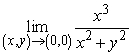
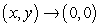
Use polar coordinates to find the indicated limit, if it exists. Note that Use polar coordinates to find the indicated limit, if it exists. Note that   is equivalent to   .  is equivalent to Use polar coordinates to find the indicated limit, if it exists. Note that   is equivalent to   .  . Use polar coordinates to find the indicated limit, if it exists. Note that   is equivalent to   .
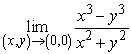
(Multiple Choice)
4.9/5
(78)

Wind chill is a combination of temperature and wind speed that expresses how cold the air feels. The larger the wind speed, the more rapidly heat is lost to the air and thus the colder it feels. The table shows the wind chill for selected temperatures and wind speeds. For the function Wind chill is a combination of temperature and wind speed that expresses how cold the air feels. The larger the wind speed, the more rapidly heat is lost to the air and thus the colder it feels. The table shows the wind chill for selected temperatures and wind speeds. For the function   , find   . Temperature (degrees Fahrenheit) Wind speed (mph)  , find Wind chill is a combination of temperature and wind speed that expresses how cold the air feels. The larger the wind speed, the more rapidly heat is lost to the air and thus the colder it feels. The table shows the wind chill for selected temperatures and wind speeds. For the function   , find   . Temperature (degrees Fahrenheit) Wind speed (mph)  . Temperature (degrees Fahrenheit) Wind speed (mph) Wind chill is a combination of temperature and wind speed that expresses how cold the air feels. The larger the wind speed, the more rapidly heat is lost to the air and thus the colder it feels. The table shows the wind chill for selected temperatures and wind speeds. For the function   , find   . Temperature (degrees Fahrenheit) Wind speed (mph)
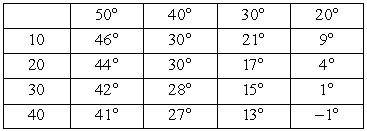
(Multiple Choice)
4.9/5
(73)

Find the gradient of the given function at the indicated point. Find the gradient of the given function at the indicated point.

(Multiple Choice)
4.9/5
(81)
Showing 61 - 80 of 112
close modal

Filters

  • Essay(0)
  • Multiple Choice(0)
  • Short Answer(0)
  • True False(0)
  • Matching(0)