



 Chat with AI
Exam 12: Money Growth and Inflation

Exam 1: Ten Principles of Economics439 Questions
Exam 2: Thinking Like an Economist615 Questions
Exam 3: Interdependence and the Gains From Trade527 Questions
Exam 4: The Market Forces of Supply and Demand697 Questions
Exam 5: Measuring a Nations Income518 Questions
Exam 6: Measuring the Cost of Living543 Questions
Exam 7: Production and Growth507 Questions
Exam 8: Saving, Investment, and the Financial System565 Questions
Exam 9: The Basic Tools of Finance510 Questions
Exam 10: Unemployment and Its Natural Rate698 Questions
Exam 11: The Monetary System517 Questions
Exam 12: Money Growth and Inflation484 Questions
Exam 13: Open-Economy Macroeconomics: Basic Concepts520 Questions
Exam 14: A Macroeconomic Theory of the Open Economy478 Questions
Exam 15: Aggregate Demand and Aggregate Supply563 Questions
Exam 16: The Influence of Monetary and Fiscal Policy on Aggregate Demand510 Questions
Exam 17: The Short-Run Tradeoff Between Inflation and Unemployment516 Questions
Exam 18: Six Debates Over Macroeconomic Policy372 Questions
Select questions type


Your grandfather tells you that his annual income increased at an average rate of eight percent over his lifetime. He complains, however, that the average inflation rate of three percent reduced his ability to buy all the things he could have purchased if inflation had been zero. You respectfully tell your grandfather that he is committing the _____, because his annual income would have increased at an average rate of only five percent if inflation had been zero.
(Short Answer)
4.9/5  (67)
(67) An economy produces two goods, x and y. A year ago the price of x was $4 and the price of y was $6. Today the price of x is $8 and the price of y is $10. What happened to the nominal and the real value of good x? What happened to the nominal and real value of good y?
(Essay)
4.7/5 (90)
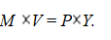
(90) When the money market is drawn with the value of money on the vertical axis,
(Multiple Choice)
4.9/5 (77)
(77) 
You put money into an account that earns an 8 percent nominal interest rate. The inflation rate is 5 percent, and your marginal tax rate is 10 percent. What is your after-tax real rate of interest?
(Multiple Choice)
4.8/5 (93)
(93) Jennifer took out a fixed-interest-rate loan when the CPI was 100. She expected the CPI to increase to 103 but it actually increased to 105. The real interest rate she paid is
(Multiple Choice)
4.8/5 (75)
(75) You hear an economist state the following: "The increase in the money supply will causes price to rise in the long run and will have no effect on output or any other real factors." This economist is expressing the principle of _____.
(Short Answer)
4.8/5 (78)
(78) The nominal interest rate is 4%, the inflation rate is 1% and the tax rate is 20%. Given U.S. tax laws, how is after- tax real return computed?
(Multiple Choice)
4.9/5 (69)
(69) Based on past experience, if a country is experiencing hyperinflation, then which of the following would be a reasonable guess?
(Multiple Choice)
4.9/5 (77)
(77) In United States history there were long periods when most prices fell.
(True/False)
4.8/5 (71)
(71) One benefit of low inflation is that it _____ the variability of relative price changes. Therefore, resources are _____ likely to be better allocated.
(Short Answer)
5.0/5 (91)
(91) Based on the quantity equation, if Y = 3,000, P = 3, and V = 4, then M =
(Multiple Choice)
4.9/5 (84)
(84) The inflation rate is measured as the percentage change in a price index.
(True/False)
4.8/5 (73)
(73) In the long run inflation is explained by __________. For countries that had hyperinflation this source of inflation arose primarily because the government __________.
(Essay)
4.9/5 (71)
(71) 
Filters
- Essay(0)
- Multiple Choice(0)
- Short Answer(0)
- True False(0)
- Matching(0)