



 Chat with AI
Exam 8: Molecular and Evolutionary Ecology

Exam 1: Ecology and How to Do It50 Questions
Exam 2: Ecology’s Evolutionary Backdrop50 Questions
Exam 3: Physical Conditions and the Availability of Resources50 Questions
Exam 4: Climate and the World’s Biomes50 Questions
Exam 5: Birth, Death and Movement50 Questions
Exam 6: Interspecific Competition50 Questions
Exam 7: Predation, Grazing and Disease50 Questions
Exam 8: Molecular and Evolutionary Ecology50 Questions
Exam 9: From Populations to Communities50 Questions
Exam 10: Patterns in Species Richness50 Questions
Exam 11: The Flux of Energy and Matter Through Ecosystems50 Questions
Exam 12: Global Biogeochemical Cycles and Their Alteration by Humans50 Questions
Exam 13: Conservation Ecology51 Questions
Exam 14: The Ecology of Human Population Growth, Disease, and Food Supply51 Questions
Select questions type


In Figure 8.6a,what reasons might explain why specialists survive better than generalists? 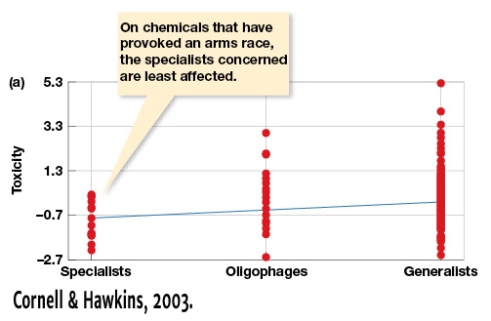
(Multiple Choice)
4.8/5  (90)
(90) An __________ is a finely branched intracellular cluster of fungi found in plant host cells.
(Multiple Choice)
4.8/5 (78)
(78) Do Tuberculatus quercicola that are farmed by Formica yesensis experience any type of tradeoff?
(Multiple Choice)
4.9/5 (69)
(69) What are a few examples of how molecular markers have informed our understanding of the Asian elephant as a species?
(Multiple Choice)
4.8/5 (91)
(91) In Figure 8.6b,why would generalists survive better than specialists? 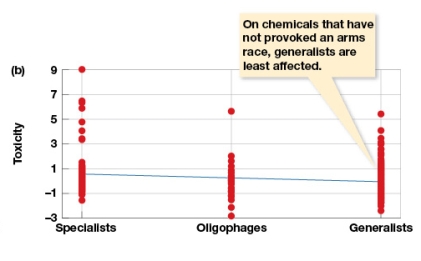
(Multiple Choice)
4.9/5 (74)
(74) 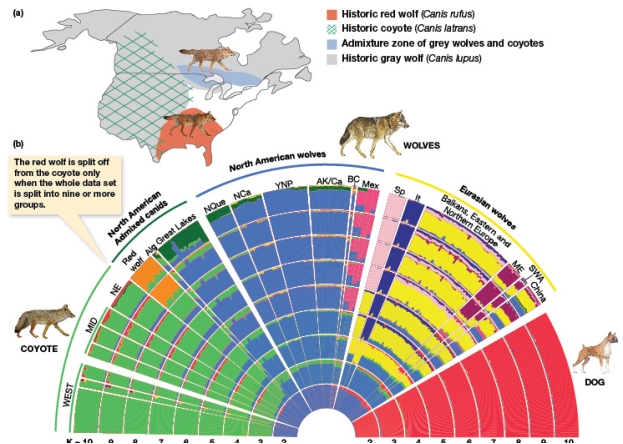
Which of the following defines plant quantitative compounds?
(Multiple Choice)
4.8/5 (77)
(77) ________ are found in roughly two-thirds of all plant species.
(Multiple Choice)
4.8/5 (83)
(83) 
Filters
- Essay(0)
- Multiple Choice(0)
- Short Answer(0)
- True False(0)
- Matching(0)