



 Chat with AI
Exam 19: Reconstitution of Solutions

Exam 1: Roman Numerals11 Questions
Exam 2: Fractions42 Questions
Exam 3: Decimals35 Questions
Exam 4: Ratio and Proportion25 Questions
Exam 5: Percentages20 Questions
Exam 6: Metric System43 Questions
Exam 7: Apothecary and Household Systems33 Questions
Exam 8: Converting Within and Between Systems27 Questions
Exam 9: Additional Conversions Useful in the Health Care Setting40 Questions
Exam 10: Medication Administration18 Questions
Exam 11: Understanding and Interpreting Medication Orders25 Questions
Exam 12: Medication Administration Records and Medication Distribution Systems16 Questions
Exam 13: Reading Medication Labels25 Questions
Exam 14: Dosage Calculation Using the Ratio and Proportion Method15 Questions
Exam 15: Dosage Calculation Using the Formula Method14 Questions
Exam 16: Dosage Calculation Using the Dimensional Analysis Method12 Questions
Exam 17: Oral Medications35 Questions
Exam 18: Parenteral Medications30 Questions
Exam 19: Reconstitution of Solutions17 Questions
Exam 20: Insulin10 Questions
Exam 21: Intravenous Solutions and Equipment15 Questions
Exam 22: Intravenous Calculations37 Questions
Exam 23: Heparin Calculations24 Questions
Exam 24: Critical Care Calculations8 Questions
Exam 25: Pediatric and Adult Dosage Calculation Based on Weight33 Questions
Select questions type


Directions: Use the label (where provided) to obtain the necessary information. Round answers to the nearest tenth where indicated.
Order: Synagis 65 mg IM q8h
Available: Refer to label and package insert. 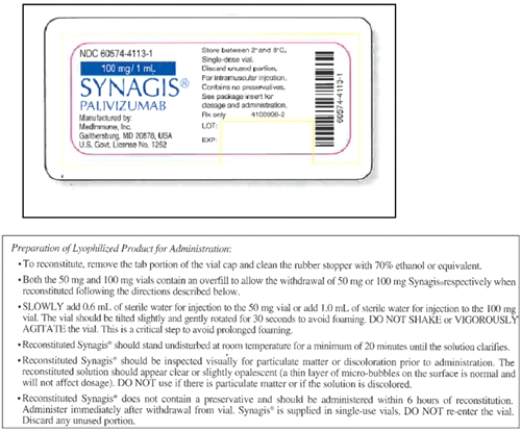 a. What diluent is recommended for reconstitution? ___________
b. How much diluent must be added? ____________
c. What is the dosage strength of the reconstituted solution? ______
d. How many milliliters will you administer? ________
e. How long is the reconstituted solution good for? ___________
a. What diluent is recommended for reconstitution? ___________
b. How much diluent must be added? ____________
c. What is the dosage strength of the reconstituted solution? ______
d. How many milliliters will you administer? ________
e. How long is the reconstituted solution good for? ___________
Free
(Essay)
4.8/5  (89)
(89) Correct Answer: Verified
a. Sterile water for injection
b. 1 mL
c. 100 mg per mL
d. 0.7 mL
e. 6 hours
Directions: Prepare the following strength solutions. Describe your calculations.
Order: Amoxicillin 175 mg p.o. q8h
Available: 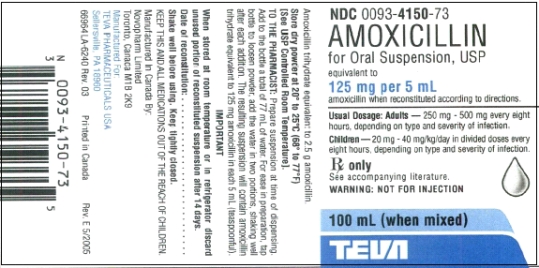 a. Form: _______________
b. Route of administration: _______________
c. Type of diluent and amount to use: _______________
d. Directions for mixing: _______________
e. Dosage strength of reconstituted solution: _____
g. How many milliliters will you administer? __________
a. Form: _______________
b. Route of administration: _______________
c. Type of diluent and amount to use: _______________
d. Directions for mixing: _______________
e. Dosage strength of reconstituted solution: _____
g. How many milliliters will you administer? __________Free
(Essay)
4.7/5 (85)
(85) Correct Answer:Verified
Verifieda. Oral suspension when reconstituted
b. By mouth, orally
c. Water, 77 mL
d. Tap bottle to loosen powder, add the water in two portions, shaking well after each addition
e. 125 mg per 5 mL
f. Discard suspension after 14 days
g. 7 mL
Directions: Indicate how you would prepare each of the following using full-strength hydrogen peroxide (solute) and normal saline (solvent).
0.24 L of 1/3 strength for wound care
Free
(Essay)
4.9/5 (86)
(86) Correct Answer:Verified
VerifiedConversion required. 1 L = 1,000 mL, 0.24 L = 240 mL
1/3 * 240 mL = 80 mL (solute)
240 mL - 80 mL = 160 mL (solvent/normal saline)
To make 240 mL of 1/3 strength hydrogen peroxide, mix 80 mL of full-strength hydrogen peroxide and 160 mL of normal saline.
Directions: Prepare the following strength solutions. Describe your calculations. 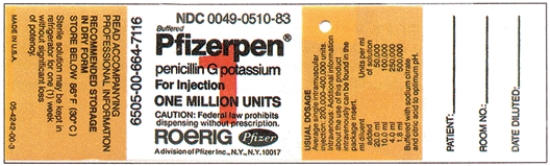 a. What is the total dosage strength of the vial? _____
b. If 450,000 units IV of penicillin were ordered, which concentration would be appropriate to mix? _____
c. How much diluent must be added to make the appropriate concentration? _____
d. If the medication is reconstituted at 1:00 AM on December 18, what must you print on the label? _______________
e. How many milliliters will you give to administer 450,000 units IV? _______
a. What is the total dosage strength of the vial? _____
b. If 450,000 units IV of penicillin were ordered, which concentration would be appropriate to mix? _____
c. How much diluent must be added to make the appropriate concentration? _____
d. If the medication is reconstituted at 1:00 AM on December 18, what must you print on the label? _______________
e. How many milliliters will you give to administer 450,000 units IV? _______ (Essay)
4.7/5 (81)
(81) Order: Zithromax 250 mg p.o. daily
Available: 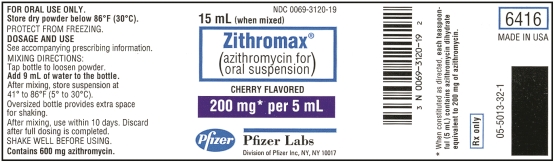 a. How many milliliters of diluent must be added to the bottle? _____________
b. What is the final concentration of the prepared solution? ________________
c. How many milliliters will you administer? ___________________
a. How many milliliters of diluent must be added to the bottle? _____________
b. What is the final concentration of the prepared solution? ________________
c. How many milliliters will you administer? ___________________ (Essay)
4.8/5 (75)
(75) Directions: Prepare the following strength solutions. Describe your calculations.
360 mL of 1/4 strength Ensure percutaneous endoscopic (PEG) tube over 4 hours
(Essay)
4.9/5 (85)
(85) Directions: Use the label (where provided) to obtain the necessary information. Round answers to the nearest tenth where indicated.
Order: Zosyn 3 g IV q6h
Available: 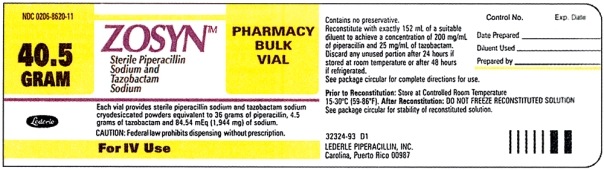 a. How many milliliters of diluent should be used to reconstitute the solution? _____ mL
b. What is the dosage strength of the prepared solution? _______________
c. How many milliliters will you add to the IV? _____ mL
a. How many milliliters of diluent should be used to reconstitute the solution? _____ mL
b. What is the dosage strength of the prepared solution? _______________
c. How many milliliters will you add to the IV? _____ mL (Essay)
4.8/5 (86)
(86) Directions: Indicate how you would prepare each of the following using full-strength hydrogen peroxide (solute) and normal saline (solvent).
300 mL of 3/4 strength for skeletal pin care
(Essay)
4.9/5 (80)
(80) Directions: Use the label (where provided) to obtain the necessary information. Round answers to the nearest tenth where indicated.
Order: Amoxicillin clavulanate potassium 275 mg p.o. q12h
Available: 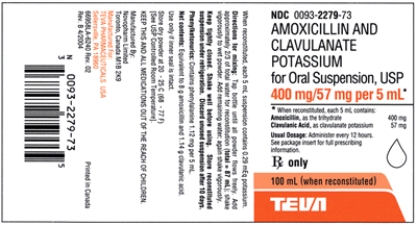 a. How much diluent is recommended for reconstitution? _________
b. What is the dosage strength of amoxicillin when reconstituted? _______
c. What is the total volume of the reconstituted solution? __________
d. How many milliliters will you administer? (based on the amoxicillin) ________
a. How much diluent is recommended for reconstitution? _________
b. What is the dosage strength of amoxicillin when reconstituted? _______
c. What is the total volume of the reconstituted solution? __________
d. How many milliliters will you administer? (based on the amoxicillin) ________ (Essay)
4.9/5 (85)
(85) Directions: Use the label (where provided) to obtain the necessary information. Round answers to the nearest tenth where indicated.
Order: cefazolin (Ancef) 0.375 g IM q6h
Available: 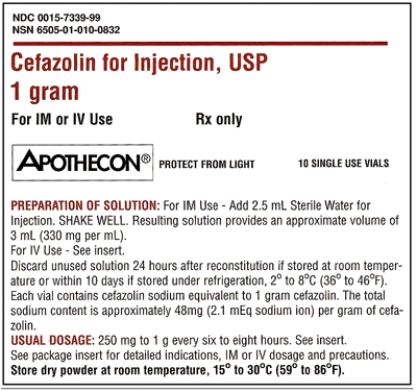 a. How many milliliters of diluent will you add for IM use? _____ mL
b. Why will the reconstituted volume be larger than the amount of diluent? _____
c. What is the dosage strength of the reconstituted solution? ___________
d. What are the directions for use?
e. How many milliliters will you administer? _____ mL
a. How many milliliters of diluent will you add for IM use? _____ mL
b. Why will the reconstituted volume be larger than the amount of diluent? _____
c. What is the dosage strength of the reconstituted solution? ___________
d. What are the directions for use?
e. How many milliliters will you administer? _____ mL (Essay)
4.8/5 (84)
(84) Directions: Prepare the following strength solutions. Describe your calculations.
Prepare irrigant 250 mL 1/2 strength solution: ______________________________
(Essay)
4.8/5 (72)
(72) Directions: Use the label (where provided) to obtain the necessary information. Round answers to the nearest tenth where indicated.
Order: Vancomycin 0.85 g IV q12h
Available: 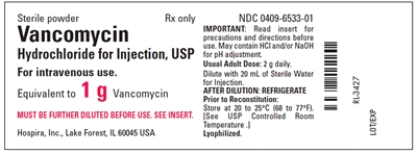 a. How many milliliters of diluent are used to reconstitute the solution? _____ mL
b. What is the dosage strength of the prepared solution? _______________
c. How many milliliters will you add to the IV? _____ mL
a. How many milliliters of diluent are used to reconstitute the solution? _____ mL
b. What is the dosage strength of the prepared solution? _______________
c. How many milliliters will you add to the IV? _____ mL (Essay)
4.7/5 (79)
(79) Directions: Indicate how you would prepare each of the following using full-strength hydrogen peroxide (solute) and normal saline (solvent).
8 oz of 1/2 strength for wound care
(Essay)
4.9/5 (86)
(86) Directions: Prepare the following strength solutions. Describe your calculations.
1/4 strength Ensure 8 oz p.o. q4h for 24 hours
(Essay)
4.8/5 (85)
(85) Directions: Use the label (where provided) to obtain the necessary information. Round answers to the nearest tenth where indicated.
Order: Ceftriaxone 0.5 g IV q12h
Available: 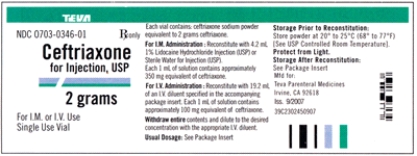 a. How many milliliters of diluent will you add to reconstitute the solution for IV use? _____ mL
b. What is the dosage strength of the reconstituted solution for IV use? _____
c. How many milliliters will you administer? __________ mL

a. How many milliliters of diluent will you add to reconstitute the solution for IV use? _____ mL
b. What is the dosage strength of the reconstituted solution for IV use? _____
c. How many milliliters will you administer? __________ mL
(Essay)
4.7/5 (85)
(85) Directions: Prepare the following strength solutions. Describe your calculations.
800 mL of 3/4 strength Sustacal via gastrostomy over 6 hours
(Essay)
4.9/5 (81)
(81) Order: Doxycycline 100 mg IVPB q12h
Available: 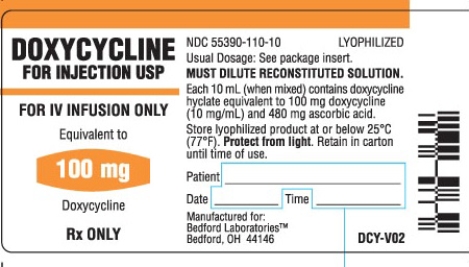 How many milliliters will you administer? __________
 (Essay)
4.8/5 (88)
(88) 
Filters
- Essay(0)
- Multiple Choice(0)
- Short Answer(0)
- True False(0)
- Matching(0)