



 Chat with AI
Exam 25: Pediatric and Adult Dosage Calculation Based on Weight

Exam 1: Roman Numerals11 Questions
Exam 2: Fractions42 Questions
Exam 3: Decimals35 Questions
Exam 4: Ratio and Proportion25 Questions
Exam 5: Percentages20 Questions
Exam 6: Metric System41 Questions
Exam 7: Apothecary and Household Systems31 Questions
Exam 8: Converting Within and Between Systems25 Questions
Exam 9: Additional Conversions Useful in the Health Care Setting40 Questions
Exam 10: Medication Administration18 Questions
Exam 11: Understanding and Interpreting Medication Orders25 Questions
Exam 12: Medication Administration Records and Medication Distribution Systems14 Questions
Exam 13: Reading Medication Labels25 Questions
Exam 14: Dosage Calculation Using the Ratio and Proportion Method15 Questions
Exam 15: Dosage Calculation Using the Formula Method13 Questions
Exam 16: Dosage Calculation Using the Dimensional Analysis Method12 Questions
Exam 17: Oral Medications35 Questions
Exam 18: Parenteral Medications30 Questions
Exam 19: Reconstitution of Solutions15 Questions
Exam 20: Insulin10 Questions
Exam 21: Intravenous Solutions and Equipment15 Questions
Exam 22: Intravenous Calculations37 Questions
Exam 23: Heparin Calculations17 Questions
Exam 24: Critical Care Calculations8 Questions
Exam 25: Pediatric and Adult Dosage Calculation Based on Weight31 Questions
Select questions type


Directions: Determine the volume of solution that must be added to the burette in the following problem.Determine the rate in gtt/min for each IV when a microdrop is used,then the rate in mL/hr for a controller.
A medication of 1 g in 4 mL is to be diluted to 60 mL and infused over 90 minutes.
a.Dilution volume: _____
b.gtt/min: _____
c.mL/hr: _____

Free
(Essay)
4.9/5  (78)
(78) Correct Answer: Verified
a.56 mL
b.40 microgtt/min or 40 gtt/min
c.40 mL/hr
Directions: Calculate the following children's dosages.
Order: Epinephrine 0.25 mg IV stat
Available: Epinephrine 0.1 mg/mL
How many milliliters will you prepare to administer? _____ mL
Free
(Short Answer)
4.8/5 (77)
(77) Correct Answer:Verified
Verified2.5
Directions: Using the West nomogram,determine the body surface area (BSA)for a child with the height and weight given.
80 cm and 11 kg: _____ m2
Free
(Short Answer)
4.8/5 (90)
(90) Correct Answer:Verified
Verified0.5
Directions: Using the West nomogram or formula when indicated,calculate the following dosages.Express answer to the nearest tenth.
The recommended dosage of Paraplatin for ovarian cancer is 360 mg/m2.The client's BSA is 1.67 m2.What dosage should the client receive? _____
(Essay)
4.8/5 (84)
(84) Directions: Using the West nomogram or formula when indicated,calculate the following dosages.Express answer to the nearest tenth.
The recommended dosage of acyclovir is 250 mg/m2.What will be the dosage for a child with a BSA of 0.27 m2? _____
(Essay)
4.9/5 (63)
(63) Directions: Use the appropriate formula to determine BSA.Express answer to the nearest hundredth.
An adolescent who measures 157.5 cm and weighs 59.1 kg: _____ m2
(Short Answer)
5.0/5 (94)
(94) Directions: Round dosage and weight to the nearest tenth as indicated.Use labels where provided.
The recommended dosage of Ticar for an adult with a complicated urinary tract infection is 150 to 200 mg/kg/day IV in divided dosages every 4 or 6 hours.The adult weighs 194 lb.
a.What is the 24-hour dosage range for the 194-lb adult in milligrams? _____
b.What is the dosage range in grams? _____
c.The prescriber ordered 4 g IV q6h.Is the dosage ordered safe? _____ Explain: ______________________________
(Essay)
4.8/5 (85)
(85) Directions: Round dosage and weight to the nearest tenth as indicated.Use labels where provided.
The recommended dosage of Mezlin for an adult with a serious infection is 200 to 300 mg/kg/day given in four to six divided dosages.The adult weighs 175 lb.
a.What is the adult's weight in kilograms? _____
b.What is the 24-hour dosage range for the 175-lb adult in milligrams? _____
c.What is the dosage range in grams? _____
(Essay)
4.8/5 (93)
(93) Directions: Using the West nomogram or formula when indicated,calculate the following dosages.Express answer to the nearest tenth.
The recommended dosage of methotrexate is 25 to 75 mg/m2/wk.The child's height is 30 inches and the weight is 25 lb.
a.What is the child's BSA? _____
b.What is the recommended dosage range? _____
(Essay)
4.8/5 (78)
(78) Directions: Round dosage and weight to the nearest tenth as indicated.Use labels where provided.
Erythromycin ethylsuccinate 62.5 mg p.o.q6h is ordered for an infant weighing 10 lb 4 oz.The recommended safe dosage is 30 to 50 mg/kg/24 hr divided q6h.
a.What is the infant's weight in kilograms? _____
b.What is the safe 24-hour dosage range for this infant? _____
c.What is the divided dosage range? _____
d.Is the dosage ordered safe? (Prove mathematically. )_______________ Explain your action: ______________________________
(Essay)
4.8/5 (72)
(72) Directions: Round dosage and weight to the nearest tenth as indicated.Use labels where provided.
Gentamicin 45 mg IV q8h for a child weighing 45 lb.The recommended dosage is 6 to 7.5 mg/kg/day in three to four divided dosages.
a.What is the child's weight in kilograms? _____
b.What is the safe 24-hour dosage range for this child? _____
c.What is the divided dosage range? _____
d.Is the dosage ordered safe? (Prove mathematically. )_______________ Explain your action: ______________________________
(Essay)
4.9/5 (77)
(77) Directions: Using the West nomogram,determine the body surface area (BSA)for a child with the height and weight given.
22 inches and 10 lb: _____ m2
(Short Answer)
4.9/5 (79)
(79) Directions: Using the West nomogram or formula when indicated,calculate the following dosages.Express answer to the nearest tenth.
The recommended dosage of Zovirax for a child who is immunosuppressed and has a varicella-zoster infection is 500 mg/m2.The child weighs 26.5 lb and is 58 inches tall.
a.What is the child's BSA? _____
b.What is the recommended dosage? _____
(Essay)
4.8/5 (79)
(79) Directions: Use the appropriate formula to determine BSA.Express answer to the nearest hundredth.
An adult who measures 175 cm and weighs 85 kg: _____ m2
(Short Answer)
4.8/5 (82)
(82) Directions: Round dosage and weight to the nearest tenth as indicated.Use labels where provided.
Order: Ceclor (cefaclor)100 mg p.o.q8h is ordered for a child weighing 32 lb.The recommended dosage is 20 to 40 mg/kg/day divided q8h.
Available: 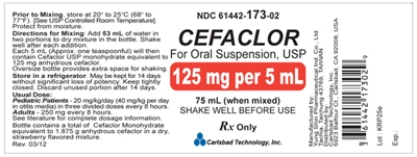 a.What is the child's weight in kilograms? _____
b.What is the safe 24-hour dosage range for this child? _____
c.Is the dosage ordered safe? (Prove mathematically. )_______________ Explain your action: ______________________________
d.How many milliliters of Ceclor are needed to administer the dosage? _____
a.What is the child's weight in kilograms? _____
b.What is the safe 24-hour dosage range for this child? _____
c.Is the dosage ordered safe? (Prove mathematically. )_______________ Explain your action: ______________________________
d.How many milliliters of Ceclor are needed to administer the dosage? _____ (Essay)
4.8/5 (92)
(92) Directions: Using the West nomogram,determine the body surface area (BSA)for a child with the height and weight given.
170 cm and 50 kg: _____ m2
(Short Answer)
4.9/5 (87)
(87) Directions: Use the appropriate formula to determine BSA.Express answer to the nearest hundredth.
A child who measures 26 inches and weighs 36 lb: _____ m2
(Short Answer)
4.8/5 (88)
(88) Directions: Determine the normal dosage range to the nearest tenth.State your course of action.
An IV medication of 50 mcg in 200 mL is ordered to infuse over 2 hours.The normal dosage range is 1.5 to 3 mcg/kg/hr.The child weighs 5.7 kg.Determine the dosage range per hour.Determine whether the dosage ordered is within normal limits.State your course of action: ______________________________
(Essay)
4.9/5 (82)
(82) Directions: Calculate the following children's dosages.
Order: Nebcin 35 mg IV q8h
Available: 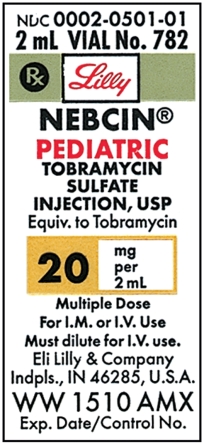 How many milliliters will you administer? _____ mL
 (Short Answer)
4.9/5 (76)
(76) Directions: Determine the volume of solution that must be added to the burette in the following problem.Determine the rate in gtt/min for each IV when a microdrop is used,then the rate in mL/hr for a controller.
The volume of a 75-mg dosage of medication is 3 mL.Dilute to 55 mL and infuse over 45 minutes.
a.Dilution volume: _____
b.gtt/min: _____
c.mL/hr: _____
(Essay)
4.8/5 (87)
(87) 
Filters
- Essay(0)
- Multiple Choice(0)
- Short Answer(0)
- True False(0)
- Matching(0)