



 Chat with AI
Exam 7: Analysis of Financial Statements

Exam 1: An Overview of Financial Management and the Financial Environment41 Questions
Exam 2: Risk and Return-Part I147 Questions
Exam 3: Risk and Return-Part II35 Questions
Exam 4: Bond Valuation101 Questions
Exam 5: Financial Options28 Questions
Exam 6: Accounting for Financial Management77 Questions
Exam 7: Analysis of Financial Statements104 Questions
Exam 8: Basic Stock Valuation91 Questions
Exam 9: Corporate Valuation and Financial Planning46 Questions
Exam 10: Corporate Governance51 Questions
Exam 11: Determining the Cost of Capital92 Questions
Exam 12: Capital Budgeting: Decision Criteria108 Questions
Exam 13: Capital Budgeting-Estimating Cash Flows and Analyzing Risk78 Questions
Exam 14: Real Options19 Questions
Exam 15: Distributions to Shareholders-Dividends and Repurchases58 Questions
Exam 16: Capital Structure Decisions87 Questions
Exam 17: Dynamic Capital Structures and Corporate Valuation50 Questions
Exam 18: Initial Public Offerings-Investment Banking: and Financial Restructuring13 Questions
Exam 19: Lease Financing23 Questions
Exam 20: Hybrid Financing Preferred Stock-Warrants and Convertibles30 Questions
Exam 21: Supply Chains and Working Capital Management131 Questions
Exam 22: Providing and Obtaining Credit38 Questions
Exam 23: Other Topics in Working Capital Management29 Questions
Exam 24: Enterprise Risk Management14 Questions
Exam 25: Bankruptcy-Reorganization and Liquidation12 Questions
Exam 26: Mergers and Corporate Control42 Questions
Exam 27: Multinational Financial Management49 Questions
Exam 28: Time Value of Money168 Questions
Exam 29: Basic Financial Tools: A review249 Questions
Exam 30: Pension Plan Management10 Questions
Exam 31: Financial Management in Not for Profit Businesses10 Questions
Select questions type


The inventory turnover ratio and days sales outstanding (DSO) are two ratios that are used to assess how effectively a firm is managing its assets.
(True/False)
4.9/5  (81)
(81) Harper Corp.'s sales last year were $395,000, and its year-end receivables were $42,500. Harper sells on terms that call for customers to pay 30 days after the purchase, but many delay payment beyond Day 30. On average, how many days late do customers payσ Base your answer on this equation: DSO - Allowed credit period = Average days late, and use a 365-day year when calculating the DSO.
(Multiple Choice)
5.0/5 (78)
(78) A firm's new president wants to strengthen the company's financial position. Which of the following actions would make it financially stronger?
(Multiple Choice)
4.8/5 (78)
(78) If a firm finances with only debt and common equity, and if its equity multiplier is 3.0, then its debt ratio must be 0.667.
(True/False)
4.9/5 (78)
(78) Bostian, Inc. has total assets of $625,000. Its total debt outstanding is $185,000. The Board of Directors has directed the CFO to move towards a debt-to-assets ratio of 55%. How much debt must the company add or subtract to achieve the target debt ratio?
(Multiple Choice)
5.0/5 (75)
(75) LeCompte Corp. has $312,900 of assets, and it uses only common equity capital (zero debt). Its sales for the last year were $620,000, and its net income after taxes was $24,655. Stockholders recently voted in a new management team that has promised to lower costs and get the return on equity up to 15%. What profit margin would LeCompte need in order to achieve the 15% ROE, holding everything else constant?
(Multiple Choice)
4.8/5 (76)
(76) Pettijohn Inc.
The balance sheet and income statement shown below are for Pettijohn Inc. Note that the firm has no amortization charges, it does not lease any assets, none of its debt must be retired during the next 5 years, and the notes payable will be rolled over.
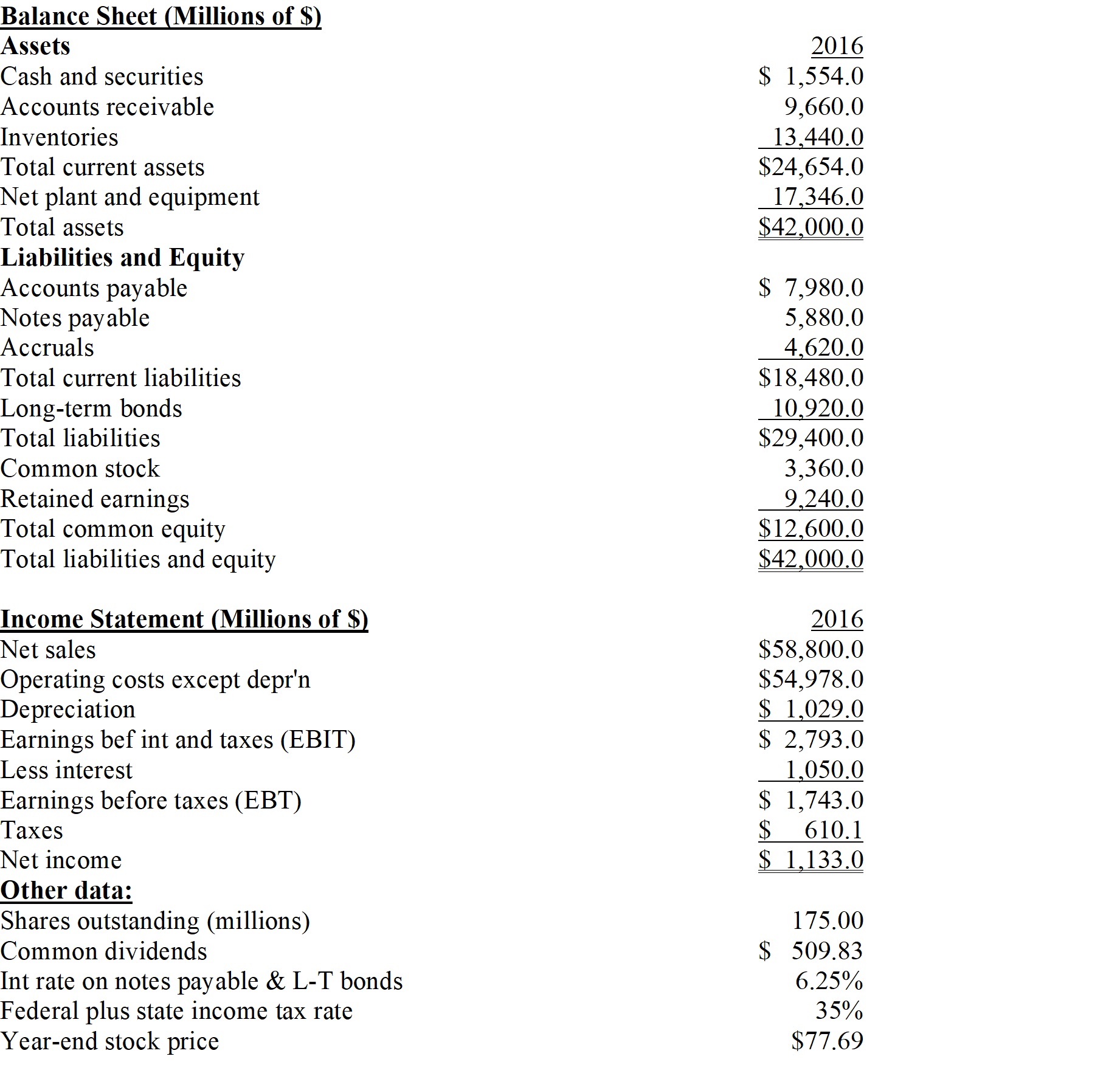 -Refer to the data for Pettijohn Inc.What is the firm's BEP?
 (Multiple Choice)
4.9/5 (85)
(85) The inventory turnover and current ratio are related. The combination of a high current ratio and a low inventory turnover ratio, relative to industry norms, suggests that the firm has an above-average inventory level and/or that part of the inventory is obsolete or damaged.
(True/False)
4.9/5 (80)
(80) Pettijohn Inc.
The balance sheet and income statement shown below are for Pettijohn Inc. Note that the firm has no amortization charges, it does not lease any assets, none of its debt must be retired during the next 5 years, and the notes payable will be rolled over.
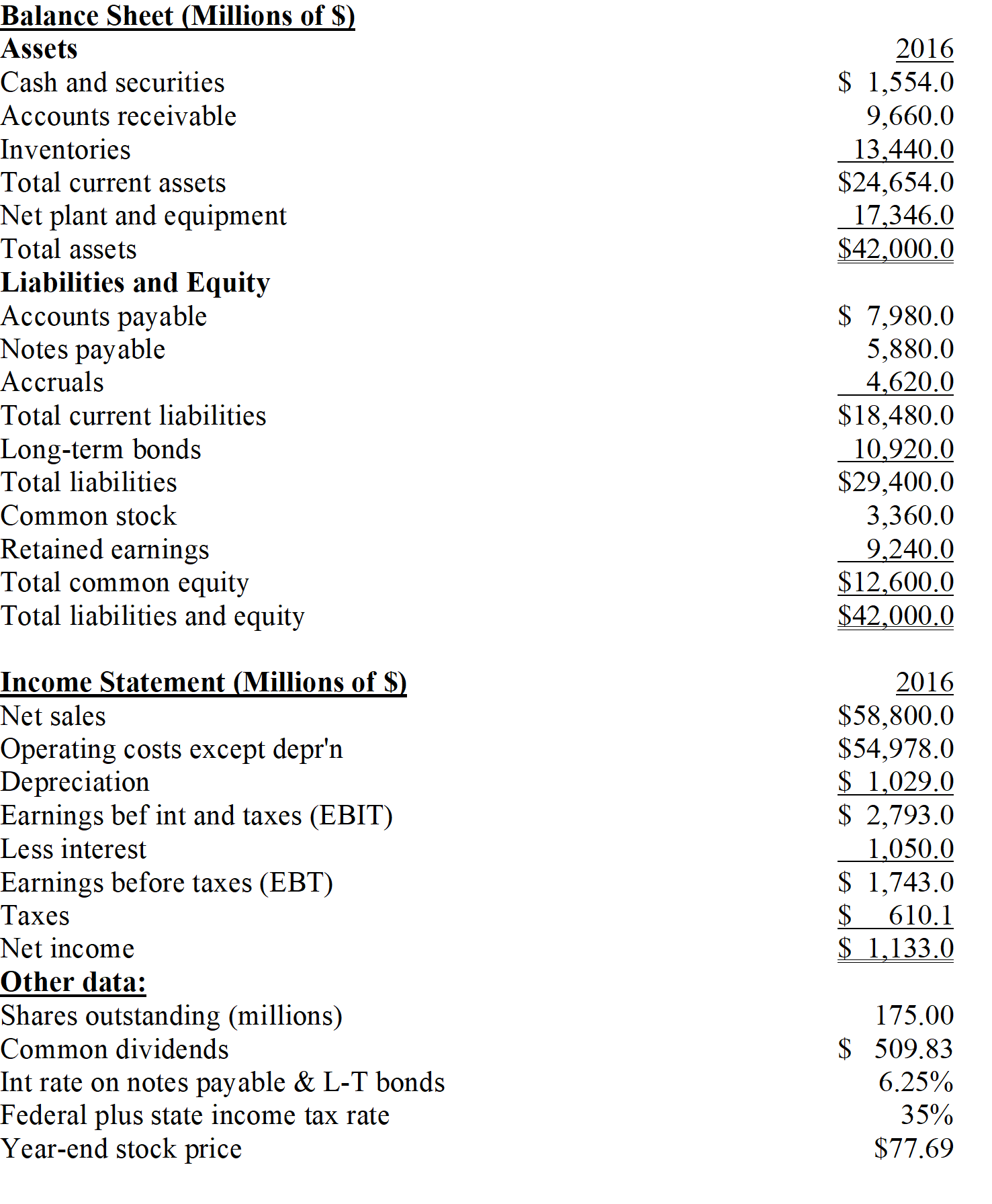 -Refer to the data for Pettijohn Inc.What is the firm's quick ratio?
 (Multiple Choice)
4.7/5 (80)
(80) Pettijohn Inc.
The balance sheet and income statement shown below are for Pettijohn Inc. Note that the firm has no amortization charges, it does not lease any assets, none of its debt must be retired during the next 5 years, and the notes payable will be rolled over.
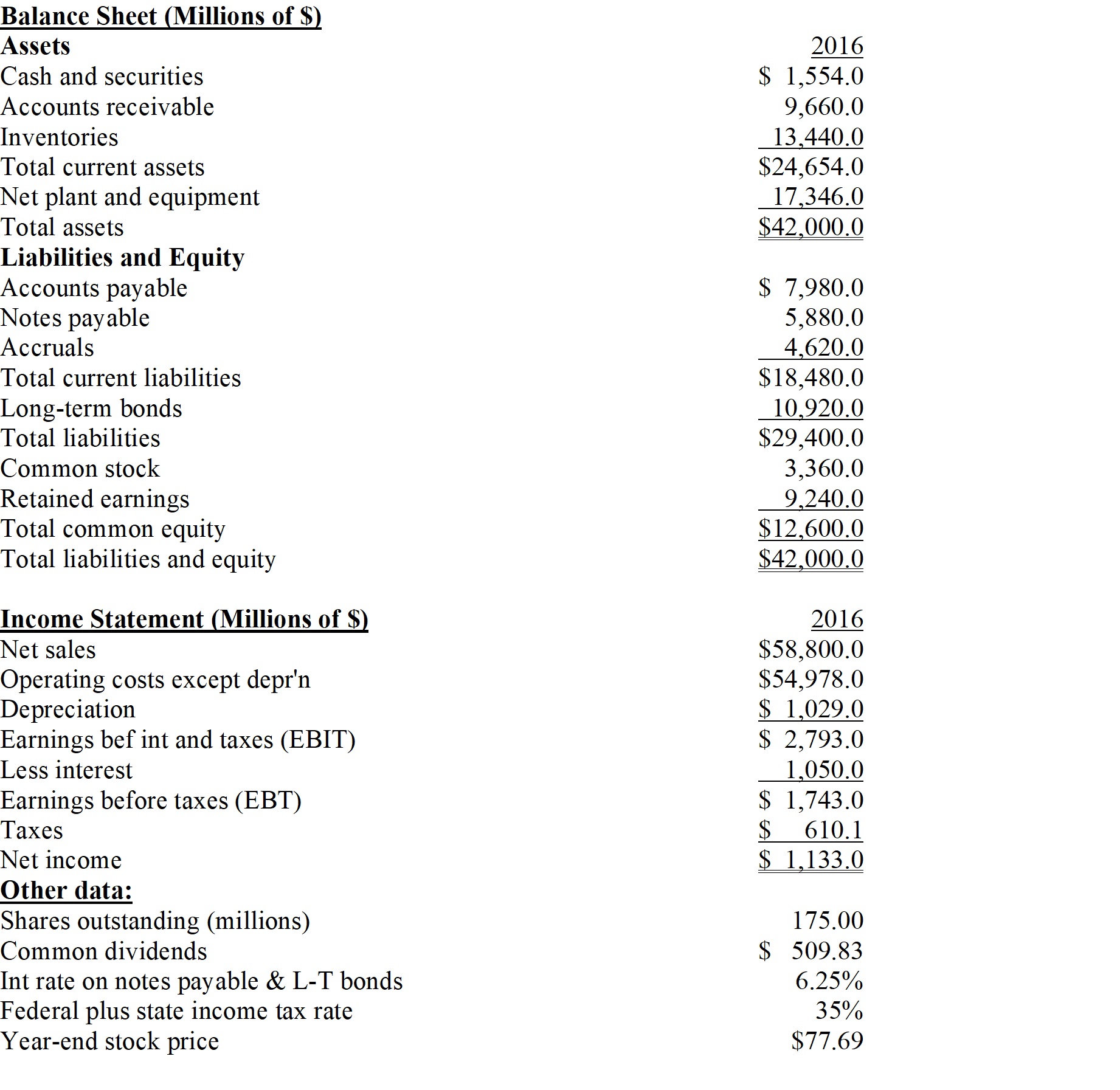 -Refer to the data for Pettijohn Inc.What is the firm's debt ratio (i.e., debt-to-assets ratio)?
 (Multiple Choice)
4.9/5 (87)
(87) Nikko Corp.'s total common equity at the end of last year was $305,000 and its net income after taxes was $60,000. What was its ROE?
(Multiple Choice)
4.8/5 (85)
(85) Last year Vaughn Corp. had sales of $315,000 and a net income of $17,832, and its year-end assets were $210,000. The firm's total-debt-to-total-assets ratio was 42.5%. Based on the DuPont equation, what was Vaughn's ROE?
(Multiple Choice)
4.7/5 (71)
(71) Suppose a firm wants to maintain a specific TIE ratio. It knows the amount of its debt, the interest rate on that debt, the applicable tax rate, and its operating costs. With this information, the firm can calculate the amount of sales required to achieve its target TIE ratio.
(True/False)
4.8/5 (76)
(76) Pettijohn Inc.
The balance sheet and income statement shown below are for Pettijohn Inc. Note that the firm has no amortization charges, it does not lease any assets, none of its debt must be retired during the next 5 years, and the notes payable will be rolled over.
-Refer to the data for Pettijohn Inc.What is the firm's current ratio?
-Refer to the data for Pettijohn Inc.What is the firm's current ratio? (Multiple Choice)
4.9/5 (67)
(67) Lindley Corp.'s stock price at the end of last year was $33.50, and its book value per share was $25.00. What was its market/book ratio?
(Multiple Choice)
5.0/5 (72)
(72) Pettijohn Inc.
The balance sheet and income statement shown below are for Pettijohn Inc. Note that the firm has no amortization charges, it does not lease any assets, none of its debt must be retired during the next 5 years, and the notes payable will be rolled over.
-Refer to the data for Pettijohn Inc.What is the firm's TIE?
-Refer to the data for Pettijohn Inc.What is the firm's TIE? (Multiple Choice)
4.9/5 (81)
(81) Pettijohn Inc.
The balance sheet and income statement shown below are for Pettijohn Inc. Note that the firm has no amortization charges, it does not lease any assets, none of its debt must be retired during the next 5 years, and the notes payable will be rolled over.
-Refer to the data for Pettijohn Inc.What is the firm's profit margin?
-Refer to the data for Pettijohn Inc.What is the firm's profit margin? (Multiple Choice)
4.9/5 (87)
(87) A new firm is developing its business plan. It will require $565,000 of assets, and it projects $452,800 of sales and $354,300 of operating costs for the first year. Management is quite sure of these numbers because of contracts with its customers and suppliers. It can borrow at a rate of 7.5%, but the bank requires it to have a TIE of at least 4.0, and if the TIE falls below this level the bank will call in the loan and the firm will go bankrupt. What is the  debt-to-assets ratio the firm can use? (Hint: Find the maximum dollars of interest, then the debt that produces that interest, and then the related debt ratio.)
 (Multiple Choice)
4.8/5 (80)
(80) Heaton Corp. sells on terms that allow customers 45 days to pay for merchandise. Its sales last year were $425,000, and its year-end receivables were $60,000. If its DSO is less than the 45-day credit period, then customers are paying on time. Otherwise, they are paying late. By how much are customers paying early or lateσ Base your answer on this equation: DSO - Credit period = days early or late, and use a 365-day year when calculating the DSO. A positive answer indicates late payments, while a negative answer indicates early payments.
(Multiple Choice)
4.7/5 (78)
(78) 
Filters
- Essay(0)
- Multiple Choice(0)
- Short Answer(0)
- True False(0)
- Matching(0)