



 Chat with AI
Exam 20: The Cardiovascular System: the Heart

Exam 1: An Introduction to the Human Body74 Questions
Exam 2: The Chemical Level of Organization75 Questions
Exam 3: The Cellular Level of Organization76 Questions
Exam 4: The Tissue Level of Organization75 Questions
Exam 5: The Integumentary System Unit Ii: Principles of Support and Movement74 Questions
Exam 6: The Skeletal System: Bone Tissue75 Questions
Exam 7: The Skeletal System: the Axial Skeleton75 Questions
Exam 8: The Skeletal System: the Appendicular Skeleton75 Questions
Exam 9: Joints75 Questions
Exam 10: Muscle Tissue75 Questions
Exam 11: The Muscular System Unit Iii: Control Systems of the Human Body75 Questions
Exam 12: Nervous Tissue75 Questions
Exam 13: The Spinal Cord and Spinal Nerves75 Questions
Exam 14: The Brain and Cranial Nerves75 Questions
Exam 15: The Autonomic Nervous System75 Questions
Exam 16: Sensory, Motor and Integrative Systems75 Questions
Exam 17: The Special Senses75 Questions
Exam 18: The Endocrine System Unit Iv: Maintenance of the Human Body75 Questions
Exam 19: The Cardiovascular System: the Blood74 Questions
Exam 20: The Cardiovascular System: the Heart74 Questions
Exam 21: The Cardiovascular System: Blood Vessels and Hemodynamics75 Questions
Exam 22: The Lymphatic System, Nonspecific Resistance to Disease, and Immunity75 Questions
Exam 23: The Respiratory System75 Questions
Exam 24: The Digestive System75 Questions
Exam 25: Metabolism73 Questions
Exam 26: The Urinary System73 Questions
Exam 27: Fluid, Electrolyte, and Acid-Base Homeostasis Unit V: Continuity48 Questions
Exam 28: The Reproductive Systems74 Questions
Exam 29: Development and Inheritance75 Questions
Select questions type


Why is the myocardium of the left ventricle thicker than the myocardium of the right ventricle?
(Essay)
4.8/5  (81)
(81) Which labeled structure in the figure represents the only potential pathway for conducting action potentials from the atria to the ventricles?
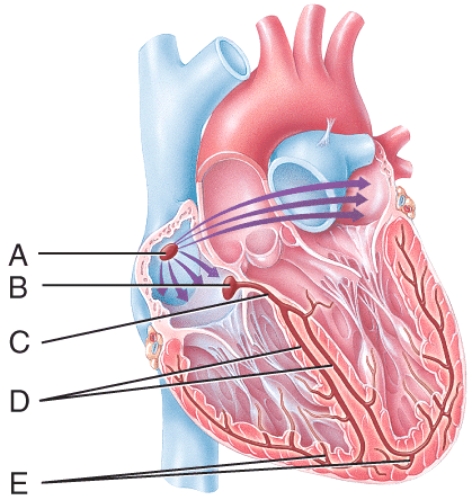
(Multiple Choice)
4.7/5 (79)
(79) The volume of blood ejected from the left ventricle into the aorta each minute is called the
(Multiple Choice)
4.8/5 (81)
(81) Which wave in an electrocardiogram represents repolarization of the ventricles?
(Multiple Choice)
4.8/5 (66)
(66) Briefly describe what is happening at stage of the ECG labeled 5 in the diagram.
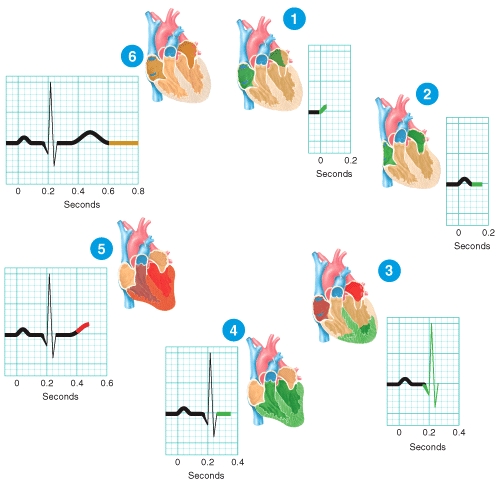
(Essay)
4.9/5 (77)
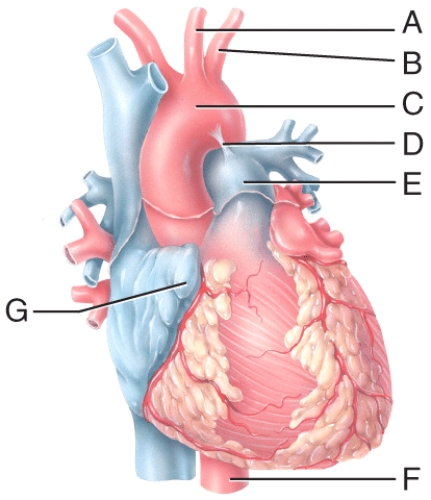
(77) Which labeled blood vessel in the diagram is an artery carrying deoxygenated blood?
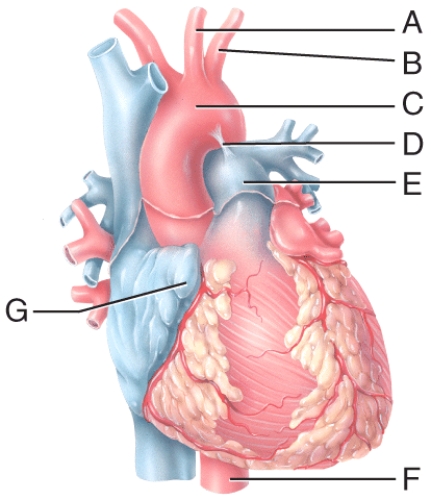
(Multiple Choice)
4.9/5 (91)
(91) Blood leaving the left ventricle passes through which of the following structures?
(Multiple Choice)
4.9/5 (66)
(66) 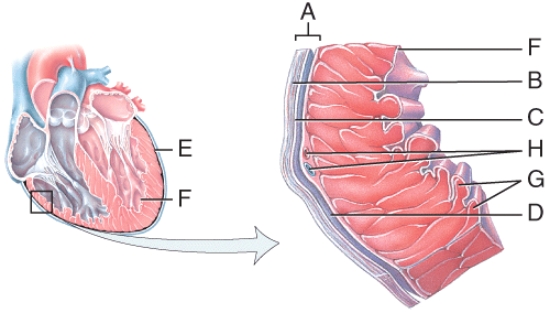
What is the function of the foramen ovale during fetal life?
(Multiple Choice)
4.8/5 (78)
(78) Which of the following blood vessel is used to distribute oxygenated blood to the myocardium?
(Multiple Choice)
4.8/5 (93)
(93) Identify the groove found on the surface of the heart and marks the boundary between the right and left ventricles.
(Multiple Choice)
4.7/5 (78)
(78) Which labeled structure in the figure carries the cardiac action potential directly into the contractile fibers of the ventricular myocardium?
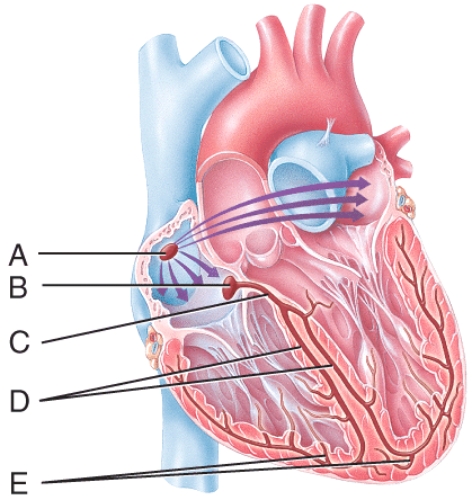
(Multiple Choice)
4.7/5 (69)
(69) Which of the following is used to reduce friction between the layers of membranes surrounding the heart?
(Multiple Choice)
4.7/5 (63)
(63) Explain how the heart pumps blood into two separate closed circuits that are arranged in series.
(Essay)
4.8/5 (98)
(98) Contraction of the atria of the heart leads to blood moving directly
(Multiple Choice)
4.8/5 (78)
(78) Which of the labeled diagrams shows coarctation of the aorta?
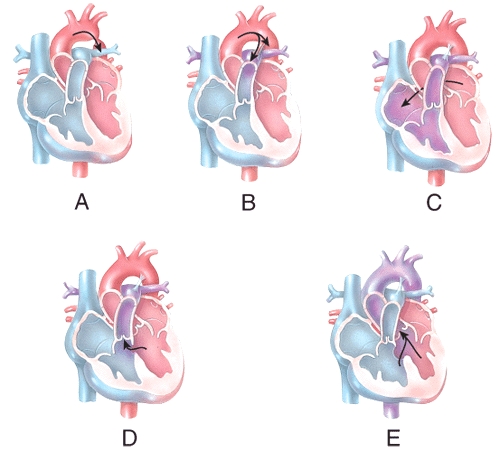
(Multiple Choice)
4.9/5 (85)
(85) Which labeled structure in the figure acts as the natural pacemaker of the heart?
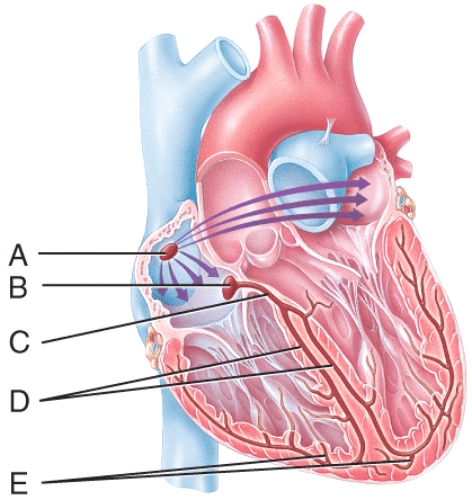
(Multiple Choice)
4.9/5 (84)
(84) In comparison to skeletal muscle fibers,the contractile fibers of the heart are depolarized for _____ period of time.
(Multiple Choice)
4.9/5 (77)
(77) Which of the following would lead to a decreased heart rate?
(Multiple Choice)
4.9/5 (79)
(79) 

Filters
- Essay(0)
- Multiple Choice(0)
- Short Answer(0)
- True False(0)
- Matching(0)