



 Chat with AI
Exam 30: Nuclear Energy and Elementary Particles

Exam 1: Introduction60 Questions
Exam 1: Introduction: Part A47 Questions
Exam 2: Motion in One Dimension64 Questions
Exam 2: Motion in One Dimension: Part A42 Questions
Exam 3: Vectors and Two-Dimensional Motion74 Questions
Exam 3: Vectors and Two-Dimensional Motion: Part A64 Questions
Exam 4: The Laws of Motion93 Questions
Exam 4: The Laws of Motion: Part A69 Questions
Exam 5: Energy84 Questions
Exam 5: Energy: Part A32 Questions
Exam 6: Momentum and Collisions83 Questions
Exam 6: Momentum and Collisions: Part A61 Questions
Exam 7: Rotational Motion and the Law of Gravity84 Questions
Exam 7: Rotational Motion and the Law of Gravity: Part A48 Questions
Exam 8: Rotational Equilibrium and Rotational Dynamics60 Questions
Exam 8: Rotational Equilibrium and Rotational Dynamics: Part A61 Questions
Exam 9: Solids and Fluids78 Questions
Exam 9: Solids and Fluids: Part A46 Questions
Exam 10: Thermal Physics82 Questions
Exam 10: Thermal Physics: Part A56 Questions
Exam 11: Energy in Thermal Processes Heat and Internal Energy82 Questions
Exam 11: Energy in Thermal Processes Heat and Internal Energy: Part A54 Questions
Exam 12: The Laws of Thermodynamics Work in Thermodynamic Processes70 Questions
Exam 12: The Laws of Thermodynamics Work in Thermodynamic Processes: Part A40 Questions
Exam 13: Vibrations and Waves83 Questions
Exam 13: Vibrations and Waves: Part A48 Questions
Exam 14: Sound81 Questions
Exam 14: Sound: Part A67 Questions
Exam 15: Electric Forces and Electric Fields81 Questions
Exam 15: Electric Forces and Electric Fields: Part A42 Questions
Exam 16: Electrical Energy and Capacitance81 Questions
Exam 16: Electrical Energy and Capacitance: Part A33 Questions
Exam 17: Current and Resistance Electric Current83 Questions
Exam 17: Current and Resistance Electric Current: Part A37 Questions
Exam 18: Direct-Current Circuits Sources of EMF77 Questions
Exam 18: Direct-Current Circuits Sources of EMF: Part A54 Questions
Exam 19: Magnetism Magnets82 Questions
Exam 19: Magnetism Magnets: Part A67 Questions
Exam 20: Induced Voltages and Inductance83 Questions
Exam 20: Induced Voltages and Inductance: Part A46 Questions
Exam 21: Alternating-Current Circuits and Electromagnetic Waves98 Questions
Exam 21: Alternating-Current Circuits and Electromagnetic Waves: Part A32 Questions
Exam 22: Reflection and Refraction of Light81 Questions
Exam 22: Reflection and Refraction of Light: Part A49 Questions
Exam 23: Mirrors and Lenses82 Questions
Exam 23: Mirrors and Lenses: Part A31 Questions
Exam 24: Wave Optics88 Questions
Exam 24: Wave Optics: Part A71 Questions
Exam 25: Optical Instruments79 Questions
Exam 25: Optical Instruments: Part A59 Questions
Exam 26: Relativity62 Questions
Exam 26: Relativity: Part A29 Questions
Exam 27: Quantum Physics Blackbody Radiation and Plancks Hypothesis79 Questions
Exam 27: Quantum Physics Blackbody Radiation and Plancks Hypothesis: Part A52 Questions
Exam 28: Atomic Physics71 Questions
Exam 28: Atomic Physics: Part A38 Questions
Exam 29: Nuclear Physics75 Questions
Exam 29: Nuclear Physics: Part A43 Questions
Exam 30: Nuclear Energy and Elementary Particles88 Questions
Exam 30: Nuclear Energy and Elementary Particles: Part A37 Questions
Exam 31: Particle Collisions, Mediating Photons, and Quark Structures: Exploring the Fundamentals of Physics16 Questions
Select questions type


The water surrounding the fuel rods in a nuclear fission reactor serves what purpose(s)?
(Multiple Choice)
4.9/5  (82)
(82) The formation of a star requires the consideration of the effects of gravity and the energy from nuclear reactions and a star will form only when both the temperature and density are sufficiently high.In the birth of a star:
(Multiple Choice)
4.8/5 (90)
(90) A plasma can be contained in a "magnetic bottle" because it has which of the following properties?
(Multiple Choice)
4.7/5 (85)
(85) In order to be useful in sustaining a reaction,the neutrons in a fission reactor must be:
(Multiple Choice)
4.8/5 (92)
(92) Which of the following will not influence the rate at which nuclear reactions will occur in a nuclear power plant where the fuel elements are a mixture of 235U and 238U?
(Multiple Choice)
4.7/5 (85)
(85) In a fission reaction,a 235U nucleus captures a neutron.What energy is released if the products are 139I,95Y and two neutrons? (atomic masses: 235U,235.043 9;139I,138.935 0;95Y,94.913 4;neutron,1.008 67;and 1 u = 931.5 MeV/c2)
(Multiple Choice)
4.9/5 (75)
(75) Calculate the energy (in kW⋅h)given off if four kg of plutonium-239 undergoes complete fission.The energy released per fission is 200 MeV.(1 MeV = 1.6 × 10⁻¹³ J)
(Multiple Choice)
4.8/5 (90)
(90) The size and sign of the charge on an electron is the same as that for:
(Multiple Choice)
4.8/5 (71)
(71) One in 5600 water molecules contains a deuterium atom.If all the deuterium could be extracted from 2 m3 of water and then reacted,how much energy could be obtained? (Each D-D fusion liberates 3.65 MeV of energy,  ,
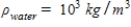 ,one mole of water has a mass of 18 g,and
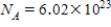 )
,
,one mole of water has a mass of 18 g,and
) (Multiple Choice)
4.9/5 (72)
(72) In a nuclear fission process involving the use of 239Pu fuel,if the approximate average binding energy per nucleon in the product fragments is 8.8 MeV while that of the fuel atom is 8.1 MeV,what approximate net energy is released per fission?
(Multiple Choice)
4.7/5 (90)
(90) According to the standard model,there are some cases in which a quark and its anti-quark have the same:
(Multiple Choice)
4.9/5 (82)
(82) In a nuclear reactor which uses the fission process,which of the following is the most likely result in the event of a cooling system failure followed by a nuclear accident?
(Multiple Choice)
5.0/5 (87)
(87) Which of the following can only occur if the reproduction constant,K,exceeds 1?
(Multiple Choice)
4.7/5 (90)
(90) 
Filters
- Essay(0)
- Multiple Choice(0)
- Short Answer(0)
- True False(0)
- Matching(0)