



 Chat with AI
Exam 1: What Is Economics

Exam 1: What Is Economics479 Questions
Exam 2: The Economic Problem440 Questions
Exam 3: Demand and Supply515 Questions
Exam 4: Elasticity533 Questions
Exam 5: Efficiency and Equity450 Questions
Exam 6: Government Actions in Markets412 Questions
Exam 7: Global Markets in Action200 Questions
Exam 8: Utility and Demand364 Questions
Exam 9: Possibilities, Preferences, and Choices459 Questions
Exam 10: Organizing Production385 Questions
Exam 11: Output and Costs493 Questions
Exam 12: Perfect Competition487 Questions
Exam 13: Monopoly599 Questions
Exam 14: Monopolistic Competition319 Questions
Exam 15: Oligopoly276 Questions
Exam 16: Public Choices, Public Goods, and Healthcare205 Questions
Exam 17: Externalities437 Questions
Exam 18: Markets for Factors of Production382 Questions
Exam 19: Economic Inequality353 Questions
Exam 20: Uncertainty and Information233 Questions
Select questions type


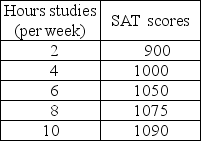
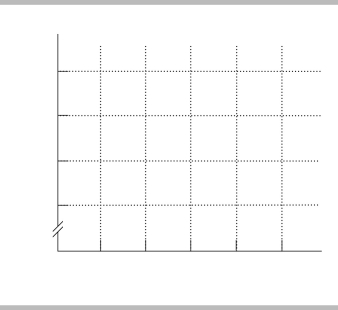 -The vertical axis of a graph shows only positive values.

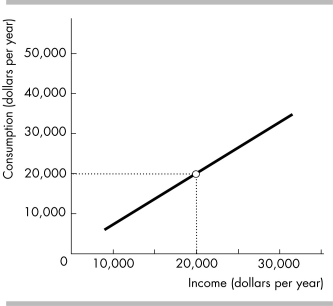 -The relationship between income and consumption illustrated in the figure above is
 (Multiple Choice)
4.9/5  (93)
(93) Which of the following questions is a topic that would be studied by microeconomics?
(Multiple Choice)
4.9/5 (92)
(92) On a graph showing the relationship between x and y, the ceteris paribus condition implies that
(Multiple Choice)
4.8/5 (90)
(90) Mark Zuckerberg believes everyone in the world should have Internet access.
(Multiple Choice)
4.8/5 (75)
(75)  -In the above figure, the relationship between the tax rate and tax revenue is positive and becoming less steep between tax rates of
 (Multiple Choice)
4.7/5 (81)
(81) Suppose you plan to go to school this summer. The cost of tuition and textbooks is $1,400 and housing, board, and entertainment will cost you $500. If you didn't go to school, you'd live in your parents' house for free, but your other living expenses would be about the same. Also, if you didn't go to school you'd work full time and could earn $8,000. You can still work part time while attending the summer school, but you will earn only $3,000.
a) What will the summer school cost you in terms of money explicitly paid?
b) What are the opportunity costs of going to summer school that you don't pay explicitly? Explain.
c) What is your total opportunity costs of going to school this summer? Explain your answer.
(Essay)
4.7/5 (85)
(85) Your employer has asked you to start working overtime and has offered to pay $18 per hour for every hour you work beyond forty hours a week. The wage rate for each of the first forty hours will continue to be the usual $15 per hour. In terms of dollars, what is the marginal benefit of working each hour of overtime?
(Multiple Choice)
4.9/5 (86)
(86) Economics can be defined as the social science that explains the ________.
(Multiple Choice)
4.9/5 (79)
(79) You decide to take a vacation and the trip costs you $2,000. While you are on vacation, you do not go to work where you could have earned $750. In terms of dollars, the opportunity cost of the vacation is
(Multiple Choice)
4.8/5 (86)
(86) Suppose that for the past two months, you have studied economics one hour a day. You now decide to study economics two hours a day. For the past two months
(Multiple Choice)
4.8/5 (68)
(68) Which of the following is a macroeconomic decision or concept?
(Multiple Choice)
4.9/5 (80)
(80) 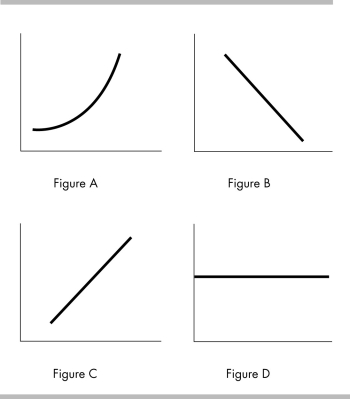 -In the above figure, a negative relationship is demonstrated in which of the graphs?
 (Multiple Choice)
4.8/5 (81)
(81) 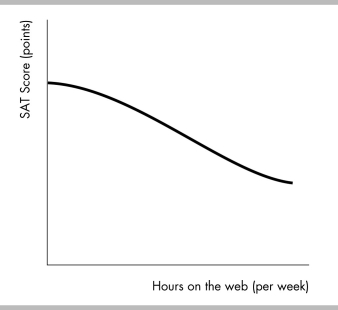 -A graph has a point that is either a maximum or a minimum. To the left of the point, the slope of relationship is positive. To the right of the point, the slope is negative. Is the point a maximum point or a minimum point? Be sure to draw a figure that supports your answer.
 (Essay)
4.9/5 (65)
(65) 
Filters
- Essay(0)
- Multiple Choice(0)
- Short Answer(0)
- True False(0)
- Matching(0)