



 Chat with AI
Exam 6: Ventricular Rhythms

Exam 1: Anatomy and Physiology62 Questions
Exam 2: Basic Electrophysiology65 Questions
Exam 3: Sinus Mechanisms45 Questions
Exam 4: Atrial Rhythms60 Questions
Exam 5: Junctional Rhythms51 Questions
Exam 6: Ventricular Rhythms60 Questions
Exam 7: Atrioventricular Blocks48 Questions
Exam 8: Pacemaker Rhythms17 Questions
Exam 9: Introduction to the 12-Lead Electrocardiogram36 Questions
Exam 10: Posttest63 Questions
Select questions type


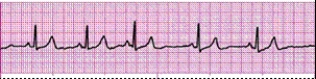
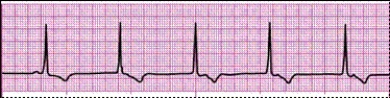
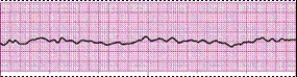
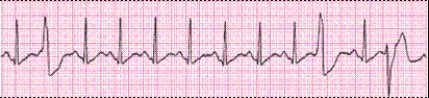
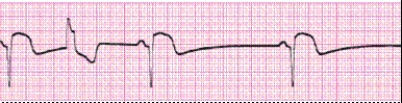
Identify the following rhythm (lead II): ____________________

Free
(Essay)
4.7/5  (83)
(83) Correct Answer: Verified
Sinus rhythm at 60 beats/min with a PAC
List three potential sites of origin of ectopic beats.
Free
(Essay)
4.8/5 (89)
(89) Correct Answer:Verified
VerifiedAtria (PACs), AV junction (PJCs), and ventricles (PVCs)
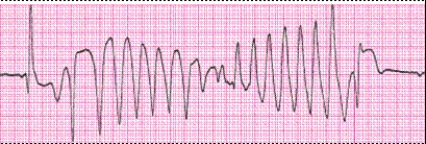
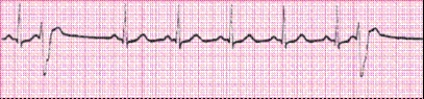
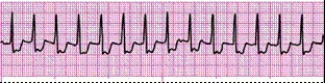
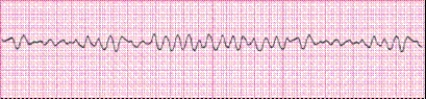
Identify the following rhythm (lead II): ____________________
Free
(Essay)
4.9/5 (72)
(72) Correct Answer:Verified
VerifiedPolymorphic VT
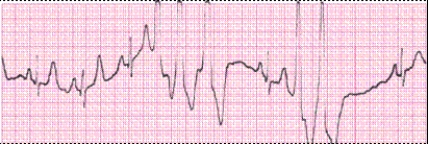
What is meant by the term pulseless electrical activity (PEA)?
(Multiple Choice)
4.7/5 (68)
(68) Medications to suppress an idioventricular rhythm should generally be avoided.
(True/False)
4.8/5 (73)
(73) 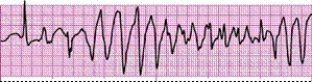
What is the name given to polymorphic VT that occurs in the presence of a long QT interval?
(Essay)
4.9/5 (96)
(96) An idioventricular (ventricular escape) rhythm has an intrinsic rate of 40 to 60 beats/min.
(True/False)
4.8/5 (71)
(71) 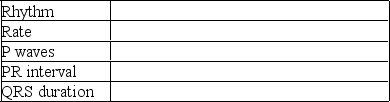
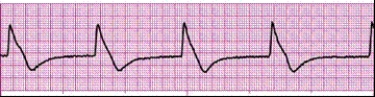
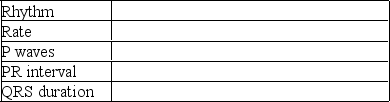
Complete the following ECG criteria for polymorphic ventricular tachycardia:
(Essay)
4.9/5 (79)
(79) 

Filters
- Essay(0)
- Multiple Choice(0)
- Short Answer(0)
- True False(0)
- Matching(0)