



 Chat with AI
Exam 20: Neurosurgery

Exam 1: Concepts Basic to Perioperative Nursing21 Questions
Exam 2: Patient Safety and Risk Management25 Questions
Exam 3: Infection Prevention and Control in the Perioperative Setting35 Questions
Exam 4: Anesthesia40 Questions
Exam 5: Positioning the Patient for Surgery30 Questions
Exam 6: Sutures, Needles, and Instruments20 Questions
Exam 7: Surgical Modalities28 Questions
Exam 8: Wound Healing, Dressings, and Drains25 Questions
Exam 9: Postoperative Patient Care and Pain Management20 Questions
Exam 10: Gastrointestinal Surgery26 Questions
Exam 11: Surgery of the Liver, Biliary Tract, Pancreas, and Spleen24 Questions
Exam 12: Repair of Hernias25 Questions
Exam 13: Gynecologic and Obstetric Surgery24 Questions
Exam 14: Genitourinary Surgery24 Questions
Exam 15: Thyroid and Parathyroid Surgery24 Questions
Exam 16: Breast Surgery24 Questions
Exam 17: Ophthalmic Surgery27 Questions
Exam 18: Otorhinolaryngologic Surgery49 Questions
Exam 19: Orthopedic Surgery33 Questions
Exam 20: Neurosurgery23 Questions
Exam 21: Plastic and Reconstructive Surgery25 Questions
Exam 22: Thoracic Surgery25 Questions
Exam 23: Vascular Surgery25 Questions
Exam 24: Cardiac Surgery24 Questions
Exam 25: Pediatric Surgery25 Questions
Exam 26: Geriatric Surgery20 Questions
Exam 27: Trauma Surgery25 Questions
Exam 28: Interventional Radiology24 Questions
Exam 29: Integrated Health Practices:Complementary and Alternative Therapies20 Questions
Exam 30: Workplace Issues and Staff Safety24 Questions
Select questions type


Select the name of the procedure for which this patient is positioned.
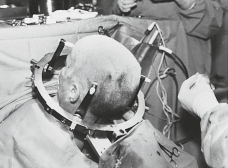
(Multiple Choice)
4.8/5  (87)
(87) Twelve pairs of cranial nerves arise within the cranial cavity.Although they are part of the peripheral nervous system,from a surgical standpoint they are considered part of the anatomy of the head.Which three pairs of nerves,conveniently considered together because of their motor influence on the eye,are subject to toxic,inflammatory,vascular,and neoplastic lesions?
(Multiple Choice)
4.8/5 (74)
(74) Jordan Gribbins,a 69-year-old pipe smoker with a history of cardiac disease and atrial rhythm disturbance,is scheduled for a supratentorial craniotomy and is securely positioned in a semisitting position.The perioperative nurse and anesthesia provider have discussed the anesthesia plan and Mr.Gribbin's surgical and anesthesia risks,and agree that he is at risk for venous air embolism (VAE).Sequential compression devices have been placed on both legs.Pulmonary lines have been placed and the nurse has prepared an area for preparation of TEE (transesophageal electrocardiography),if needed.During the procedure,Mr.Gribbins reacted with decreases in arterial pressure and end-tidal CO₂.Precordial "washing machine" sounds emanated from the Doppler.What should the perioperative nurse anticipate as a possible next response?
(Multiple Choice)
4.9/5 (83)
(83) 
Filters
- Essay(0)
- Multiple Choice(0)
- Short Answer(0)
- True False(0)
- Matching(0)