



 Chat with AI
Exam 19: Appendix A: Behavioral Statistics

Exam 1: A: Introduction to Psychology and Research Methods250 Questions
Exam 1: B: Introduction to Psychology and Research Methods250 Questions
Exam 1: C: Introduction to Psychology and Research Methods163 Questions
Exam 2: A: Brain and Behavior500 Questions
Exam 2: C: Brain and Behavior142 Questions
Exam 3: A: Human Development250 Questions
Exam 3: B: Human Development250 Questions
Exam 3: C: Human Development241 Questions
Exam 3: D: Human Development70 Questions
Exam 4: A: Sensation and Perception250 Questions
Exam 4: B: Sensation and Perception250 Questions
Exam 4: C: Sensation and Perception250 Questions
Exam 4: D: Sensation and Perception70 Questions
Exam 5: A: States of Consciousness250 Questions
Exam 5: B: States of Consciousness250 Questions
Exam 5: C: States of Consciousness211 Questions
Exam 5: D: States of Consciousness70 Questions
Exam 6: A: Conditioning and Learning250 Questions
Exam 6: B: Conditioning and Learning250 Questions
Exam 6: C: Conditioning and Learning192 Questions
Exam 6: D: Conditioning and Learning70 Questions
Exam 7: A: Memory250 Questions
Exam 7: B: Memory250 Questions
Exam 7: C: Memory222 Questions
Exam 8: A: Cognition,language,and Creativity250 Questions
Exam 8: B: Cognition,language,and Creativity250 Questions
Exam 8: C: Cognition,language,and Creativity125 Questions
Exam 9: A: Intelligence250 Questions
Exam 9: B: Intelligence250 Questions
Exam 9: C: Intelligence91 Questions
Exam 10: A: Motivation and Emotion249 Questions
Exam 10: B: Motivation and Emotion250 Questions
Exam 10: C: Motivation and Emotion250 Questions
Exam 10: D: Motivation and Emotion70 Questions
Exam 11: A: Gender and Sexuality250 Questions
Exam 11: B: Gender and Sexuality250 Questions
Exam 11: C: Gender and Sexuality235 Questions
Exam 11: D: Gender and Sexuality Completion40 Questions
Exam 12: A: Personality250 Questions
Exam 12: B: Personality250 Questions
Exam 12: C: Personality250 Questions
Exam 12: D: Personality70 Questions
Exam 13: A: Health,stress,and Coping250 Questions
Exam 13: B: Health,stress,and Coping250 Questions
Exam 13: C: Health,stress,and Coping241 Questions
Exam 14: A: Psychological Disorders250 Questions
Exam 14: B: Psychological Disorders250 Questions
Exam 14: C: Psychological Disorders250 Questions
Exam 14: D: Psychological Disorders70 Questions
Exam 15: A: Therapies250 Questions
Exam 15: B: Therapies250 Questions
Exam 15: C: Therapies250 Questions
Exam 15: D: Therapies70 Questions
Exam 16: A: Social Thinking and Social Influence250 Questions
Exam 16: B: Social Thinking and Social Influence250 Questions
Exam 16: C: Social Thinking and Social Influence190 Questions
Exam 17: A: Prosocial and Antisocial Behavior250 Questions
Exam 17: B: Prosocial and Antisocial Behavior250 Questions
Exam 17: C: Prosocial and Antisocial Behavior108 Questions
Exam 18: A: Applied Psychology249 Questions
Exam 18: B: Applied Psychology250 Questions
Exam 18: C: Applied Psychology159 Questions
Exam 19: Appendix A: Behavioral Statistics207 Questions
Exam 20: Appendix B: Behavioral Statistics254 Questions
Select questions type


A scatter plot in which all the points fall in a straight diagonal line would be characteristic of two sets of variables which
(Multiple Choice)
5.0/5  (87)
(87) The relationship between anxiety level and classroom test scores would probably
(Multiple Choice)
4.9/5 (69)
(69) Which of the following is made by breaking down the entire range of possible scores into classes of equal size and then recording the number of scores falling into each class?
(Multiple Choice)
4.9/5 (58)
(58) In order to clearly visualize the correlation,Dr.Amott should construct a
(Multiple Choice)
4.8/5 (79)
(79) What percent of all cases are found between an SD of +1 and an SD of -1 on a normal curve?
(Multiple Choice)
4.8/5 (77)
(77) Descriptive statistics are helpful in doing all of the following EXCEPT
(Multiple Choice)
4.9/5 (73)
(73) On a normal curve,68 percent of all the cases would be found between which two standard deviations (SDs)?
(Multiple Choice)
4.9/5 (90)
(90) The degree of relationship between two measures is depicted by a
(Multiple Choice)
4.8/5 (69)
(69) The absence of a mathematical relationship between two measures is referred to as a
(Multiple Choice)
4.9/5 (83)
(83) There are ten students in the pre-kindergarten class.Each student is shown eight colors and asked to name them.The number of colors correctly named by each student was: 8,8,8,8,7,7,6,6,5,4.What would be the mean?
(Multiple Choice)
4.8/5 (92)
(92) Which of the following measures offset proportions of a normal curve that are above and below the mean?
(Multiple Choice)
4.9/5 (74)
(74) If the correlation between the IQs of identical twins is .86,then,in any group of identical twins,what percent of the variation in the "Y" twins' IQs is accounted for by knowing
The IQs of their identical siblings (the "X's")?
(Multiple Choice)
4.9/5 (79)
(79) Which of the following is the largest number that a correlation coefficient can be?
(Multiple Choice)
4.8/5 (88)
(88) Which of the following measures of central tendency is sensitive to extremely high or low scores in a distribution?
(Multiple Choice)
4.9/5 (74)
(74) What percent of all cases are found between a standard deviation (SD)of +2 and an SD of -2 on a normal curve?
(Multiple Choice)
4.9/5 (79)
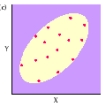
(79) 

Filters
- Essay(0)
- Multiple Choice(0)
- Short Answer(0)
- True False(0)
- Matching(0)