



 Chat with AI
Exam 15: Inequality in Earnings

Exam 1: Introduction36 Questions
Exam 2: Overview of the Labor Market36 Questions
Exam 3: The Demand for Labor35 Questions
Exam 4: Labor Demand Elasticities35 Questions
Exam 5: Frictions in the Labor Market39 Questions
Exam 6: Supply of Labor to the Economy: the Decision to Work35 Questions
Exam 7: Labor Supply: Household Production, the Family, and the Life Cycle34 Questions
Exam 8: Compensating Wage Differentials and Labor Markets35 Questions
Exam 9: Investments in Human Capital: Education and Training34 Questions
Exam 10: Worker Mobility: Migration, Immigration, and Turnover45 Questions
Exam 11: Pay and Productivity: Wage Determination Within the Firm45 Questions
Exam 12: Gender, Race, and Ethnicity in the Labor Market35 Questions
Exam 13: Unions and the Labor Market35 Questions
Exam 14: Unemployment35 Questions
Exam 15: Inequality in Earnings45 Questions
Exam 16: The Labor Market Effects of International Trade and Production Sharing35 Questions
Select questions type


According to the text, the main reason for the increase in inequality since 1980 is
(Multiple Choice)
4.9/5  (89)
(89) Table 14.1 Incomes in Pololand
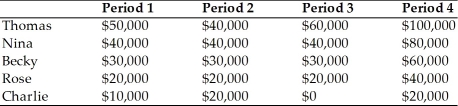 -According to Table 14.1, in which period is the Gini coefficient lowest?
 (Multiple Choice)
4.8/5 (73)
(73) If all incomes were to fall by ten percent (due to deflation, for example) then the variance of income will
(Multiple Choice)
4.9/5 (87)
(87) If a number of new workers enter the labor force and all of them find jobs at the mean level of wages, then this will cause the variance of wages to
(Multiple Choice)
4.8/5 (80)
(80) 
Filters
- Essay(0)
- Multiple Choice(0)
- Short Answer(0)
- True False(0)
- Matching(0)