



 Chat with AI
Exam 43: Animal Nutrition

Exam 1: Biology and the Tree of Life35 Questions
Exam 2: Water and Carbon: the Chemical Basis of Life51 Questions
Exam 3: Protein Structure and Function54 Questions
Exam 4: Nucleic Acids and the Rna World40 Questions
Exam 5: An Introduction to Carbohydrates40 Questions
Exam 6: Lipids, membranes, and the First Cells54 Questions
Exam 7: Inside the Cell38 Questions
Exam 8: Cell-Cell Interactions38 Questions
Exam 9: Cellular Respiration and Fermentation38 Questions
Exam 10: Photosynthesis39 Questions
Exam 11: The Cell Cycle39 Questions
Exam 12: Meiosis39 Questions
Exam 13: Mendel and the Gene42 Questions
Exam 14: Dna and the Gene: Synthesis and Repair39 Questions
Exam 15: How Genes Work39 Questions
Exam 16: Transcription, RNA Processing, and Translation39 Questions
Exam 17: Control of Gene Expression in Bacteria38 Questions
Exam 18: Control of Gene Expression in Eukaryotes39 Questions
Exam 19: Analyzing and Engineering Genes41 Questions
Exam 20: Genomics41 Questions
Exam 21: Principles of Development39 Questions
Exam 22: An Introduction to Animal Development40 Questions
Exam 23: An Introduction to Plant Development37 Questions
Exam 24: Evolution by Natural Selection42 Questions
Exam 25: Evolutionary Processes50 Questions
Exam 26: Speciation41 Questions
Exam 27: Phylogenies and the History of Life43 Questions
Exam 28: Bacteria and Archaea38 Questions
Exam 29: Protists36 Questions
Exam 30: Green Algae and Land Plants54 Questions
Exam 31: Fungi40 Questions
Exam 32: An Introduction to Animals42 Questions
Exam 33: Protostome Animals38 Questions
Exam 34: Deuterostome Animals43 Questions
Exam 35: Viruses35 Questions
Exam 36: Plant Form and Function36 Questions
Exam 37: Water and Sugar Transport in Plants42 Questions
Exam 38: Plant Nutrition37 Questions
Exam 39: Plant Sensory Systems, signals, and Responses65 Questions
Exam 40: Plant Reproduction41 Questions
Exam 41: Animal Form and Function38 Questions
Exam 42: Water and Electrolyte Balance in Animals41 Questions
Exam 43: Animal Nutrition43 Questions
Exam 44: Gas Exchange and Circulation46 Questions
Exam 45: Electrical Signals in Animals40 Questions
Exam 46: Animal Sensory Systems and Movement43 Questions
Exam 47: Chemical Signals in Animals38 Questions
Exam 48: Animal Reproduction39 Questions
Exam 49: The Immune System in Animals38 Questions
Exam 50: An Introduction to Ecology41 Questions
Exam 51: Behavioural Ecology39 Questions
Exam 52: Population Ecology49 Questions
Exam 53: Community Ecology39 Questions
Exam 54: Ecosystems41 Questions
Exam 55: Biodiversity and Conservation Biology38 Questions
Select questions type


If there is a strong genetic link for type II diabetes mellitus in your family,how might you minimize your risk of developing the disorder?
(Multiple Choice)
4.8/5  (69)
(69) Amino acids,dipeptides,and sugars are transported from intestinal epithelial cells into circulation.Lipids are transported from the intestinal epithelium into
(Multiple Choice)
4.9/5 (69)
(69) Vitamin D is indirectly responsible for calcium uptake in the intestine.What is the mechanism by which Vitamin D and its receptor affect the calcium transporter gene?
(Multiple Choice)
4.7/5 (67)
(67) What can the mouthparts of an animal tell you about its diet?
(Multiple Choice)
4.9/5 (84)
(84) Figure 43.3 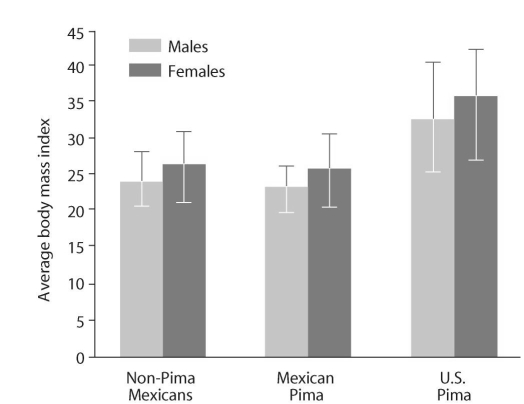 -Based on the graph in the Figure 43.3,what can you infer about the incidence of type II diabetes mellitus?
 (Multiple Choice)
4.8/5 (92)
(92) If the person consumes 2500 calories daily to maintain body weight,what percentage of the RDA for iron would this person receive from a serving of apple juice?
(Multiple Choice)
4.9/5 (75)
(75) Why did scientists originally hypothesize that proteolytic enzymes like pepsin and trypsin are secreted in inactive form?
(Multiple Choice)
4.7/5 (67)
(67) The parietal cells that line the stomach secrete hydrogen ions into the stomach against a concentration gradient.Based on that knowledge,which of the following transport processes is most likely involved in hydrogen ion secretion?
(Multiple Choice)
4.9/5 (93)
(93) Aquaporins have been identified in the epithelium of the large intestine.What is the function of these aquaporins?
(Multiple Choice)
4.8/5 (83)
(83) The process of obtaining is known as ________ and requires specialized mouthparts.
(Multiple Choice)
4.7/5 (87)
(87) What is the function of goblet cells of the stomach epithelium?
(Multiple Choice)
4.9/5 (82)
(82) Glucose is transported from the intestinal lumen into epithelial cells through ________ and from the intestinal epithelium into circulation by ________.
(Multiple Choice)
4.8/5 (88)
(88) What is the importance of the mucins that are released by salivary glands?
(Multiple Choice)
4.7/5 (74)
(74) Figure 43.3
-Following a meal high in starch,digestive processes break the starch into ________,which when absorbed into circulation cause a release of the hormone ________.
-Following a meal high in starch,digestive processes break the starch into ________,which when absorbed into circulation cause a release of the hormone ________. (Multiple Choice)
5.0/5 (100)
(100) How many food calories does the jug of apple juice contain?
(Multiple Choice)
4.8/5 (80)
(80) If you chew a salted cracker long enough,it begins to taste sweet.Why?
(Multiple Choice)
4.8/5 (73)
(73) 
Filters
- Essay(0)
- Multiple Choice(0)
- Short Answer(0)
- True False(0)
- Matching(0)