



 Chat with AI
Exam 12: Oligopoly

Exam 1: Supply, Demand, Balancing Benefits, Costs, Principles and Preferences11 Questions
Exam 2: From Demand to Welfare, Constraints, Choices, and Demand14 Questions
Exam 3: Technology and Production13 Questions
Exam 4: Cost13 Questions
Exam 5: Choices Involving Time and Profit Maximization12 Questions
Exam 6: Behavioral Economics, Choices Involving Strateg and Choices Involving Risk17 Questions
Exam 7: Equilibrium and Efficiency21 Questions
Exam 8: Market Intervention17 Questions
Exam 9: General Equilibrium, Efficiency, and Equity14 Questions
Exam 10: Monopoly30 Questions
Exam 11: Pricing Policies39 Questions
Exam 12: Oligopoly31 Questions
Exam 13: Externalities and Public Goods17 Questions
Select questions type


45 Kate and Alice are small-town ready-mix concrete duopolists. The market demand function is  where P is the price of a cubic yard of concrete and Qd is the number of cubic yards demanded per year. Marginal cost is $80 per cubic yard. Suppose Kate enters the market first and chooses her output before Alice. What is Alice's profit maximizing output?
Free
(Multiple Choice)
4.8/5  (80)
(80) Correct Answer: Verified
C
Kate and Alice are small-town ready-mix concrete duopolists. The market demand function is 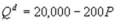 where P is the price of a cubic yard of concrete and Qdis the number of cubic yards demanded per year. Marginal cost is $80 per cubic yard. Suppose Kate enters the market first and chooses her output before Alice. What is Kate's profit?
Free
(Multiple Choice)
4.7/5 (71)
(71) Correct Answer:Verified
VerifiedA
Kate and Alice are small-town ready-mix concrete duopolists. The market demand function is  where P is the price of a cubic yard of concrete and Qd is the number of cubic yards demanded per year. Marginal cost is $80 per cubic yard. Suppose Kate enters the market first and chooses her output before Alice. What is Alice's profit?
Free
(Multiple Choice)
5.0/5 (78)
(78) Correct Answer:Verified
VerifiedB
Kate and Alice are small-town ready-mix concrete duopolists. The market demand function is  where P is the price of a cubic yard of concrete and Qd is the number of cubic yards demanded per year. Marginal cost is $80 per cubic yard. The Cournot model describes the competition in this market. Find Kate's best response function.
 (Multiple Choice)
4.8/5 (85)
(85) Kate and Alice are small-town ready-mix concrete duopolists. The market demand function is  where P is the price of a cubic yard of concrete and Qd is the number of cubic yards demanded per year. Marginal cost is $80 per cubic yard. Suppose Kate enters the market first and chooses her output before Alice. What is the difference in Alice's profit when Kate enters the market first, compared to when they simultaneously select their outputs?
 (Multiple Choice)
4.9/5 (76)
(76) Kate and Alice are small-town ready-mix concrete duopolists. The market demand function is  where P is the price of a cubic yard of concrete and Qdis the number of cubic yards demanded per year. Marginal cost is $80 per cubic yard. The Cournot model describes the competition in this market. How much more profit does a monopolist earn compared to the joint profit each producer earns in the Nash equilibrium?
 (Multiple Choice)
4.7/5 (90)
(90) Kate and Alice are small-town ready-mix concrete duopolists. The market demand function is  where P is the price of a cubic yard of concrete and Qd is the number of cubic yards demanded per year. Marginal cost is $80 per cubic yard. The Cournot model describes the competition in this market. What is Alice's inverse residual demand function?
 (Multiple Choice)
4.7/5 (80)
(80) Kate and Alice are small-town ready-mix concrete duopolists. The market demand function is  where P is the price of a cubic yard of concrete and Qd is the number of cubic yards demanded per year. Marginal cost is $80 per cubic yard. The Cournot model describes the competition in this market. What is Kate's inverse residual demand function?
 (Multiple Choice)
4.7/5 (76)
(76) Kate and Alice are small-town ready-mix concrete duopolists. The market demand function is  where P is the price of a cubic yard of concrete and Qd is the number of cubic yards demanded per year. Marginal cost is $80 per cubic yard. The Cournot model describes the competition in this market. Find Alice's best response function.
 (Multiple Choice)
4.9/5 (85)
(85) Kate and Alice are small-town ready-mix concrete duopolists. The market demand function is  where P is the price of a cubic yard of concrete andQd is the number of cubic yards demanded per year. Marginal cost is $80 per cubic yard. The Cournot model describes the competition in this market. What is Kate's marginal revenue function?
 (Multiple Choice)
4.8/5 (73)
(73) Suppose the daily demand for Coke and Pepsi in a small city are given by  and
 where QC and QP are the number of cans Coke and Pepsi sell, respectively, in thousands per day. PC and PP are the prices of a can of Coke and Pepsi, respectively, measured in dollars. The marginal cost is $0.45 per can. What is Pepsi's best response function?
and where QC and QP are the number of cans Coke and Pepsi sell, respectively, in thousands per day. PC and PP are the prices of a can of Coke and Pepsi, respectively, measured in dollars. The marginal cost is $0.45 per can. What is Pepsi's best response function? (Multiple Choice)
4.8/5 (81)
(81) Kate and Alice are small-town ready-mix concrete duopolists. The market demand function is  where P is the price of a cubic yard of concrete and Qd is the number of cubic yards demanded per year. Marginal cost is $80 per cubic yard. The Cournot model describes the competition in this market. What is Alice's marginal revenue function?
 (Multiple Choice)
4.9/5 (84)
(84) Kate and Alice are small-town ready-mix concrete duopolists. The market demand function is  where P is the price of a cubic yard of concrete and Qd is the number of cubic yards demanded per year. Marginal cost is $80 per cubic yard. The Cournot model describes the competition in this market. How much profit does each producer earn in the Nash equilibrium?
 (Multiple Choice)
4.7/5 (82)
(82) Kate and Alice are small-town ready-mix concrete duopolists. The market demand function is  where P is the price of a cubic yard of concrete and Qd is the number of cubic yards demanded per year. Marginal cost is $80 per cubic yard. Suppose Kate enters the market first and chooses her output before Alice. Given market demand, what is the market price per cubic yard?
 (Multiple Choice)
4.8/5 (86)
(86) Kate and Alice are small-town ready-mix concrete duopolists. The market demand function is  where P is the price of a cubic yard of concrete and Qd is the number of cubic yards demanded per year. Marginal cost is $80 per cubic yard. The Cournot model describes the competition in this market. What is the difference in the deadweight loss compared to a monopoly in this market?
 (Multiple Choice)
4.9/5 (82)
(82) Kate and Alice are small-town ready-mix concrete duopolists. The market demand function is  where P is the price of a cubic yard of concrete and Qd is the number of cubic yards demanded per year. Marginal cost is $80 per cubic yard. The Cournot model describes the competition in this market. What is total output in the Nash equilibrium?
 (Multiple Choice)
4.8/5 (84)
(84) Kate and Alice are small-town ready-mix concrete duopolists. The market demand function is 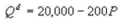 where P is the price of a cubic yard of concrete andQd is the number of cubic yards demanded per year. Marginal cost is $80 per cubic yard. Suppose Kate enters the market first and chooses her output before Alice. What is the difference in Kate's profit when she enters the market first compared to when Kate and Alice choose their outputs simultaneously?
 (Multiple Choice)
5.0/5 (81)
(81) Suppose the daily demand for Coke and Pepsi in a small city are given by  and
 where QC and QP and QP are the number of cans Coke and Pepsi sell, respectively, in thousands per day. PC and PP are the prices of a can of Coke and Pepsi, respectively, measured in dollars. The marginal cost is $0.45 per can. If PP = $0.75, what is Coke's demand function?
and where QC and QP and QP are the number of cans Coke and Pepsi sell, respectively, in thousands per day. PC and PP are the prices of a can of Coke and Pepsi, respectively, measured in dollars. The marginal cost is $0.45 per can. If PP = $0.75, what is Coke's demand function? (Multiple Choice)
4.9/5 (80)
(80) Suppose the daily demand for Coke and Pepsi in a small city are given by  and
 where QC and QP are the number of cans Coke and Pepsi sell, respectively, in thousands per day. PC and PP are the prices of a can of Coke and Pepsi, respectively, measured in dollars. The marginal cost is $0.45 per can. What is the Nash equilibrium price for Coke?
and where QC and QP are the number of cans Coke and Pepsi sell, respectively, in thousands per day. PC and PP are the prices of a can of Coke and Pepsi, respectively, measured in dollars. The marginal cost is $0.45 per can. What is the Nash equilibrium price for Coke? (Multiple Choice)
4.7/5 (77)
(77) Kate and Alice are small-town ready-mix concrete duopolists. The market demand function is  where P is the price of a cubic yard of concrete and Qd is the number of cubic yards demanded per year. Marginal cost is $80 per cubic yard. The Cournot model describes the competition in this market. What is the amount of the deadweight loss?
 (Multiple Choice)
4.9/5 (86)
(86) 
Filters
- Essay(0)
- Multiple Choice(0)
- Short Answer(0)
- True False(0)
- Matching(0)