



 Chat with AI
Exam 8: Dna Structure and Function

Exam 1: Invitation to Biology79 Questions
Exam 2: Lifes Chemical Basis67 Questions
Exam 3: Molecules of Life87 Questions
Exam 4: Cell Structure and Function106 Questions
Exam 5: Ground Rules of Metabolism69 Questions
Exam 6: Where It Starts - Photosynthesis69 Questions
Exam 7: How Cells Release Chemical Energy75 Questions
Exam 8: Dna Structure and Function61 Questions
Exam 9: From Dna to Protein64 Questions
Exam 10: Gene Control63 Questions
Exam 11: How Cells Reproduce77 Questions
Exam 12: Meiosis and Sexual Reproduction59 Questions
Exam 13: Observing Patterns in Inherited Traits85 Questions
Exam 14: Chromosomes and Human Inheritance76 Questions
Exam 15: Studying and Manipulating Genomes58 Questions
Exam 16: Evidence of Evolution55 Questions
Exam 17: Processes of Evolution74 Questions
Exam 18: Organizating Information About Species46 Questions
Exam 19: Lifes Origin and Early Evolution60 Questions
Exam 20: Viruses - Bacteria - and Archaea56 Questions
Exam 21: Protists - the Simplest Eukaryotes61 Questions
Exam 22: The Land Plants66 Questions
Exam 23: Fungi52 Questions
Exam 24: Animal Evolution - the Invertibrates74 Questions
Exam 25: Animal Evolution - the Chordates71 Questions
Exam 26: Human Evolution51 Questions
Exam 27: Plant Tissues96 Questions
Exam 28: Plant Nutrition and Transport69 Questions
Exam 29: Life Cycles of Flowering Plants89 Questions
Exam 30: Communication Strategies in Plants73 Questions
Exam 31: Animal Tissues78 Questions
Exam 32: Neural Control96 Questions
Exam 33: Sensory Perception72 Questions
Exam 34: Endocrine Control90 Questions
Exam 35: Structural Support and Movement72 Questions
Exam 36: Circulation58 Questions
Exam 37: Immunity73 Questions
Exam 38: Respiration78 Questions
Exam 39: Digestion and Nutrition98 Questions
Exam 40: Maintaining the Internal Environment73 Questions
Exam 41: Animal Reproductive Systems105 Questions
Exam 42: Animal Development72 Questions
Exam 43: Animal Behavior74 Questions
Select questions type


Choose the one most appropriate answer for each.
-Watson and Crick
(Multiple Choice)
4.8/5  (79)
(79) The experiments that clearly distinguished DNA and not protein as the hereditary material were conducted by _____.
(Multiple Choice)
4.9/5 (68)
(68) Figure 8.3
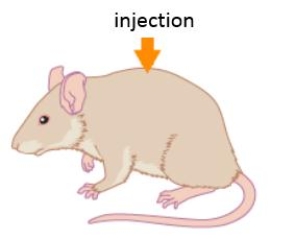 Answer the following question about Griffith's experiments involving Streptococcus pneumoniae.
-Extracts of pathogenic bacteria can transform harmless bacteria to harmful bacteria unless ____ enzymes are added to the extract.
Answer the following question about Griffith's experiments involving Streptococcus pneumoniae.
-Extracts of pathogenic bacteria can transform harmless bacteria to harmful bacteria unless ____ enzymes are added to the extract. (Multiple Choice)
5.0/5 (73)
(73) What characteristic of a species refers to having two of each type of chromosome?
(Multiple Choice)
4.8/5 (81)
(81) How many pairs of autosomes are in a typical human karyotype?
(Multiple Choice)
4.8/5 (72)
(72) Answer the following question in reference to the five nucleotides listed below:
-This nucleotide is not incorporated into the structure of the DNA helix.
(Multiple Choice)
4.9/5 (89)
(89) Figure 8.3
Answer the following question about Griffith's experiments involving Streptococcus pneumoniae.
-If an injection to the mouse contains live R strain Streptococcus pneumonia, _____.
Answer the following question about Griffith's experiments involving Streptococcus pneumoniae.
-If an injection to the mouse contains live R strain Streptococcus pneumonia, _____. (Multiple Choice)
4.9/5 (92)
(92) Figure 8.4
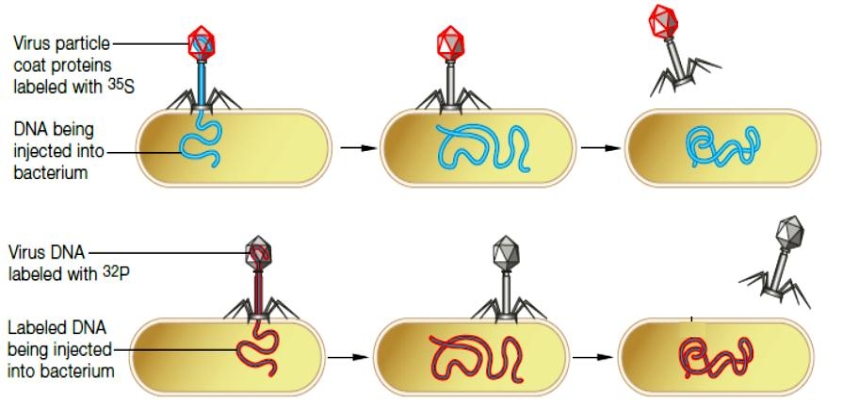 -What is the concept illustrated by the experiment in the accompanying figure?
 (Multiple Choice)
4.9/5 (87)
(87) DNA contains all of the following nitrogen-containing bases EXCEPT ____.
(Multiple Choice)
4.8/5 (78)
(78) Answer the following question in reference to the five nucleotides listed below:
-Three hydrogen bonds connect guanine to __________ in the DNA molecule.
(Multiple Choice)
4.9/5 (77)
(77) Experiments with bacteria and ____________________ offered solid evidence that deoxyribonucleic acid (DNA), not protein, is the hereditary material.
(Short Answer)
4.9/5 (85)
(85) Figure 8.4
-The Hershey and Chase experiments, in which radioactive phosphorus (32P) and radioactive sulfur (35S) were used, demonstrated that ____.
-The Hershey and Chase experiments, in which radioactive phosphorus (32P) and radioactive sulfur (35S) were used, demonstrated that ____. (Multiple Choice)
4.8/5 (72)
(72) Which statement is false with regard to adult cell cloning?
(Multiple Choice)
4.8/5 (82)
(82) A free nucleotide has a five carbon sugar (deoxyribose), ____________________ phosphate group(s), and one of four nitrogen-containing bases.
(Short Answer)
5.0/5 (96)
(96)  -The accompanying figure represents ____.

Filters
- Essay(0)
- Multiple Choice(0)
- Short Answer(0)
- True False(0)
- Matching(0)