



 Chat with AI
Exam 13: Abdomen and Gastrointestinal System

Exam 1: Introduction to Health Assessment14 Questions
Exam 2: Obtaining a Health History32 Questions
Exam 3: Techniques and Equipment for Physical Assessment31 Questions
Exam 4: General Inspection and Measurement of Vital Signs18 Questions
Exam 5: Cultural Assessment14 Questions
Exam 6: Pain Assessment15 Questions
Exam 7: Mental Health Assessment17 Questions
Exam 8: Nutritional Assessment22 Questions
Exam 9: Skin, Hair, and Nails30 Questions
Exam 10: Head, Eyes, Ears, Nose, and Throat75 Questions
Exam 11: Lungs and Respiratory System32 Questions
Exam 12: Heart and Peripheral Vascular System32 Questions
Exam 13: Abdomen and Gastrointestinal System38 Questions
Exam 14: Musculoskeletal System27 Questions
Exam 15: Neurologic System34 Questions
Exam 16: Breasts and Axillae24 Questions
Exam 17: Reproductive System and the Perineum40 Questions
Exam 18: Developmental Assessment Throughout the Life Span20 Questions
Exam 19: Assessment of the Infant, Child, and Adolescent45 Questions
Exam 20: Assessment of the Pregnant Patient30 Questions
Exam 21: Assessment of the Older Adult22 Questions
Exam 22: Conducting a Head-to-Toe Examination7 Questions
Exam 23: Documenting the Comprehensive Health Assessment6 Questions
Exam 24: Adapting Health Assessment to the Hospitalized Patient9 Questions
Select questions type


When auscultating a patient's abdomen using the bell of the stethoscope, the nurse hears soft, low-pitched murmurs over the right and left upper midline. What do these sounds indicate?
(Multiple Choice)
4.7/5  (84)
(84) When palpating the abdomen to determine a floating mass, a nurse presses on the abdomen at a 90-degree angle with the fingertips. Which finding indicates a mass?
(Multiple Choice)
5.0/5 (81)
(81) What sound does a nurse expect to hear when using the bell of the stethoscope over the epigastric area of the abdomen of a healthy patient?
(Multiple Choice)
4.7/5 (85)
(85) What technique does a nurse use when performing deep palpation of a patient's abdomen?
(Multiple Choice)
4.9/5 (72)
(72) Put in correct order the steps used to palpate the liver.
A) Place your right hand parallel to the right costal margin.
B) Ask the patient to take a deep breath and hold it.
C) Lift up the eleventh and twelfth ribs with the left hand.
D) Press your right hand down and under the coastal margin.
E) Assess the border and contour of the liver.
(Short Answer)
4.8/5 (69)
(69) The nurse recognizes which clinical finding as expected on palpation of the abdomen?
(Multiple Choice)
4.8/5 (90)
(90) A nurse notices abdominal distention when inspecting a patient's abdomen. What action does the nurse take next to gain further objective data?
(Multiple Choice)
4.9/5 (71)
(71) A patient reports having abdominal distention. The nurse notices that the patient's sclerae are yellow. What question is appropriate for the nurse to ask in response to this information?
(Multiple Choice)
4.7/5 (69)
(69) A nurse suspects appendicitis in a patient with abdominal pain. Which findings are suggestive of appendicitis? (Select all that apply.)
(Multiple Choice)
4.8/5 (90)
(90) On inspection of a female patient's abdomen, the nurse asks the patient to raise her head without using her arms and notes a midline bulge. What is the appropriate response of the nurse at this time?
(Multiple Choice)
4.8/5 (75)
(75) A patient reports having frequent heartburn. Which question does the nurse ask in response to this information?
(Multiple Choice)
4.8/5 (76)
(76) Using deep palpation of a patient's epigastrium, a nurse feels a rhythmic pulsation of the aorta. Based on this finding, what is the nurse's most appropriate response?
(Multiple Choice)
5.0/5 (85)
(85) A patient tells the nurse, "I've been having pain in my belly for several days that gets worse after eating." Which datum from the symptom analysis is consistent with the nurse's suspicion of peptic ulcer disease?
(Multiple Choice)
5.0/5 (71)
(71) In assessing a patient with renal disease, the nurse palpates edema in both ankles and feet. Based on this finding, what question does the nurse ask the patient?
(Multiple Choice)
4.9/5 (77)
(77) On palpation of the left upper quadrant of the abdomen of a female patient, the nurse notes tenderness. This finding may indicate a disorder in which organ?
(Multiple Choice)
4.8/5 (80)
(80) Which assessment technique is the nurse performing in the figure below? 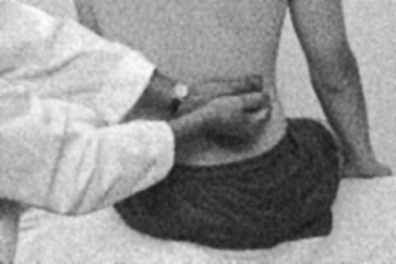
(Multiple Choice)
4.8/5 (74)
(74) A patient reports having abdominal distention. The nurse observes that the patient's sclerae are yellow. Which abnormal finding does the nurse anticipate on examination of this patient's abdomen?
(Multiple Choice)
4.9/5 (85)
(85) Alcoholism increases the risk of cancers of the gastrointestinal tract. Which cancer risk is increased in patients with alcoholism? (Select all that apply.)
(Multiple Choice)
4.9/5 (72)
(72) 
Filters
- Essay(0)
- Multiple Choice(0)
- Short Answer(0)
- True False(0)
- Matching(0)