



 Chat with AI
Exam 5: Human Origins

Exam 1: Anthropology in a Global Age66 Questions
Exam 2: Culture70 Questions
Exam 3: Fieldwork and Ethnography63 Questions
Exam 4: Language62 Questions
Exam 5: Human Origins69 Questions
Exam 6: Race and Racism70 Questions
Exam 7: Ethnicity and Nationalism63 Questions
Exam 8: Gender67 Questions
Exam 9: Sexuality62 Questions
Exam 10: Kinship, Family, and Marriage72 Questions
Exam 11: Class and Inequality68 Questions
Exam 12: The Global Economy68 Questions
Exam 13: Migration62 Questions
Exam 14: Politics and Power70 Questions
Exam 15: Religion70 Questions
Exam 16: Health, Illness, and the Body69 Questions
Exam 17: Art and Media63 Questions
Select questions type


Around 15,000 yBP, where had modern Homo sapiens migrated to from Asia?
(Multiple Choice)
5.0/5  (67)
(67) Calculations of DNA mutation rates indicate that Native Americans migrated about ________ yBP.
(Multiple Choice)
4.9/5 (85)
(85) Which of the following emphasizes the deep underlying connection among all humans today?
(Multiple Choice)
4.7/5 (83)
(83) A recent attempt to undermine evolution tries to avoid religions and instead claims that hard evidence shows life is too complex to be random. What is this theory called?
(Multiple Choice)
4.9/5 (84)
(84) What significant fossil discoveries have emerged from the site at Middle Awash River valley in Ethiopia?
(Multiple Choice)
4.9/5 (80)
(80) Discuss sickle cell anemia as an example of natural selection at work in the human population.
(Essay)
4.9/5 (94)
(94) Explain the process of fossilization. Include some of the critical factors necessary for fossilization of an organism to be successful. Why are fossils rare?
(Essay)
4.8/5 (77)
(77) The role of ultraviolet light is significant in human evolution because: 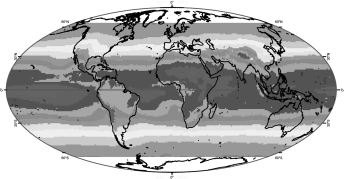
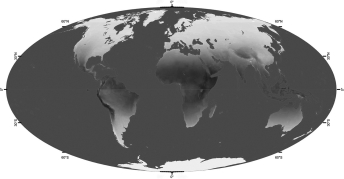
(Multiple Choice)
4.7/5 (75)
(75) The chance discovery of the Kennewick man in 1996 opened a window to early human life in North America. This success might not have been possible, however, without researchers making comparisons of the remains to nearby plants, animals, and other parts of the remains to understand the context. This approach to dating is called ________.
(Multiple Choice)
4.9/5 (78)
(78) Which of the following was a contemporary hominid with Australopithecus, but had significantly increased cranial capacity?
(Multiple Choice)
4.7/5 (73)
(73) Without gene mutations there would be no evolution. Explain why this is the case.
(Essay)
5.0/5 (94)
(94) What is one type of cultural adaptation to ultraviolet radiation?
(Multiple Choice)
4.8/5 (79)
(79) Until the mid-1800s, most peppered moths in Great Britain were white, while a few were dark. Why did these groups switch during the Industrial Revolution, when most of the peppered moth population evolved to have the darker coloration?
(Multiple Choice)
4.8/5 (75)
(75) What is one possible explanation offered by some scholars to explain the "Hobbit" of Flores Island, Indonesia? 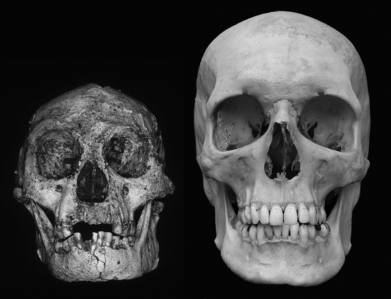
(Multiple Choice)
4.8/5 (79)
(79) At about what date do DNA studies place the migration of humans out of Africa?
(Multiple Choice)
4.8/5 (86)
(86) What is one of the unintended side effects of the Lascaux cave paintings discovery?
(Multiple Choice)
4.8/5 (80)
(80) What are the five categories in which paleoanthropologists have grouped our immediate ancestors? Briefly define each.
(Essay)
4.9/5 (73)
(73) 
Filters
- Essay(0)
- Multiple Choice(0)
- Short Answer(0)
- True False(0)
- Matching(0)