



 Chat with AI
Exam 4: Language

Exam 1: Anthropology in a Global Age66 Questions
Exam 2: Culture70 Questions
Exam 3: Fieldwork and Ethnography63 Questions
Exam 4: Language62 Questions
Exam 5: Human Origins69 Questions
Exam 6: Race and Racism70 Questions
Exam 7: Ethnicity and Nationalism63 Questions
Exam 8: Gender67 Questions
Exam 9: Sexuality62 Questions
Exam 10: Kinship, Family, and Marriage72 Questions
Exam 11: Class and Inequality68 Questions
Exam 12: The Global Economy68 Questions
Exam 13: Migration62 Questions
Exam 14: Politics and Power70 Questions
Exam 15: Religion70 Questions
Exam 16: Health, Illness, and the Body69 Questions
Exam 17: Art and Media63 Questions
Select questions type


Gender differences in communication often give rise to stereotypes. A common stereotype in the United States suggests that women never seem to stop talking. How does this contradict research about men?
(Multiple Choice)
4.8/5  (93)
(93) The Hopi language has verb tenses that differ from those of English. Benjamin Whorf's linguistic research among the Hopi people suggested that they have:
(Multiple Choice)
4.8/5 (75)
(75) Many animals, such as dolphins and great apes, communicate with each other through gestures and sounds. Human language utilizes sounds, gestures, and ________.
(Multiple Choice)
4.9/5 (77)
(77) Translating certain words into another language is very difficult. The word leader, for example, seems obvious to us, but can take on a different significance when translated into another language. This demonstrates that language:
(Multiple Choice)
4.9/5 (62)
(62) In 1996, the Oakland School District proposed the use of Ebonics in the school system. What did the subsequent revision of that proposal suggest about African American English?
(Multiple Choice)
5.0/5 (84)
(84) According to the textbook, what is happening to human languages worldwide?
(Multiple Choice)
4.9/5 (64)
(64) American women are far more likely than men to distinguish between colors like teal and turquoise, or magenta and purple. What is this an example of?
(Multiple Choice)
4.7/5 (78)
(78) The work of the Summer Institute of Linguistics presents a challenge to anthropology because it:
(Multiple Choice)
4.8/5 (80)
(80) While anthropologists have gone to lengths to show that languages are linguistically equal, languages often exist in a hierarchical manner within a given place. Compare how language and power intersect by discussing how nonprestige languages may be marginalized, such as in the case of Spanish speakers in the United States. How are boundaries between language policed, and what happens when speakers "code switch" in different cultural contexts?
(Essay)
4.9/5 (78)
(78) We sometimes "signal" interest in someone without the use of words, which is part of how we establish a relationship with another person. How would an anthropologist describe our behavior?
(Multiple Choice)
4.7/5 (94)
(94) Linguistic anthropologists have shown that languages are disappearing at an unprecedented rate. Many argue that efforts should be made to preserve these endangered languages by documenting their lexicon and grammar. Why are anthropologists interested in preserving languages? Do you agree with these efforts? Why or why not? Which types of knowledge are embedded in language that might make them worthwhile to preserve? What are some of the techniques or strategies that have been used to either preserve or revitalize less-prominent languages? Discuss two examples where anthropologists have been involved in preserving endangered languages, and reflect on how information technology may be used in language revitalization.
(Essay)
4.9/5 (74)
(74) Don Kulick's 2003 study explored the gendered understandings of the word no. What did Kulick find? How might his study have implications for both linguistic anthropology and gender relations more generally? What might be one way to foster better understandings of consent across gender divides?
(Essay)
4.8/5 (74)
(74) Because few children grow up learning to speak the Lakota language, efforts have been made to preserve language samples and artifacts in tribal areas. One of the major efforts in use today is:
(Multiple Choice)
4.8/5 (88)
(88) In Montreal, Quebec, Canada, signs posted in public view (such as for streets or restaurants) are required to show the words in French first, usually above English, and in larger type sizes. This reflects: 
(Multiple Choice)
4.8/5 (74)
(74) We communicate with verbal language, but sometimes words cannot convey everything. Sometimes we may unknowingly resort to a system of body movements as well as a collection of noises and tone of voice in order to fully convey ________. 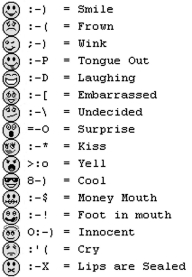
(Multiple Choice)
4.7/5 (75)
(75) At present, only 32 percent of the population in developing countries uses the Internet. This reflects what aspect of information technology development?
(Multiple Choice)
4.9/5 (78)
(78) What has the effort to preserve the Native American Lakota language, spoken by about 25,000 people in the United States, led to?
(Multiple Choice)
5.0/5 (80)
(80) According to your textbook, preserving endangered languages is an important goal of linguistic anthropologists. Discuss the potentially ambiguous role that information technology and the digital divide may play in language preservation. Using examples from the text, assess the potential benefits that may accrue as members of less-prominent languages gain access to community technology and cross over the "digital divide." Consider how the tendency of prominent languages to crowd out speakers of lesser-spoken languages may be accelerated with increased cultural contact and exposure to global languages. How is the digital divide related to issues of language extinction?
(Essay)
4.8/5 (68)
(68) 
Filters
- Essay(0)
- Multiple Choice(0)
- Short Answer(0)
- True False(0)
- Matching(0)