



 Chat with AI
Exam 10: Inner Product Spaces

Exam 1: Systems of Linear Equations57 Questions
Exam 2: Euclidean Space48 Questions
Exam 3: Matrices76 Questions
Exam 4: Subspaces60 Questions
Exam 5: Determinants48 Questions
Exam 6: Eigenvalues and Eigenvectors75 Questions
Exam 7: Vector Spaces45 Questions
Exam 8: Orthogonality75 Questions
Exam 9: Linear Transformations60 Questions
Exam 10: Inner Product Spaces45 Questions
Exam 11: Additional Topics and Applications75 Questions
Select questions type


In a weighted least squares regression, the average of the weights must equal 1.
(True/False)
4.9/5  (62)
(62) If V is a finite-dimensional inner product space, S is a nonzero subspace of V and
 is nonzero, then for every
 in V,
 .
is nonzero, then for every
in V,
. (True/False)
4.9/5 (73)
(73) Use the Gram-Schmidt process to convert the set
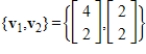 to an orthonormal basis with respect to the inner product
 .
to an orthonormal basis with respect to the inner product
. (Essay)
4.7/5 (83)
(83) If f is a positive even function on
 , then for every k,
 and
 in the Fourier approximation of f.
, then for every k, and in the Fourier approximation of f. (True/False)
4.8/5 (85)
(85)  for the odd function
 .
Use the Gram-Schmidt process to convert the set
 to an orthonormal basis with respect to the inner product
 .
to an orthonormal basis with respect to the inner product
. (Essay)
4.8/5 (86)
(86)  for
 .
 .
Determine the values of a (if any) that will make the given set of vectors orthogonal in
 with respect to the inner product
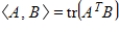 .
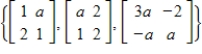
with respect to the inner product
.
(Essay)
4.7/5 (63)
(63)  , where
 , where
 and the inner product on
 is
 .
If
 is an inner product on a vector space V, and v is any vector in V, then
 defined by
 is a linear transformation.
is an inner product on a vector space V, and v is any vector in V, then
defined by
is a linear transformation. (True/False)
4.8/5 (71)
(71)  , where
 and
 .
If
 is an inner product on a vector space V, and
 is an invertible linear transformation, then
 is also an inner product on V.
is an inner product on a vector space V, and
is an invertible linear transformation, then
is also an inner product on V. (True/False)
4.8/5 (78)
(78) Find the discrete Fourier approximation
 for
 based on the table information.
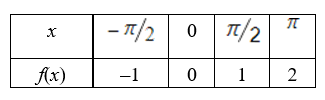
for
based on the table information. (Essay)
5.0/5 (81)
(81) If f is an odd function on
 , then in the Fourier approximation of f, we have
 for every k.
, then in the Fourier approximation of f, we have
for every k. (True/False)
4.9/5 (79)
(79) If
 is an orthonormal set in an inner product space V, and
 is a
 orthogonal matrix, then
 is also an orthonormal set in V.
is an orthonormal set in an inner product space V, and
is a
orthogonal matrix, then
is also an orthonormal set in V. (True/False)
4.9/5 (83)
(83)  , where the inner product on
 is
 for
 .
If
 is the nth-order Fourier approximation to f, and
 is the nth-order Fourier approximation to g, and
 are scalars, then the nth-order Fourier approximation to
 is
 .
is the nth-order Fourier approximation to f, and
is the nth-order Fourier approximation to g, and
are scalars, then the nth-order Fourier approximation to
is
. (True/False)
4.9/5 (81)
(81) If u, v are vectors in an inner product space V, then u is orthogonal to v if and only if
 .
. (True/False)
4.9/5 (86)
(86)  for
 .

Find the discrete Fourier approximation
 for
 based on the table information.
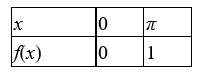
for
based on the table information.
(Essay)
4.8/5 (85)
(85) 
Filters
- Essay(0)
- Multiple Choice(0)
- Short Answer(0)
- True False(0)
- Matching(0)