



 Chat with AI
Exam 17: Postpartum Physiologic Adaptations

Exam 1: Maternity and Women's Health Care Today26 Questions
Exam 2: The Nurse's Role in Maternity and Women's Health Care24 Questions
Exam 3: Ethical, Social, and Legal Issues27 Questions
Exam 4: Reproductive Anatomy and Physiology24 Questions
Exam 5: Hereditary and Environmental Influences on Childbearing25 Questions
Exam 6: Conception and Prenatal Development24 Questions
Exam 7: Physiologic Adaptations to Pregnancy56 Questions
Exam 8: Psychosocial Adaptations to Pregnancy24 Questions
Exam 9: Nutrition for Childbearing53 Questions
Exam 10: Antepartum Fetal Assessment38 Questions
Exam 11: Perinatal Education27 Questions
Exam 12: Processes of Birth40 Questions
Exam 13: Nursing Care During Labor and Birth43 Questions
Exam 14: Intrapartum Fetal Surveillance45 Questions
Exam 15: Pain Management During Childbirth47 Questions
Exam 16: Nursing Care During Obstetric Procedures52 Questions
Exam 17: Postpartum Physiologic Adaptations36 Questions
Exam 18: Postpartum Psychosocial Adaptations29 Questions
Exam 19: Normal Newborn: Processes of Adaptation29 Questions
Exam 20: Assessment of the Normal Newborn26 Questions
Exam 21: Care of the Normal Newborn24 Questions
Exam 22: Infant Feeding35 Questions
Exam 23: Home Care of the Infant24 Questions
Exam 24: The Childbearing Family with Special Needs29 Questions
Exam 25: Complications of Pregnancy70 Questions
Exam 26: Concurrent Disorders During Pregnancy25 Questions
Exam 27: Intrapartum Complications37 Questions
Exam 28: Postpartum Maternal Complications44 Questions
Exam 29: High-Risk Newborn: Complications Associated with Gestational Age and Development23 Questions
Exam 30: High-Risk Newborn: Acquired and Congenital Conditions24 Questions
Exam 31: Family Planning25 Questions
Exam 32: Infertility12 Questions
Exam 33: Preventive Care for Women7 Questions
Exam 34: Women's Health Problems19 Questions
Exam 32: Infertility12 Questions
Exam 33: Preventive Care for Women7 Questions
Exam 34: Women's Health Problems19 Questions
Select questions type


If the client's white blood cell (WBC) count is 25,000/mm³ on her second postpartum day, which action should the nurse take?
(Multiple Choice)
5.0/5  (69)
(69) Which is the best measure to prevent abdominal distention following a cesarean birth?
(Multiple Choice)
5.0/5 (84)
(84) In which area should the nurse expect that the postbirth care of a cesarean section will differ from that of a vaginal birth?
(Multiple Choice)
4.9/5 (83)
(83) The postpartum nurse has completed discharge teaching for a client being discharged after an uncomplicated vaginal birth. Which statement by the client indicates that further teaching is needed?
(Multiple Choice)
4.9/5 (83)
(83) The nurse is conducting discharge teaching for a client going home after a cesarean birth. Which signs and symptoms should the client be taught to report? (Select all that apply.)
(Multiple Choice)
4.7/5 (82)
(82) When assessing the A of the acronym REEDA, the nurse should assess the:
(Multiple Choice)
4.9/5 (74)
(74) A postpartum client asks, "Will these stretch marks go away?" Which is the nurse's best response?
(Multiple Choice)
4.8/5 (86)
(86) If the fundus is palpated on the right side of the abdomen above the expected level, the nurse should suspect that the client has which?
(Multiple Choice)
4.9/5 (78)
(78) To assess fundal contraction 6 hours after cesarean birth, which action should the nurse perform?
(Multiple Choice)
4.8/5 (89)
(89) A postpartum client overhears the nurse tell the health care provider that she has a positive Homans sign and asks what it means. Which is the nurse's best response?
(Multiple Choice)
4.9/5 (87)
(87) A pregnant client asks when the dark line on her abdomen (linea nigra) will go away. The nurse knows the pigmentation will decrease after birth because of:
(Multiple Choice)
4.9/5 (85)
(85) The nurse is performing a postpartum assessment on a client and concludes with the assessment depicted in the figure. Which is the rationale for performing the depicted assessment? 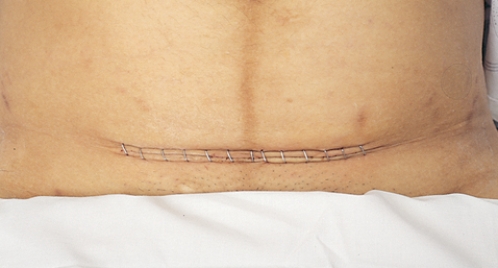
(Multiple Choice)
4.7/5 (80)
(80) The nurse is providing care to a patient 2 hours after a cesarean section. In the hand-off report, the preceding nurse indicated that the patient's lochia was scant rubra. On initial assessment, the oncoming nurse notes the patient's peripad is saturated with lochia rubra immediately after breastfeeding her infant. What is the nurse's priority action with this finding?
(Multiple Choice)
4.8/5 (76)
(76) To facilitate adequate urinary elimination during the postpartum period, the nurse should incorporate which intervention in the plan of care?
(Multiple Choice)
4.7/5 (81)
(81) The nurse is caring for a client who delivered by cesarean birth 6 hours ago. The nurse assesses light bilateral rales when auscultating lung sounds. Which priority action should the nurse take?
(Multiple Choice)
4.8/5 (79)
(79) The nurse is providing care to a patient who delivered a 3525-g infant 14 hours ago. The nurse palpates the fundus of the uterus as firm and at the umbilicus. What is the nurse's priority action related to this finding?
(Multiple Choice)
4.8/5 (90)
(90) 
Filters
- Essay(0)
- Multiple Choice(0)
- Short Answer(0)
- True False(0)
- Matching(0)