



 Chat with AI
Exam 3: Population Geography: Shaping the Human Mosaic

Exam 1: Human Geography: A Cultural Approach192 Questions
Exam 2: Geographies of Cultural Difference: One World or Many183 Questions
Exam 3: Population Geography: Shaping the Human Mosaic229 Questions
Exam 4: The Geography of Language: Locating the Spoken Word211 Questions
Exam 5: Geographies of Race and Ethnicity: Melting Pot or Salad Bowl222 Questions
Exam 6: Political Geography: A Divided World262 Questions
Exam 7: The Geography of Religion: Space and Places of Sacredness278 Questions
Exam 8: The Geography of Agriculture and Food: Shaping the Land, Feeding the World248 Questions
Exam 9: Development Geography: Transforming Landscapes of Well-Being184 Questions
Exam 10: Urban Geography: A World of Cities150 Questions
Select questions type


Approximately how many people today live outside the country of their birth?
(Multiple Choice)
4.8/5  (82)
(82) All of the following tend to be environmental characteristics of sparsely populated areas EXCEPT:
(Multiple Choice)
4.7/5 (90)
(90) All societies pass along their wealth, property, and prestige from father to son.
(True/False)
4.9/5 (85)
(85) Which two countries exhibit the greatest gender imbalance, with men greatly outnumbering women?
(Multiple Choice)
4.9/5 (77)
(77) 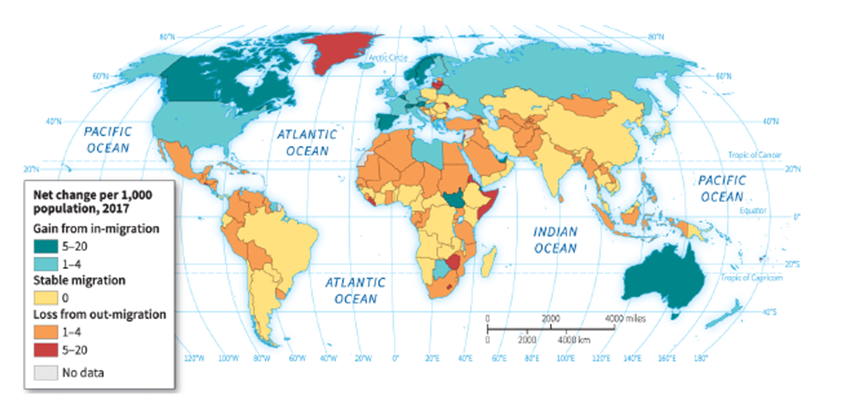 -According to the map, which country or region is NOT experiencing positive migration?
 (Multiple Choice)
4.8/5 (84)
(84) 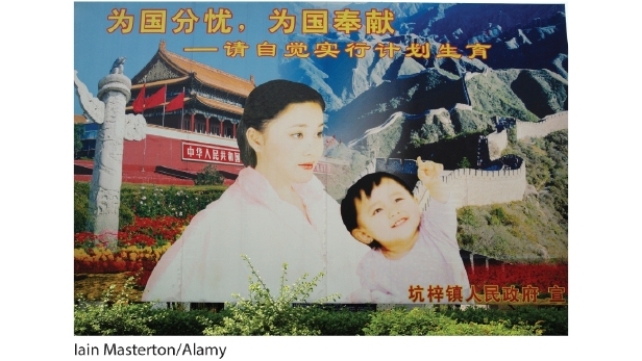 -The poster shown here would MOST likely be found in which country?
 (Multiple Choice)
4.8/5 (90)
(90) Since the time Thomas Malthus's essay An Essay on the Principle of Population was published, the world population has doubled _____ times, while food supplies have doubled _____ times.
(Multiple Choice)
4.8/5 (79)
(79) 
Filters
- Essay(0)
- Multiple Choice(0)
- Short Answer(0)
- True False(0)
- Matching(0)