



 Chat with AI
Exam 1: The Basics

Exam 1: The Basics329 Questions
Exam 2: Linear Equations and Inequalities310 Questions
Exam 3: Linear Equations and Inequalities in Two Variables155 Questions
Exam 4: Systems of Linear Equations135 Questions
Exam 5: Exponents and Polynomials300 Questions
Exam 6: Factoring295 Questions
Exam 7: Rational Expressions302 Questions
Exam 8: Roots and Radicals215 Questions
Exam 9: Quadratic Equations212 Questions
Select questions type


Find the perimeter and area of the figure. 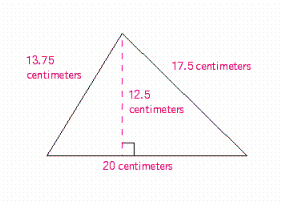 perimeter = __________ centimeters area = __________ centimeters
 (Essay)
4.8/5  (74)
(74) Use the associative property to rewrite the expression, and then simplify the result. 
(Multiple Choice)
5.0/5 (84)
(84) 

Fibonacci sequence = 1, 1, 2, 3, 5, 8, . . . Any number in the Fibonacci sequence is a Fibonacci number . Name the Fibonacci numbers that are prime numbers and less than 10.
(Multiple Choice)
4.9/5 (83)
(83) Use the rule for order of operations to simplify the expression as much as possible. 
(Multiple Choice)
4.7/5 (74)
(74) Simplify the expression  and then factor the result into the product of primes. (Notice one of the factors of the answer is 3.)
 (Essay)
4.9/5 (75)
(75) Use the associative property to rewrite the expression, and then simplify the result. 
(Multiple Choice)
4.9/5 (70)
(70) 


 .
State the property or properties that justify the following statement. 
(Multiple Choice)
4.9/5 (83)
(83) Factor the following number into the product of primes. List the prime factors from smallest to largest. If the number is not factorable, indicate this. 
(Multiple Choice)
4.8/5 (91)
(91) Work the following problem using the rule for addition of real numbers. 
(Short Answer)
4.9/5 (70)
(70) 
Find the LCD for each of the following; then perform the indicated operation and reduce answer to lowest terms. 
(Essay)
4.7/5 (84)
(84) Find the next number in the sequence. 1, 4, 9, 16, 25, . . . (The sequence of squares.)
(Short Answer)
4.9/5 (68)
(68) 
Filters
- Essay(0)
- Multiple Choice(0)
- Short Answer(0)
- True False(0)
- Matching(0)