



 Chat with AI
Exam 12: An Era of Totalitarianism

Exam 1: Transition to the Modern Age: Renaissance and Reformation102 Questions
Exam 2: Political and Economic Transformation: National States, Overseas Expansion, Commercial Revolution84 Questions
Exam 3: Intellectual Transformation: the Scientific Revolution and the Age of Enlightenment86 Questions
Exam 4: The Era of the French Revolution: Affirmation of Liberty and Equality92 Questions
Exam 5: The Industrial Revolution: The Transformation of Society79 Questions
Exam 6: Thought and Culture in the Early Nineteenth Century82 Questions
Exam 7: Surge of Liberalism and Nationalism: Revolution, Counterrevolution, and Unification78 Questions
Exam 8: Thought and Culture in the Mid-Nineteenth Century: Realism, Positivism, Darwinism, and Social Criticism86 Questions
Exam 9: Europe in the Late Nineteenth Century: Modernization, Nationalism, Imperialism93 Questions
Exam 10: Modern Consciousness: New Views of Nature, Human Nature, and the Arts78 Questions
Exam 11: World War I: The West in Despair83 Questions
Exam 12: An Era of Totalitarianism88 Questions
Exam 13: World War II: Western Civilization in the Balance56 Questions
Exam 14: Europe After World War II: Recovery and Realignment, 1945-198963 Questions
Exam 15: The Troubled Present55 Questions
Select questions type


Key Terms Instructions: Please define the following key terms. Show Who? What? Where? When? Why Important?
Karl Jaspers
(Essay)
4.9/5  (85)
(85) How might different policies of the victorious powers towards Germany in the 1920s have forestalled the rise of Nazism?
(Essay)
4.8/5 (87)
(87) How may one say that the experience of Nazism illustrates the dynamic power of myth? How did myth confer power on Hitler's movement?
(Essay)
4.9/5 (81)
(81) Key Terms Instructions: Please define the following key terms. Show Who? What? Where? When? Why Important?
Pablo Picasso
(Essay)
4.8/5 (76)
(76) Key Terms Instructions: Please define the following key terms. Show Who? What? Where? When? Why Important?
"November criminals"
(Essay)
4.9/5 (78)
(78) Please use this outline map of Europe to answer the question(s).
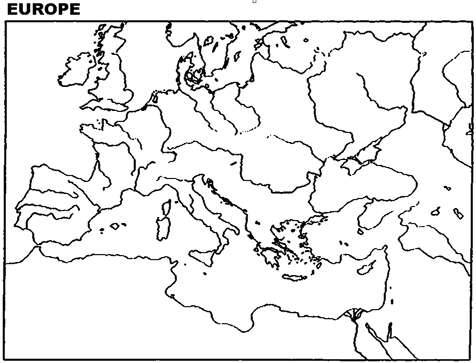 -On a map of Europe, locate the following: Brest-Litovsk, whose name is connected with a treaty; Kronstadt, the site of a naval mutiny; the Ukraine, site of a massive starvation as a result of collectivization and Petrograd, the location in the Soviet Union of which Lenin took charge.
 (Not Answered)
This question doesn't have any answer yet
The official style in art and literature of the communist regime was known as
(Multiple Choice)
4.8/5 (81)
(81) Key Terms Instructions: Please define the following key terms. Show Who? What? Where? When? Why Important?
Collectivization
(Essay)
4.9/5 (82)
(82) List some of the main elements of twentieth-century existential thought.
(Essay)
4.8/5 (79)
(79) Key Terms Instructions: Please define the following key terms. Show Who? What? Where? When? Why Important?
Lenin
(Essay)
4.7/5 (83)
(83) Please use this outline map of Europe to answer the question(s).
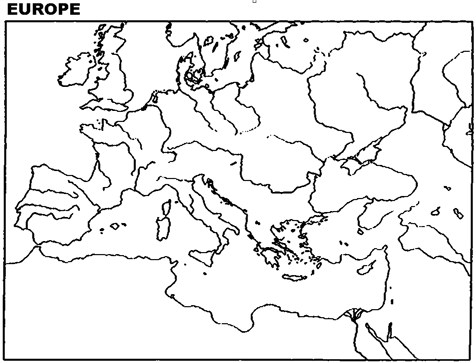 -On a map of Europe locate the areas mentioned in this chapter where fascism took hold as well the areas where democracy survived and the one new nation after World War One that was able to enact a successful democratic system.
 (Not Answered)
This question doesn't have any answer yet
Key Terms Instructions: Please define the following key terms. Show Who? What? Where? When? Why Important?
German Workers Party
(Essay)
4.7/5 (80)
(80) Key Terms Instructions: Please define the following key terms. Show Who? What? Where? When? Why Important?
Jean-Paul Sartre
(Essay)
4.8/5 (84)
(84) In what ways did the work of Lenin contribute to an ideology of world revolution?
(Essay)
4.9/5 (74)
(74) 
Filters
- Essay(0)
- Multiple Choice(0)
- Short Answer(0)
- True False(0)
- Matching(0)