
Exam 8: Complex Numbers and Polar Coordinates

arrow
  • Select Tags
search iconSearch Question
flashcardsStudy Flashcards
  • Select Tags

Write the complex number in standard form. Write the complex number in standard form.

(Essay)
5.0/5
(78)

Convert to polar coordinates with  Convert to polar coordinates with    and   between   and   ​(-21, 12   ) ​ and Convert to polar coordinates with    and   between   and   ​(-21, 12   ) ​ between Convert to polar coordinates with    and   between   and   ​(-21, 12   ) ​ and Convert to polar coordinates with    and   between   and   ​(-21, 12   ) ​ ​(-21, 12 Convert to polar coordinates with    and   between   and   ​(-21, 12   ) ​ ) ​

(Multiple Choice)
4.9/5
(90)

Find three cube roots for the complex number. Leave your answers in trigonometric form. Find three cube roots for the complex number. Leave your answers in trigonometric form.   ​ ​

(Multiple Choice)
4.8/5
(80)

Convert complex numbers to trigonometric form and then simplify the expression. Write the answer in standard form. Convert complex numbers to trigonometric form and then simplify the expression. Write the answer in standard form.   ​ ​

(Multiple Choice)
4.9/5
(72)

Find three cube roots for the complex number. Leave your answers in trigonometric form. Find three cube roots for the complex number. Leave your answers in trigonometric form.

(Essay)
4.7/5
(70)

Write the complex number in trigonometric form. Round the angle to the nearest hundredth of a degree. Write the complex number in trigonometric form. Round the angle to the nearest hundredth of a degree.

(Essay)
4.8/5
(86)

DeMoivre's Theorem can be used to find reciprocals of complex numbers. Recall from algebra that the reciprocal of x is DeMoivre's Theorem can be used to find reciprocals of complex numbers. Recall from algebra that the reciprocal of x is   , which can be expressed as   Use this fact, along with DeMoivre's Theorem, to find the reciprocal of the number below. ​   ​ , which can be expressed as DeMoivre's Theorem can be used to find reciprocals of complex numbers. Recall from algebra that the reciprocal of x is   , which can be expressed as   Use this fact, along with DeMoivre's Theorem, to find the reciprocal of the number below. ​   ​ Use this fact, along with DeMoivre's Theorem, to find the reciprocal of the number below. ​ DeMoivre's Theorem can be used to find reciprocals of complex numbers. Recall from algebra that the reciprocal of x is   , which can be expressed as   Use this fact, along with DeMoivre's Theorem, to find the reciprocal of the number below. ​   ​ ​

(Multiple Choice)
4.8/5
(79)

Solve the equation. Solve the equation.

(Essay)
4.9/5
(71)

Use your graphing calculator in polar mode to generate solutions for the equation using values of θ  that are multiples of 15°. Sketch the graph of the equation using the values from your table. Use your graphing calculator in polar mode to generate solutions for the equation using values of θ  that are multiples of 15°. Sketch the graph of the equation using the values from your table.   ​ ​

(Multiple Choice)
4.8/5
(88)

Simplify the power of i . Simplify the power of i .

(Essay)
4.7/5
(85)

Convert to rectangular coordinates. Use exact values. Convert to rectangular coordinates. Use exact values.

(Essay)
4.9/5
(77)

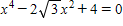
Solve the equation. Leave your solution in trigonometric form. Solve the equation. Leave your solution in trigonometric form.   ​ ​
(Multiple Choice)
4.7/5
(69)

Write the complex number in trigonometric form. Begin by sketching the graph to help find the argument θ . Write the complex number in trigonometric form. Begin by sketching the graph to help find the argument θ .

(Essay)
4.9/5
(79)

Use DeMoivre's Theorem to find the following. Write your answer in standard form. ​ Use DeMoivre's Theorem to find the following. Write your answer in standard form. ​   ​ ​

(Multiple Choice)
5.0/5
(86)

Write the complex number in trigonometric form. Round the angle to the nearest hundredth of a degree. Write the complex number in trigonometric form. Round the angle to the nearest hundredth of a degree.   ​ ​

(Multiple Choice)
5.0/5
(75)

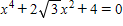
Solve the equation. Leave your solution in trigonometric form. Solve the equation. Leave your solution in trigonometric form.   ​ ​
(Multiple Choice)
4.8/5
(86)

Convert to polar coordinates. Use a calculator to find Convert to polar coordinates. Use a calculator to find   to the nearest tenth of a degree. Keep r positive and   between   and   ​   ​ to the nearest tenth of a degree. Keep r positive and Convert to polar coordinates. Use a calculator to find   to the nearest tenth of a degree. Keep r positive and   between   and   ​   ​ between Convert to polar coordinates. Use a calculator to find   to the nearest tenth of a degree. Keep r positive and   between   and   ​   ​ and Convert to polar coordinates. Use a calculator to find   to the nearest tenth of a degree. Keep r positive and   between   and   ​   ​ ​ Convert to polar coordinates. Use a calculator to find   to the nearest tenth of a degree. Keep r positive and   between   and   ​   ​ ​

(Multiple Choice)
4.9/5
(86)

Combine the complex numbers. Combine the complex numbers.   ​ ​

(Multiple Choice)
4.7/5
(77)

Graph the equation. Graph the equation.   ​ ​

(Multiple Choice)
4.9/5
(70)

Use DeMoivre's Theorem to find the following. Write your answer in standard form. Use DeMoivre's Theorem to find the following. Write your answer in standard form.     ​   ​

(Multiple Choice)
4.7/5
(75)
Showing 121 - 140 of 177
close modal

Filters

  • Essay(0)
  • Multiple Choice(0)
  • Short Answer(0)
  • True False(0)
  • Matching(0)