



 Chat with AI
Exam 15: The Chemistry of Household Products

Exam 1: Molecular Reasons72 Questions
Exam 2: The Chemists Toolbox78 Questions
Exam 3: Atoms and Elements88 Questions
Exam 4: Molecules, Compounds, and Chemical Reactions83 Questions
Exam 5: Chemical Bonding79 Questions
Exam 6: Organic Chemistry76 Questions
Exam 7: Light and Color66 Questions
Exam 8: Nuclear Chemistry73 Questions
Exam 9: Energy for Today72 Questions
Exam 10: Energy for Tomorrow: Solar and Other Renewable Energy Sources70 Questions
Exam 11: The Air Around Us72 Questions
Exam 12: The Liquids and Solids Around Us: Especially Water75 Questions
Exam 13: Acids and Bases: the Molecules Responsible for Sour and Bitter74 Questions
Exam 14: Oxidation and Reduction71 Questions
Exam 15: The Chemistry of Household Products68 Questions
Exam 16: Biochemistry and Biotechnology71 Questions
Exam 17: Drugs and Medicine: Healing, Helping, and Hurting70 Questions
Exam 18: The Chemistry of Food66 Questions
Exam 19: Nanotechnology Online Only33 Questions
Select questions type


A polymer that softens when heated or hardens when cooled is known as a(n) _____.
(Multiple Choice)
4.8/5  (82)
(82) Which of these are not molecular forces that hold hair strands together?
I. Disulfide linkages
II. Hydrogen bonds
III. Nonpolar hydrocarbon tails
(Multiple Choice)
4.8/5 (82)
(82) Which of these substances is secreted from the glands on the scalp to keep hair from drying out?
(Multiple Choice)
4.8/5 (78)
(78) Which of the following is/are true of colloidal solutions?
I. Groups of molecules clump together in colloidal solutions to form small particles.
II. A laser beam cannot be seen when it is passed through colloidal solutions.
III. A laser beam can be seen clearly when it is passed through colloidal solutions.
IV. Incident light passes through colloidal solutions without scattering/
(Multiple Choice)
4.8/5 (86)
(86) Identify the type of detergent the given structure represents. 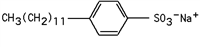
(Multiple Choice)
4.9/5 (81)
(81) Which of these is the primary problem with alkylbenzenesufonates (ABS) detergents?
(Multiple Choice)
4.8/5 (68)
(68) Which of these substances are not found in ordinary laundry detergents?
(Multiple Choice)
4.9/5 (73)
(73) Identify the characteristic(s) of a soap.
I. It acts at surfaces.
II. It contains a polar hydrocarbon tail.
III. Its abundance in water results in micelles.
(Multiple Choice)
4.9/5 (78)
(78) Which of these represent(s) characteristic(s) of LAS detergents but not of ABS detergents?
I. They are biodegradable.
II. They form branched alkyl chains.
III. They are anionic detergents.
(Multiple Choice)
4.8/5 (74)
(74) Which of the following is most likely to be found in the monomer of an addition polymer?
(Multiple Choice)
4.8/5 (76)
(76) Identify the substance(s) that act as the emulsifying agent(s) in a mixture of soap, water, and grease.
(Multiple Choice)
4.7/5 (76)
(76) Identify the substance used to oxidize tough stains on fabrics.
(Multiple Choice)
5.0/5 (80)
(80) Which of these substances are the primary component in conditioners?
(Multiple Choice)
4.8/5 (95)
(95) Which of these products are not an emulsion of oil and water?
I. Creams
II. Lotions
III. Foundations
IV. Perfumes
(Multiple Choice)
4.9/5 (62)
(62) When soapy water is added to grease or oil, the soap molecule's _____ interacts with nonpolar grease and its _____ interacts with polar water.
(Multiple Choice)
4.7/5 (65)
(65) 
Filters
- Essay(0)
- Multiple Choice(0)
- Short Answer(0)
- True False(0)
- Matching(0)