



 Chat with AI
Exam 5: Chemical Bonding

Exam 1: Molecular Reasons66 Questions
Exam 2: The Chemists Toolbox73 Questions
Exam 3: Atoms and Elements83 Questions
Exam 4: Molecules, Compounds, and Chemical Reactions78 Questions
Exam 5: Chemical Bonding74 Questions
Exam 6: Organic Chemistry71 Questions
Exam 7: Light and Color61 Questions
Exam 8: Nuclear Chemistry68 Questions
Exam 9: Energy for Today67 Questions
Exam 10: Energy for Tomorrow: Solar and Other Renewable Energy Sources63 Questions
Exam 11: The Air Around Us67 Questions
Exam 12: The Liquids and Solids Around Us: Especially Water70 Questions
Exam 13: Acids and Bases: the Molecules Responsible for Sour and Bitter69 Questions
Exam 14: Oxidation and Reduction66 Questions
Exam 15: The Chemistry of Household Products63 Questions
Exam 16: Biochemistry and Biotechnology66 Questions
Exam 17: Drugs and Medicine: Healing, Helping, and Hurting65 Questions
Exam 18: The Chemistry of Food66 Questions
Exam 19: Nanotechnology33 Questions
Select questions type


Which of these molecules will have a tetrahedral electron geometry and a bent molecular geometry?
(Multiple Choice)
4.8/5  (75)
(75) The element with the highest electronegativity is _________.
(Multiple Choice)
4.8/5 (72)
(72) Which of these will not form a positive ion in an ionic compound?
(Multiple Choice)
4.9/5 (87)
(87) Which of these molecules will have a trigonal pyramidal molecular geometry?
(Multiple Choice)
4.8/5 (82)
(82) Which of these is the correct formula for sodium phosphide?
(Multiple Choice)
4.8/5 (79)
(79) List the elements Na, K, Al, Cl, Cs in order of decreasing electronegativity (from greatest to least).
(Multiple Choice)
4.7/5 (84)
(84) Which of these substances is\are covalent compound(s)?
I. CaO
II. H20
III. PF3
IV. CH4
(Multiple Choice)
4.9/5 (73)
(73) Which of these would be expected to have a linear molecular geometry?
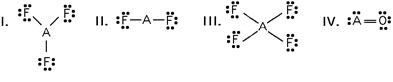
(Multiple Choice)
4.7/5 (87)
(87) Which of these molecules will have a tetrahedral electron geometry and a trigonal pyramidal molecular geometry?
(Multiple Choice)
4.8/5 (75)
(75) The [NO2] − molecule has ____ double bond(s), ____ single bond(s), ____ lone (nonbonding)pair(s)of electrons, and ____ resonance forms.
(Multiple Choice)
4.8/5 (80)
(80) 
Filters
- Essay(0)
- Multiple Choice(0)
- Short Answer(0)
- True False(0)
- Matching(0)