



 Chat with AI
Exam 10: Compound Interest and Inflation

Exam 1: Whole Numbers and Decimals210 Questions
Exam 2: Fractions143 Questions
Exam 3: Percents109 Questions
Exam 4: Equations and Formulas142 Questions
Exam 5: Bank Services32 Questions
Exam 6: Payroll106 Questions
Exam 7: Mathematics of Buying85 Questions
Exam 8: Mathematics of Selling75 Questions
Exam 9: Simple Interest114 Questions
Exam 10: Compound Interest and Inflation52 Questions
Exam 11: Annuities, Stocks, and Bonds73 Questions
Exam 12: Business and Consumer Loans121 Questions
Exam 13: Taxes and Insurance115 Questions
Exam 14: Depreciation82 Questions
Exam 15: Financial Statements and Ratios54 Questions
Exam 16: Budgeting and Business Statistics87 Questions
Select questions type


Solve the problem. 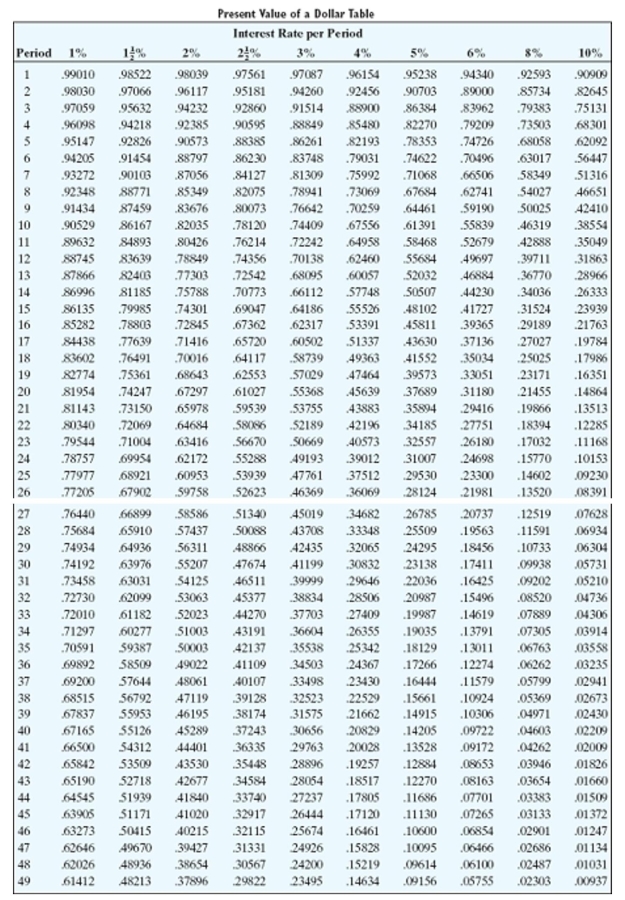 -Barbara knows that she will need to buy a new car in 5 years. The car will cost $15,000 by then. How much should she invest now at 4%, compounded quarterly, so that she will have enough to buy a new car?
 (Multiple Choice)
4.9/5  (73)
(73) Use the table to solve the problem. Round to the nearest cent. 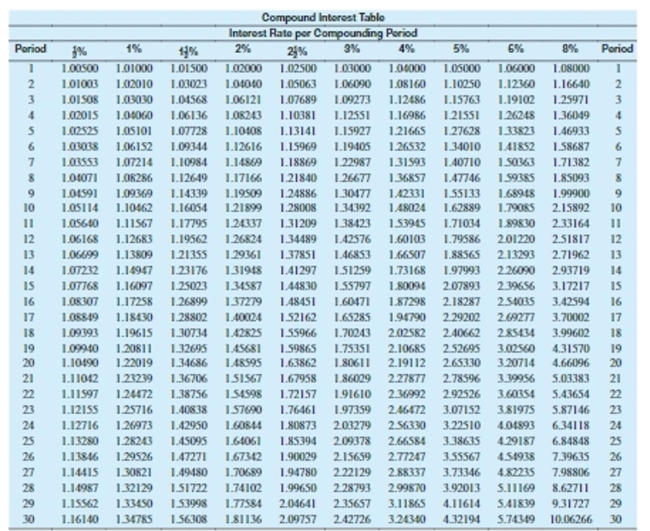 -Jenny Sherrer has $29,000 to invest and believes that she will earn 8% compounded semiannually. Find the compound amounts if she invests for 4 years and for 8 years. Then find the additional amount earned due to the longer period.
 (Multiple Choice)
4.8/5 (86)
(86) Find the interest earned. Assume  interest compounded daily, as in the following table, and use the exact number of
days. Round to the nearest cent.
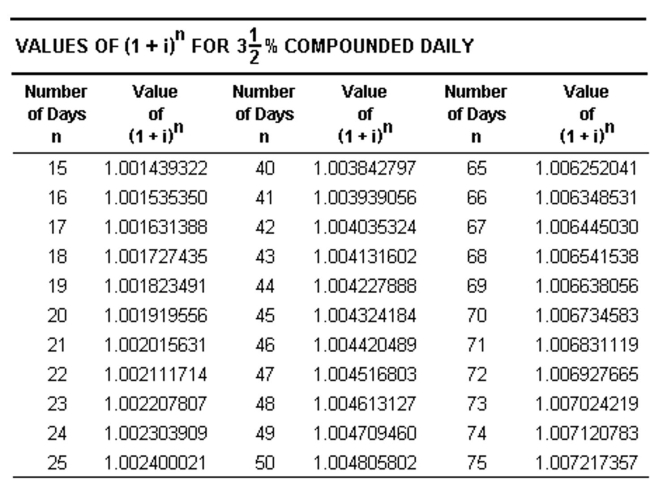 -Amount: $4,070
Deposited: Sept 27
Withdrawn: Nov 10
interest compounded daily, as in the following table, and use the exact number of
days. Round to the nearest cent.
-Amount: $4,070
Deposited: Sept 27
Withdrawn: Nov 10 (Multiple Choice)
4.9/5 (87)
(87) Use values from the compound interest table to find the compound amount. Round to the nearest cent. 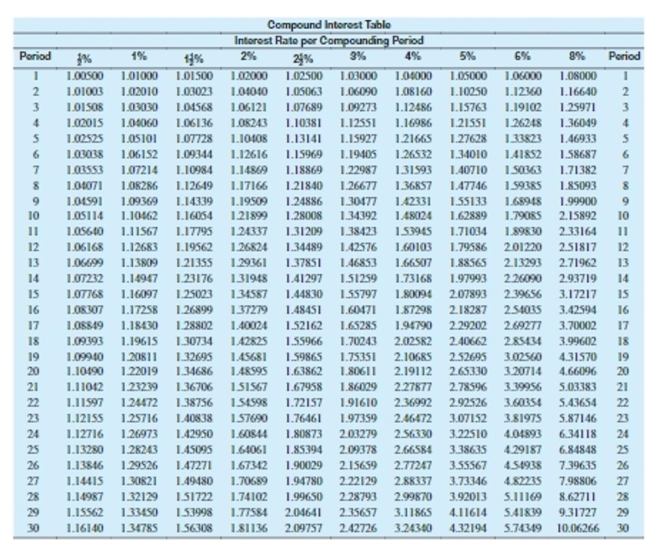 -$8,000 at 8% compounded annually for 8 years
 (Multiple Choice)
4.8/5 (89)
(89) Find the compound amount for the certificate of deposit. Assume daily compounding using the following table. Round
to the nearest cent. 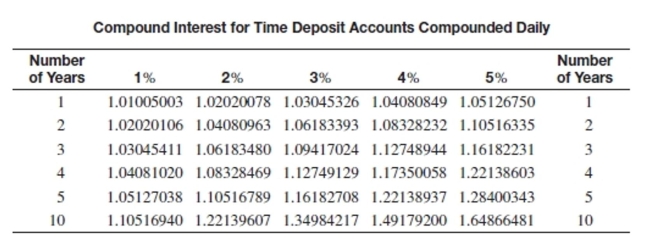 -Amount: $8,400
Rate: 5%
Years: 5
-Amount: $8,400
Rate: 5%
Years: 5 (Multiple Choice)
4.7/5 (70)
(70) 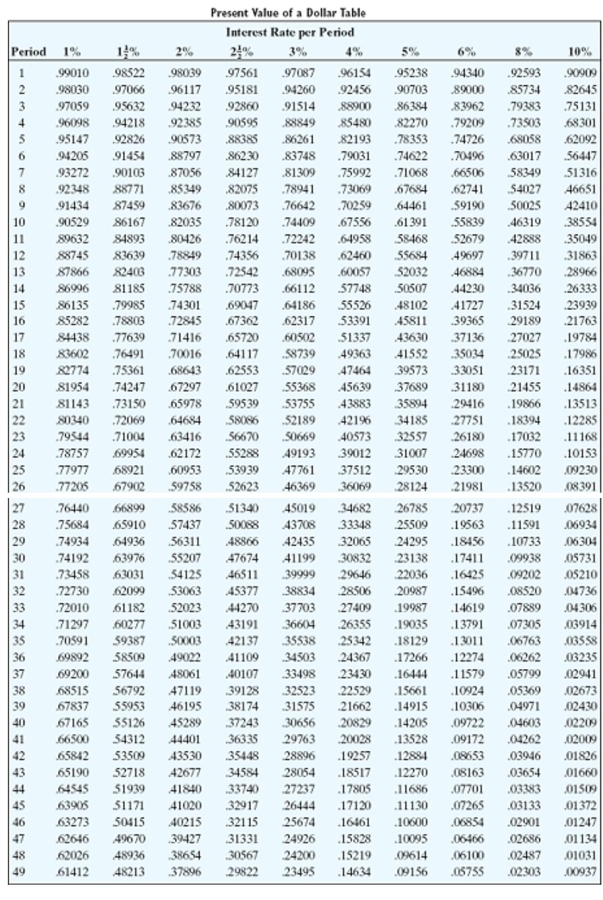 -

Use values from the compound interest table to find the compound amount. Round to the nearest cent. 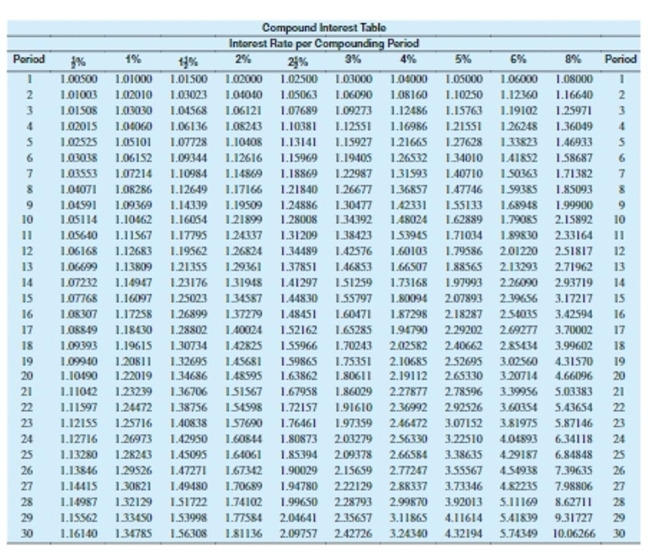 -$200 at 6% compounded annually for 15 years
 (Multiple Choice)
4.8/5 (75)
(75) 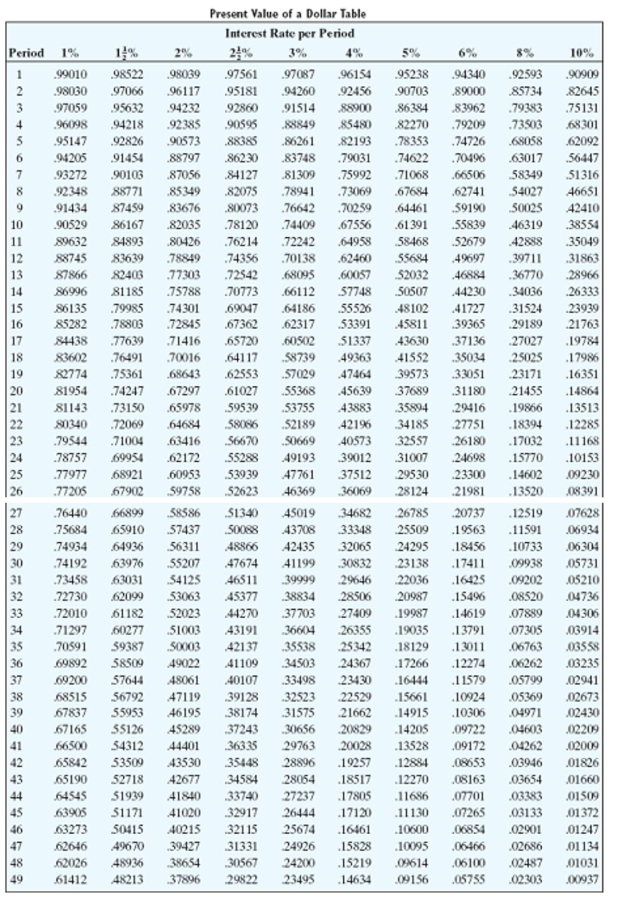 -

Use values from the compound interest table to find the compound interest. Round to the nearest cent. 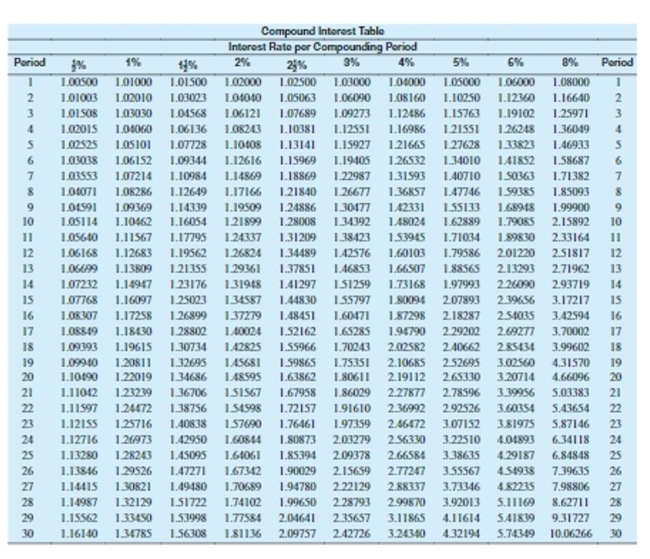 -$17,000 at 8% compounded semiannually for 6 years
 (Multiple Choice)
4.8/5 (96)
(96) Use the table to solve the problem. Round to the nearest cent. 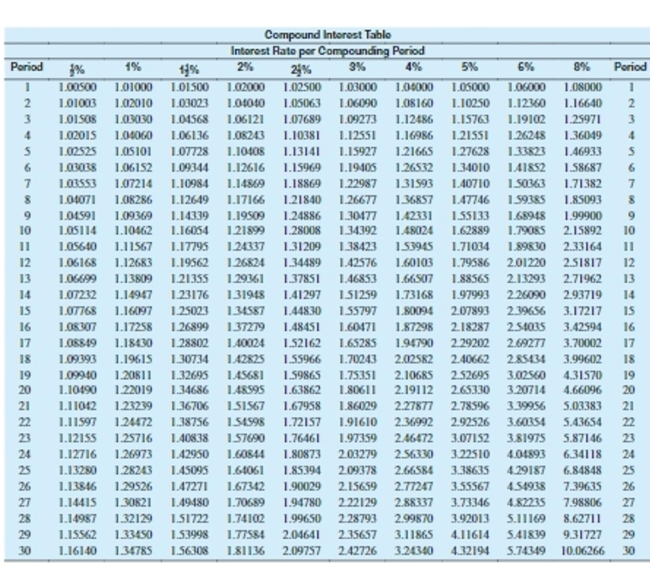 -Lexi can invest $7,330 for 3 years at 8% compounded quarterly. Find the future value.
 (Multiple Choice)
4.7/5 (89)
(89) Use values from the compound interest table to find the compound interest. Round to the nearest cent. 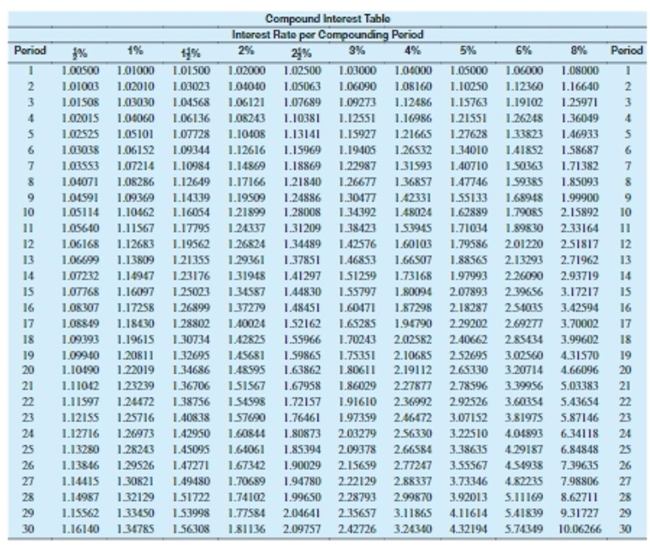 -$2,450 at 8% compounded semiannually for 6 years
 (Multiple Choice)
4.8/5 (85)
(85) Provide an appropriate response.
-Explain the difference between time deposit accounts and passbook accounts.
(Essay)
5.0/5 (82)
(82) Solve the problem. 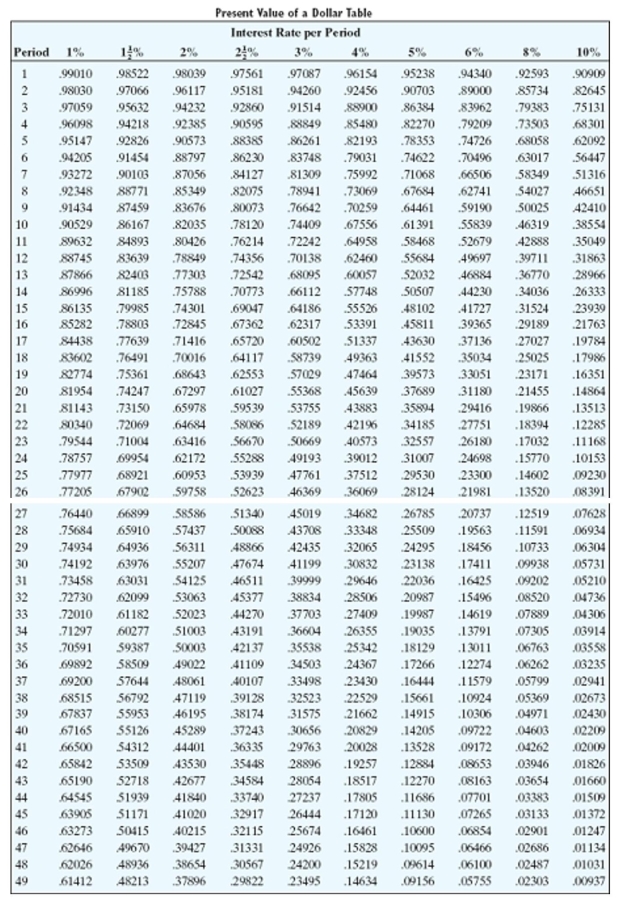 -Southwest Dry Cleaners believes that it will need new equipment in 9 years. The equipment will cost $26,000. What lump sum should be invested today at 5% compounded semiannually, to yield $26,000?
 (Multiple Choice)
4.8/5 (81)
(81) Find the simple interest for the period indicated. Then use table values to find the compound interest. Finally, find the
difference between compound interest and simple interest. Round to the nearest cent. (Interest is compounded
annually.) 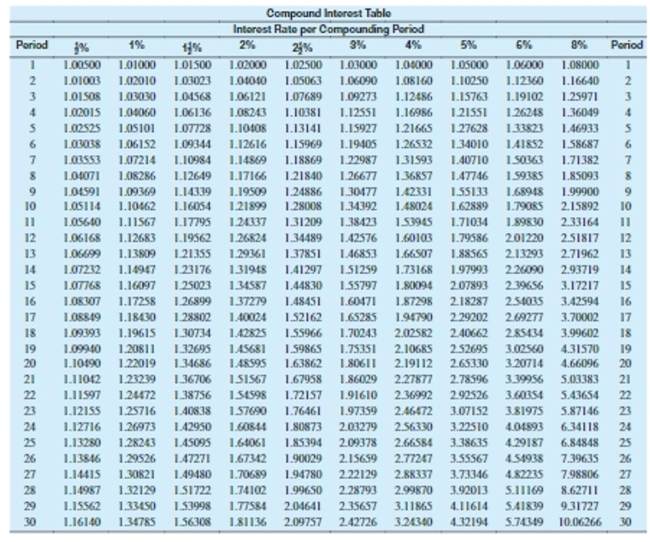 -Principal: $5,929 Rate: 5% Years: 14
 (Multiple Choice)
4.9/5 (73)
(73) Use values from the compound interest table to find the compound amount. Round to the nearest cent. 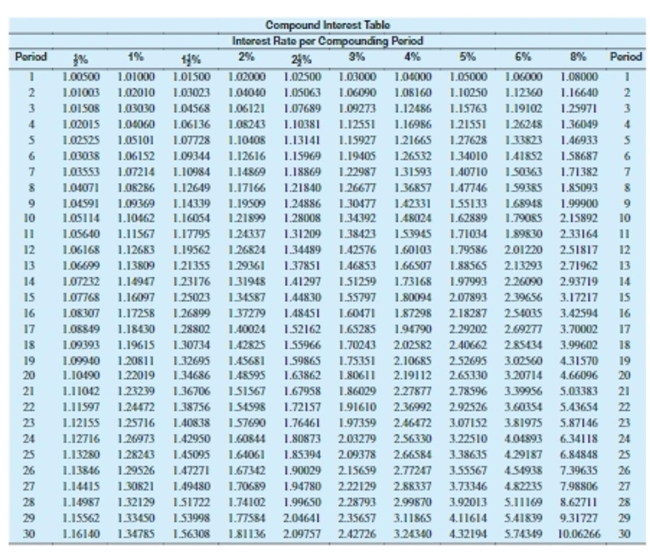 -$700 at 4% compounded quarterly for 5 years
 (Multiple Choice)
4.7/5 (78)
(78) Use values from the compound interest table to find the compound amount. Round to the nearest cent. 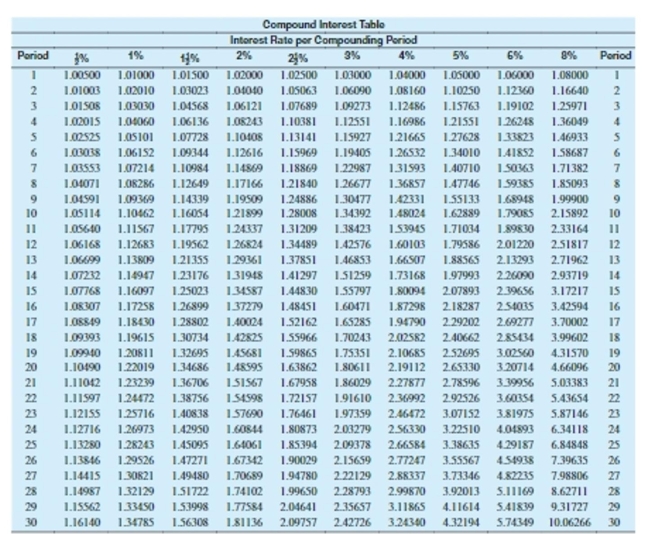 -$7,670 at 8% compounded semiannually for 12 years
 (Multiple Choice)
4.9/5 (72)
(72) Find the simple interest for the period indicated. Then use table values to find the compound interest. Finally, find the
difference between compound interest and simple interest. Round to the nearest cent. (Interest is compounded
annually.) 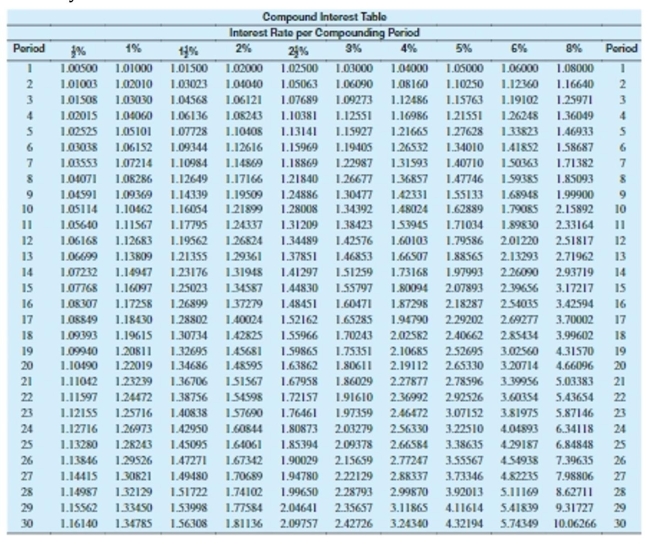 -Principal: $790 Rate: 6% Years: 16
 (Multiple Choice)
4.9/5 (86)
(86) Solve the problem. 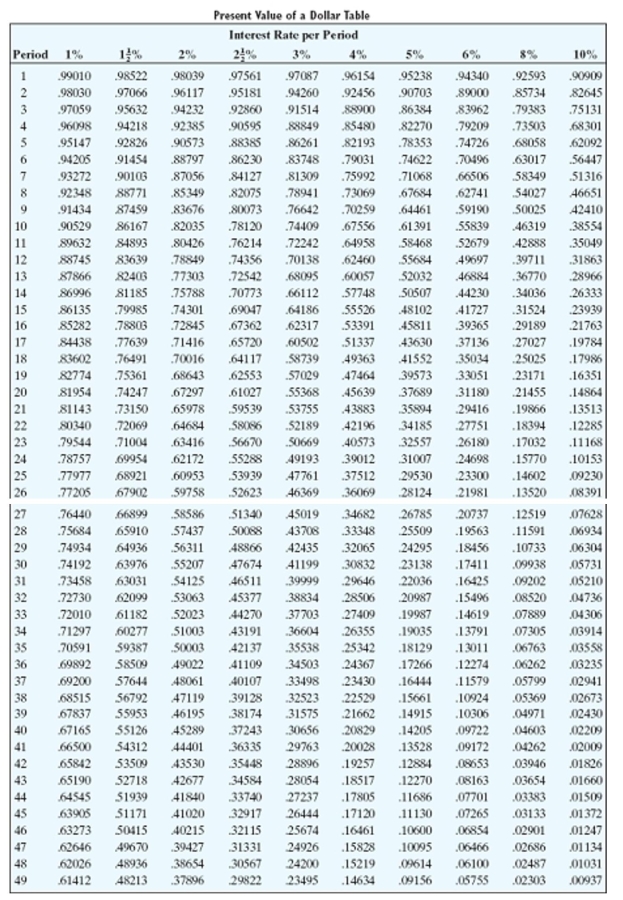 -An investment of $13,335 earns 12% interest compounded monthly for 2 years. (a)What is the future value of the investment? (Use the compound interest table.)(b)If money can be deposited at 6% compounded quarterly, find the present value of the investment.
 (Multiple Choice)
4.8/5 (94)
(94) Use the table to solve the problem. Round to the nearest cent.
-Universal Bank lends $4,300,000 for  years at 8% compounded quarterly to Shining Shores Development Company to fund the building of a condominium complex. Find the future value.
-Universal Bank lends $4,300,000 for years at 8% compounded quarterly to Shining Shores Development Company to fund the building of a condominium complex. Find the future value. (Multiple Choice)
4.9/5 (65)
(65) Use the table to solve the problem. Round to the nearest cent. 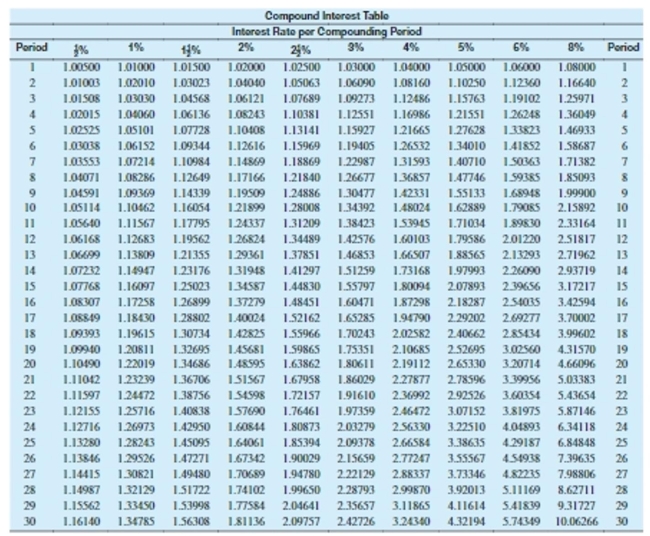 -John Lee's savings account has a balance of $282. After 9 years, what will the amount of interest be at 5% compounded semiannually?
 (Multiple Choice)
4.9/5 (75)
(75) 
Filters
- Essay(0)
- Multiple Choice(0)
- Short Answer(0)
- True False(0)
- Matching(0)