



 Chat with AI
Exam 26: Carbon-Carbon Bond Forming Reactions in Organic Synthesis

Exam 1: Structure and Bonding69 Questions
Exam 2: Acids and Bases52 Questions
Exam 3: Introduction to Organic Molecules and Functional Groups45 Questions
Exam 4: Alkanes57 Questions
Exam 5: Stereochemistry59 Questions
Exam 6: Understanding Organic Reactions45 Questions
Exam 7: Alkyl Halides and Nucleophilic Substitution61 Questions
Exam 8: Alkyl Halides and Elimination Reactions43 Questions
Exam 9: Alcohols, Ethers, and Related Compounds49 Questions
Exam 10: Alkenes43 Questions
Exam 11: Alkynes42 Questions
Exam 12: Oxidation and Reduction39 Questions
Exam 13: Mass Spectrometry and Infrared Spectroscopy35 Questions
Exam 14: Nuclear Magnetic Resonance Spectroscopy29 Questions
Exam 15: Radical Reactions42 Questions
Exam 16: Conjugation, Resonance, and Dienes43 Questions
Exam 17: Benzene and Aromatic Compounds31 Questions
Exam 18: Reactions of Aromatic Compounds54 Questions
Exam 19: Carboxylic Acids and the Acidity of the O-H Bond36 Questions
Exam 20: Introduction to Carbonyl Chemistry;29 Questions
Exam 21: Aldehydes and Ketones Nucleophilic Addition42 Questions
Exam 22: Carboxylic Acids and Derivatives46 Questions
Exam 23: Substitution Reactions of Carbonyl Compounds at the Alpha-Carbon40 Questions
Exam 24: Carbonyl Condensation Reactions45 Questions
Exam 25: Amines53 Questions
Exam 26: Carbon-Carbon Bond Forming Reactions in Organic Synthesis37 Questions
Exam 27: Pericyclic Reactions47 Questions
Exam 28: Carbohydrates38 Questions
Exam 29: Amino Acids and Proteins35 Questions
Exam 30: Synthetic Polymers36 Questions
Exam 31: Lipids39 Questions
Select questions type


What do the Suzuki reaction, the Heck reaction, and the organocuprate reaction all have in common when they react with an alkyl halide?

Free
(Multiple Choice)
4.9/5  (78)
(78) Correct Answer: Verified
A
Coupling reactions with vinyl halides are stereospecific.Which choice below best describes the expected product when trans-1-bromo-1-hexene reacts with (CH3)2CuLi?
Free
(Multiple Choice)
4.9/5 (80)
(80) Correct Answer:Verified
VerifiedA
What would be the major organic product of the following Heck reaction?
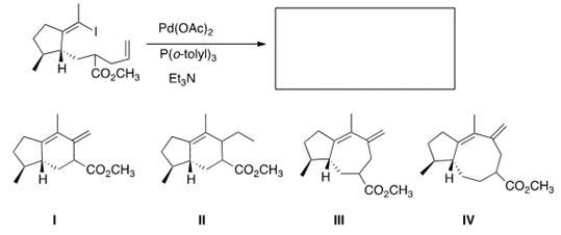
Free
(Multiple Choice)
4.7/5 (78)
(78) Correct Answer:Verified
VerifiedC
As shown below, when cis-2-butene reacts with dichlorocarbene, only the cis-1,1-dichloro-2,3-dimethylcyclopropane is formed.What can we conclude about the nature of the reaction mechanism?
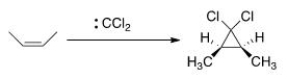
(Multiple Choice)
4.8/5 (78)
(78) What is the major organic product of the following reaction?
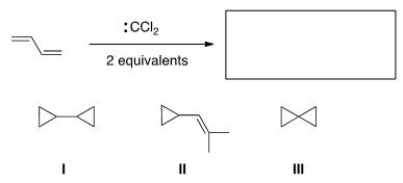
(Multiple Choice)
4.8/5 (69)
(69) Identify the major organic product of the following reaction. 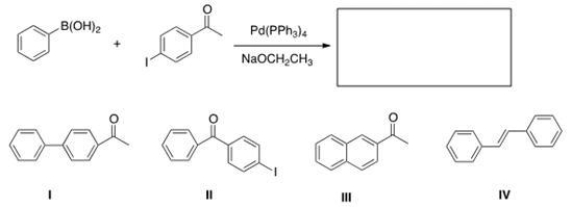
(Multiple Choice)
4.7/5 (86)
(86) Which class of compounds listed below does not react with organocuprate reagents to form a coupling product that contains a new carbon-carbon bond?
(Multiple Choice)
4.9/5 (79)
(79) Which of the following correctly describes a reaction yielding a dichorocarbene?
(Multiple Choice)
4.9/5 (75)
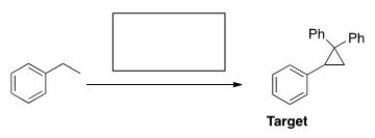
(75) What is the appropriate sequence of reagents that will produce the target molecule shown below from ethylbenzene?
(Multiple Choice)
4.8/5 (74)
(74) Many of the reactions studied in this chapter are stereospecific.Why are stereospecific reactions important?
(Multiple Choice)
5.0/5 (74)
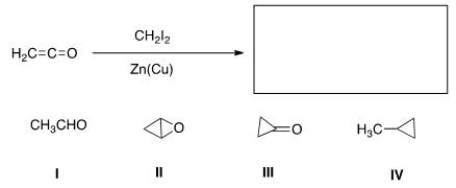
(74) What is the major organic product of the following reaction?
(Multiple Choice)
4.9/5 (75)
(75) Identify the major organic product of the following reaction. 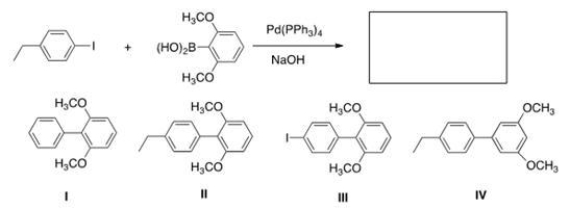
(Multiple Choice)
4.8/5 (87)
(87) Identify the structure of the organic product Y formed in the following reaction sequence. 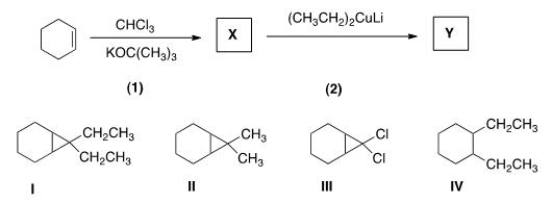
(Multiple Choice)
4.8/5 (74)
(74) Identify the structure of the major organic product that results from the following reaction. 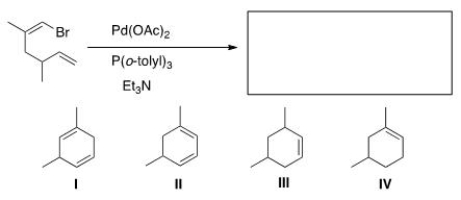
(Multiple Choice)
4.8/5 (77)
(77) What is the appropriate sequence of starting material and reagents that will produce the target molecule shown below?
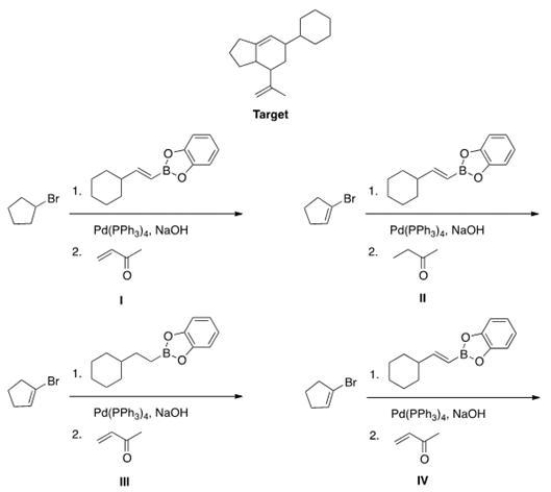
(Multiple Choice)
4.8/5 (88)
(88) Dichlorocarbene reacts with an alkene to form a cyclopropane derivative.In this reaction the dichlorocarbene acts as a(n)
(Multiple Choice)
4.9/5 (83)
(83) Which of the following descriptions does not apply to methylene?
(Multiple Choice)
4.9/5 (75)
(75) Choose the statement below that is not true about the Suzuki reaction.
(Multiple Choice)
4.8/5 (92)
(92) Identify the structure of the major organic product that results from the following reaction. 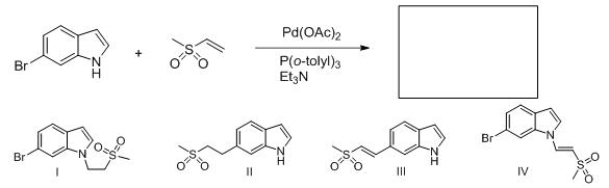
(Multiple Choice)
4.9/5 (80)
(80) 
Filters
- Essay(0)
- Multiple Choice(0)
- Short Answer(0)
- True False(0)
- Matching(0)