



 Chat with AI
Exam 5: Polynomials, Polynomial Functions, and Factoring

Exam 1: Algebra, Mathematical Models, and Problem Solving181 Questions
Exam 2: Functions and Linear Functions138 Questions
Exam 3: Systems of Linear Equations104 Questions
Exam 4: Inequalities and Problem Solving100 Questions
Exam 5: Polynomials, Polynomial Functions, and Factoring127 Questions
Exam 6: Rational Expressions, Functions, and Equations102 Questions
Exam 7: Radicals, Radical Functions, and Rational Exponents98 Questions
Exam 8: Quadratic Equations and Functions115 Questions
Select questions type


Add the polynomials. Assume all variable exponents represent whole numbers.
-
(Multiple Choice)
4.8/5  (78)
(78) Multiply the monomials. Assume any variable exponents represent whole numbers.
-
(Multiple Choice)
4.8/5 (82)
(82) Multiply the monomial and the polynomial. Assume any variable exponents represent whole numbers.
-
(Multiple Choice)
4.8/5 (79)
(79) Use the FOIL method to multiply the binomials. Assume any variable exponents represent whole numbers.
-
(Multiple Choice)
4.9/5 (90)
(90) Multiply using the rule for the product of the sum and difference of two terms. Assume any variable exponents represent whole numbers.
-
(Multiple Choice)
4.8/5 (71)
(71) Subtract the polynomials. Assume all variable exponents represent whole numbers.
-
(Multiple Choice)
4.9/5 (77)
(77) Factor the greatest common factor from the polynomial. Assume any variable exponents represent whole numbers.
-
(Multiple Choice)
4.9/5 (79)
(79) Find the product. Assume all variable exponents represent whole numbers.
-
(Multiple Choice)
4.8/5 (77)
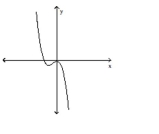
(77) Use the graph to estimate the average number of minutes a woman exercised per week if her average monthly weight loss was 4.4 pounds. A) 115 min B) 120 min C) 135 min D) 127 min Answer: B Determine whether the graph shown is the graph of a polynomial function.
-
(Multiple Choice)
4.9/5 (85)
(85) Multiply the monomial and the polynomial. Assume any variable exponents represent whole numbers.
-
(Multiple Choice)
4.9/5 (80)
(80) Solve the problem.
-A herd of bison is introduced to a wildlife refuge. The number of bison, , after years is described by the polynomial function . Use the Leading Coefficient Test to determine the graph's end behavior. What does this mean about what will eventually happen to the bison population?
(Multiple Choice)
4.9/5 (73)
(73) Use the FOIL method to multiply the binomials. Assume any variable exponents represent whole numbers.
-
(Multiple Choice)
4.8/5 (75)
(75) Give the requested components for the polynomial.
- ; the degree of each term and the coefficient of each term
(Multiple Choice)
4.9/5 (76)
(76) Multiply using one of the rules for the square of a binomial. Assume any variable exponents represent whole numbers.
-
(Multiple Choice)
4.8/5 (80)
(80) Given the polynomial functions, find the product function and the specified value.
-Let and . Find and .
(Multiple Choice)
4.8/5 (70)
(70) Find the product. Assume all variable exponents represent whole numbers.
-
(Multiple Choice)
4.7/5 (69)
(69) Multiply the monomial and the polynomial. Assume any variable exponents represent whole numbers.
-
(Multiple Choice)
5.0/5 (85)
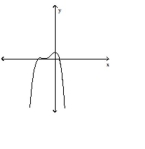
(85) Use the graph to estimate the average number of minutes a woman exercised per week if her average monthly weight loss was 4.4 pounds. A) 115 min B) 120 min C) 135 min D) 127 min Answer: B Determine whether the graph shown is the graph of a polynomial function.
-
(Multiple Choice)
4.9/5 (82)
(82) Multiply using one of the rules for the square of a binomial. Assume any variable exponents represent whole numbers.
-
(Multiple Choice)
4.8/5 (74)
(74) Multiply using the rule for the product of the sum and difference of two terms. Assume any variable exponents represent whole numbers.
-
(Multiple Choice)
4.7/5 (82)
(82) 
Filters
- Essay(0)
- Multiple Choice(0)
- Short Answer(0)
- True False(0)
- Matching(0)