



 Chat with AI
Exam 8: Exponential and Logarithmic Functions and Applications

Exam 1: Linear Equations and Inequalities in One Variable151 Questions
Exam 2: Linear Equations in Two Variables and Functions140 Questions
Exam 3: Systems of Linear Equations and Inequalities118 Questions
Exam 4: Polynomials175 Questions
Exam 5: Rational Expressions and Rational Equations121 Questions
Exam 6: Radicals and Complex Numbers168 Questions
Exam 7: Quadratic Equations, Functions and Inequalities121 Questions
Exam 8: Exponential and Logarithmic Functions and Applications144 Questions
Exam 9: Conic Sections80 Questions
Exam 10: Binomial Expansions, Sequences, and Series60 Questions
Exam 11: Online: Transformations, Piecewise-Defined Functions, and Probability83 Questions
Select questions type


Write an equation of the inverse for the one-to-one function
(Multiple Choice)
5.0/5  (68)
(68) Write the expression as a single logarithm. Assume all variables represent positive real numbers.
(Multiple Choice)
4.9/5 (84)
(84) When money is invested at an interest rate of 4%, the value of the investment after t years is given by where P is the original investment. If $24,000 is invested, how long would it take to reach a value of $36,000? Round to the nearest tenth of a year.
(Multiple Choice)
4.8/5 (84)
(84) Write an equation of the inverse for the one-to-one function f (x) = 2x - 9.
(Multiple Choice)
4.7/5 (72)
(72) Carbon dating determines the approximate age of an object made from materials that wereonce alive by measuring the remaining percentage of a radioactive isotope, carbon-14. The age is calculated Using the formula where P is the percentage of remaining carbon-14 (in decimal form). A specimen is determined to Be 3800 years old. What is the percentage of remaining carbon-14? Round to the nearest tenth of a Percent.
(Multiple Choice)
4.9/5 (88)
(88) Find the domain of the function and express the domain in interval notation.
(Multiple Choice)
4.9/5 (64)
(64) Find the domain of the function and express the domain in interval notation.
(Multiple Choice)
4.8/5 (73)
(73) Graph the equation by completing the table and plotting points. Round to two decimal places when necessary.
x y 0 2 3 4
(Short Answer)
4.9/5 (80)
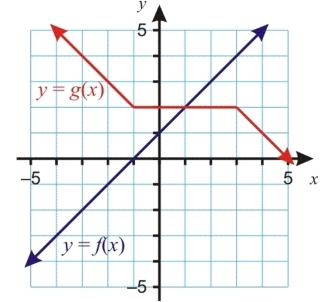
(80) 
Use a calculator to approximate the logarithm. Round to 4 decimal places.
(Multiple Choice)
4.8/5 (82)
(82) 
Filters
- Essay(0)
- Multiple Choice(0)
- Short Answer(0)
- True False(0)
- Matching(0)