



 Chat with AI
Exam 3: Quadratic, Piecewise-Defined, and Power Functions

Exam 1: Functions, Graphs, and Models; Linear Functions306 Questions
Exam 2: Linear Models, Equations, and Inequalities212 Questions
Exam 3: Quadratic, Piecewise-Defined, and Power Functions261 Questions
Exam 4: Additional Topics With Functions299 Questions
Exam 5: Exponential and Logarithmic Functions304 Questions
Exam 6: Higher-Degree Polynomial and Rational Functions262 Questions
Exam 7: Systems of Equations and Matrices196 Questions
Exam 8: Special Topics in Algebra265 Questions
Select questions type


Determine if the vertex of the graph is a maximum point or a minimum point.
-
(Multiple Choice)
4.9/5  (79)
(79) A study in a small town showed that the percent of residents who have college degrees can be modeled by the function where x is the number of years since 2005. Does this model indicate that the percent of
Residents with a college degree is increasing or decreasing?
(Multiple Choice)
4.9/5 (83)
(83) When water runs out of a hole in a cylindrical container, the height of the water in the container can often be modeled by a quadratic function. Assume that the height of the water in a particular metal can with a small hole can be modeled by , where x is the time (sec) and h is the height (cm). Use the quadratic formula to estimate
The time when the height is 5 cm. Round your answer to the nearest second.
(Multiple Choice)
4.9/5 (80)
(80) Determine if the graph of the function is concave up or concave down
-
(Multiple Choice)
4.8/5 (85)
(85) Find a power function that models the data in the table. Round to three decimal places if necessary.
- 1 2 3 4 5 6 7 8 9 1.2 26.6 172.0 645.2 1801.9 4165.5 8291.1 15,600.0 28,953.4
(Multiple Choice)
4.9/5 (79)
(79) Given the following revenue and cost functions, find the maximum profit. (Recall that profit equals revenue minus cost.)
(Multiple Choice)
4.7/5 (75)
(75) The present value that will give a future value S in 4 years with interest compounded annually varies inversely as the fourth power of r, where r is the annual interest rate. If the present value of $3.71 gives a future value
Of $5000, what would be the present value of $10,000? Round to the nearest dollar.
(Multiple Choice)
4.9/5 (83)
(83) Given the following revenue and cost functions, find the x-value that makes revenue a maximum.
(Multiple Choice)
4.8/5 (80)
(80) 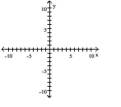
Use a graphing utility to find or approximate solutions to the equation. If necessary, round your answers to three decimal
places.
-
(Multiple Choice)
4.9/5 (85)
(85) Explain in your own words a sequence of steps that can be used to solve any quadratic equation in the most
efficient way.
(Essay)
5.0/5 (78)
(78) Use a graphing utility to find or approximate solutions to the equation. If necessary, round your answers to three decimal
places.
-
(Multiple Choice)
4.8/5 (78)
(78) 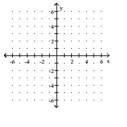
Use a graphing utility to find or approximate solutions to the equation. If necessary, round your answers to three decimal
places.
-
(Multiple Choice)
4.8/5 (77)
(77) 
Filters
- Essay(0)
- Multiple Choice(0)
- Short Answer(0)
- True False(0)
- Matching(0)