
Exam 1: Trigonometry

arrow
  • Select Tags
search iconSearch Question
flashcardsStudy Flashcards
  • Select Tags

Use the value of the trigonometric function to find the Use the value of the trigonometric function to find the   . ​   ​ . ​ Use the value of the trigonometric function to find the   . ​   ​ ​

(Multiple Choice)
4.7/5
(73)

Find the exact values of the six trigonometric functions of the angle θ shown in the figure. (Use the Pythagorean Theorem to find the third side of the triangle.) Find the exact values of the six trigonometric functions of the angle θ shown in the figure. (Use the Pythagorean Theorem to find the third side of the triangle.)
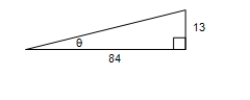
(Multiple Choice)
4.8/5
(96)

Use an inverse trigonometric function to write θ as a function of x. ​ Use an inverse trigonometric function to write θ as a function of x. ​   ​ A = 5x B = x + 9 ​ ​ A = 5x B = x + 9 ​
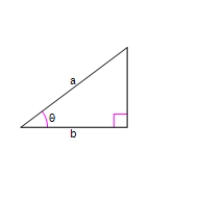
(Multiple Choice)
4.9/5
(77)

A plane flying at an altitude of a miles above a radar antenna will pass directly over the radar antenna (see figure).Let d be the ground distance from the antenna to the point directly under the plane and let x be the angle of elevation to the plane from the antenna. A plane flying at an altitude of a miles above a radar antenna will pass directly over the radar antenna (see figure).Let d be the ground distance from the antenna to the point directly under the plane and let x be the angle of elevation to the plane from the antenna.   . ​ (d is positive as the plane approaches the antenna.) Write d as a function of x. ​  . ​ (d is positive as the plane approaches the antenna.) Write d as a function of x. ​ A plane flying at an altitude of a miles above a radar antenna will pass directly over the radar antenna (see figure).Let d be the ground distance from the antenna to the point directly under the plane and let x be the angle of elevation to the plane from the antenna.   . ​ (d is positive as the plane approaches the antenna.) Write d as a function of x. ​
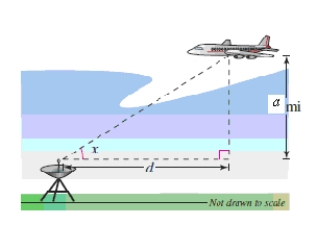
(Multiple Choice)
4.8/5
(79)

An airplane flies at an altitude of An airplane flies at an altitude of   miles toward a point directly over an observer.Consider θ and x as shown in the figure.Write θ as a function of x. ​   ​ miles toward a point directly over an observer.Consider θ and x as shown in the figure.Write θ as a function of x. ​ An airplane flies at an altitude of   miles toward a point directly over an observer.Consider θ and x as shown in the figure.Write θ as a function of x. ​   ​ ​
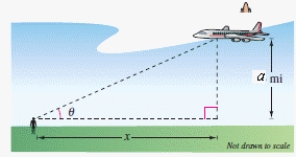
(Multiple Choice)
4.9/5
(72)

Evaluate the trigonometric function.Round your answer to four decimal places.(Be sure the calculator is set in the correct angle mode.) ​ Sin 11° ​

(Multiple Choice)
4.7/5
(85)

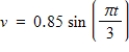
For a person at rest, the velocity v (in liters per second) of airflow during a respiratory cycle (the time from the beginning of one breath to the beginning of the next) is given by ​ For a person at rest, the velocity v (in liters per second) of airflow during a respiratory cycle (the time from the beginning of one breath to the beginning of the next) is given by ​   , ​ Where t is the time (in seconds). (Inhalation occurs when v > 0, and exhalation occurs when v < 0.) ​ Find the time for one full respiratory cycle. ​ , ​ Where t is the time (in seconds). (Inhalation occurs when v > 0, and exhalation occurs when v < 0.) ​ Find the time for one full respiratory cycle. ​
(Multiple Choice)
4.8/5
(77)

Use a calculator to evaluate Use a calculator to evaluate   .Round your answer to two decimal places. .Round your answer to two decimal places.

(Multiple Choice)
4.8/5
(78)

Evaluate (if possible) the sine, cosine, and tangent of the real number. ​ Evaluate (if possible) the sine, cosine, and tangent of the real number. ​   ​ ​

(Multiple Choice)
4.8/5
(78)

Determine whether the function below is even, odd, or neither. ​ ​ Determine whether the function below is even, odd, or neither. ​ ​   ​ ​

(Multiple Choice)
4.8/5
(93)

Describe the behavior of the function below as x approaches 0+. ​ Describe the behavior of the function below as x approaches 0<sup>+</sup>. ​   ​ ​

(Multiple Choice)
4.9/5
(76)

Select the graph of the function.(Include two full periods.) ​ Y = sin 2x ​

(Multiple Choice)
4.7/5
(86)

If If   , find the value of θ in degrees   without the aid of a calculator. , find the value of θ in degrees If   , find the value of θ in degrees   without the aid of a calculator. without the aid of a calculator.

(Multiple Choice)
4.7/5
(86)

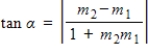
Find the angle Find the angle   between two nonvertical lines   and   .The angle   satisfies the equation ​   ​ Where   and   are slopes of   and   , respectively. (Assume that   .) ​ ​     ​ Round your answer to one decimal place. ​ between two nonvertical lines Find the angle   between two nonvertical lines   and   .The angle   satisfies the equation ​   ​ Where   and   are slopes of   and   , respectively. (Assume that   .) ​ ​     ​ Round your answer to one decimal place. ​ and Find the angle   between two nonvertical lines   and   .The angle   satisfies the equation ​   ​ Where   and   are slopes of   and   , respectively. (Assume that   .) ​ ​     ​ Round your answer to one decimal place. ​ .The angle Find the angle   between two nonvertical lines   and   .The angle   satisfies the equation ​   ​ Where   and   are slopes of   and   , respectively. (Assume that   .) ​ ​     ​ Round your answer to one decimal place. ​ satisfies the equation ​ Find the angle   between two nonvertical lines   and   .The angle   satisfies the equation ​   ​ Where   and   are slopes of   and   , respectively. (Assume that   .) ​ ​     ​ Round your answer to one decimal place. ​ ​ Where Find the angle   between two nonvertical lines   and   .The angle   satisfies the equation ​   ​ Where   and   are slopes of   and   , respectively. (Assume that   .) ​ ​     ​ Round your answer to one decimal place. ​ and Find the angle   between two nonvertical lines   and   .The angle   satisfies the equation ​   ​ Where   and   are slopes of   and   , respectively. (Assume that   .) ​ ​     ​ Round your answer to one decimal place. ​ are slopes of Find the angle   between two nonvertical lines   and   .The angle   satisfies the equation ​   ​ Where   and   are slopes of   and   , respectively. (Assume that   .) ​ ​     ​ Round your answer to one decimal place. ​ and Find the angle   between two nonvertical lines   and   .The angle   satisfies the equation ​   ​ Where   and   are slopes of   and   , respectively. (Assume that   .) ​ ​     ​ Round your answer to one decimal place. ​ , respectively. (Assume that Find the angle   between two nonvertical lines   and   .The angle   satisfies the equation ​   ​ Where   and   are slopes of   and   , respectively. (Assume that   .) ​ ​     ​ Round your answer to one decimal place. ​ .) ​ ​ Find the angle   between two nonvertical lines   and   .The angle   satisfies the equation ​   ​ Where   and   are slopes of   and   , respectively. (Assume that   .) ​ ​     ​ Round your answer to one decimal place. ​ Find the angle   between two nonvertical lines   and   .The angle   satisfies the equation ​   ​ Where   and   are slopes of   and   , respectively. (Assume that   .) ​ ​     ​ Round your answer to one decimal place. ​ ​ Round your answer to one decimal place. ​


(Multiple Choice)
4.8/5
(82)

Using trigonometric identities, determine which of the following is equivalent to the following expression. ​ Tan θ + cot θ Using trigonometric identities, determine which of the following is equivalent to the following expression. ​ Tan θ + cot θ   ​ ​

(Multiple Choice)
4.9/5
(89)

Evaluate the expression.Round your result to two decimal places. ​ Evaluate the expression.Round your result to two decimal places. ​   ​ ​

(Multiple Choice)
4.8/5
(74)

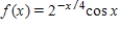
Use a graphing utility to select the graph the damping factor and the function below in the same viewing window.Describe the behavior of the function as x increases without bound. ​ Use a graphing utility to select the graph the damping factor and the function below in the same viewing window.Describe the behavior of the function as x increases without bound. ​   ​ ​ ​ ​
(Multiple Choice)
4.8/5
(86)

Evaluate (if possible) the sine, cosine, and tangent of the real number. ​ Evaluate (if possible) the sine, cosine, and tangent of the real number. ​   ​ ​

(Multiple Choice)
4.7/5
(71)

If If   , find the value of θ in degrees   without the aid of a calculator. , find the value of θ in degrees If   , find the value of θ in degrees   without the aid of a calculator. without the aid of a calculator.

(Multiple Choice)
4.8/5
(75)

Use a graphing utility to graph the function below.Be sure to include at least two full periods. y = 4 sin (x - 5π) + 1

(Multiple Choice)
4.9/5
(73)
Showing 121 - 140 of 393
close modal

Filters

  • Essay(0)
  • Multiple Choice(0)
  • Short Answer(0)
  • True False(0)
  • Matching(0)