



 Chat with AI
Exam 17: Organ Donation: Tissues Organs and Organ Systems

Exam 1: Can Science Cure the Common Cold? Introduction to the Scientific Method74 Questions
Exam 2: Are We Alone in the Universe? Water, Biochemistry, and Cells75 Questions
Exam 3: Is It Possible to Supplement Your Way to Better Health?72 Questions
Exam 4: Fat: How Much is Right for You? Enzymes, Metabolism, and Cellular Respiration72 Questions
Exam 5: Life in the Greenhouse: Photosynthesis and Global Warming70 Questions
Exam 6: Cancer: DNA Synthesis, Mitosis, and Meiosis70 Questions
Exam 7: Are You Only as Smart as Your Genes? Mendelian and Quantitative Genetics71 Questions
Exam 8: DNA Detective: Complex Patterns of Inheritance and DNA Fingerprinting71 Questions
Exam 9: Genetically Modified Organisms: Gene Expression, Mutation, and Cloning70 Questions
Exam 10: Where Did We Come From? The Evidence for Evolution70 Questions
Exam 11: An Evolving Enemy: Natural Selection72 Questions
Exam 12: Who Am I? Species and Races66 Questions
Exam 13: Prospecting for Biological Gold: Biodiversity and Classification72 Questions
Exam 14: Is the Human Population Too Large? Population Ecology69 Questions
Exam 15: Conserving Biodiversity: Community and Ecosystem Ecology71 Questions
Exam 16: Where Do You Live? Climate and Biomes73 Questions
Exam 17: Organ Donation: Tissues Organs and Organ Systems70 Questions
Exam 18: Clearing the Air: Respiratory Cardiovascular and Excretory Systems69 Questions
Exam 19: Vaccinations: Protection and Prevention or Peril? Immune System 70 Questions
Exam 20: Sex Differences and Athleticism: Endocrine Skeletal and Muscular Systems73 Questions
Exam 21: Is There Something in the Water? Reproductive and Developmental Biology71 Questions
Exam 22: Attention Deficit Disorder: Brain Structure and Function69 Questions
Exam 23: Feeding the World: Plant Structure and Growth74 Questions
Exam 24: Growing a Green Thumb: Plant Physiology71 Questions
Select questions type


Which organ in the digestive system can be transplanted to help certain diabetic patients?
(Multiple Choice)
4.8/5  (71)
(71) 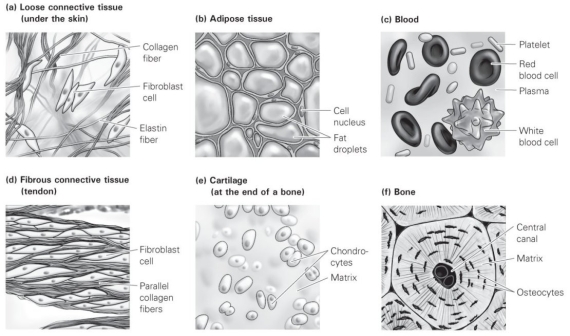 -In which connective tissue type are the collagen fibers arranged parallel with one another in a very organized, layered fashion?
 (Multiple Choice)
5.0/5 (86)
(86) Osteocytes are cells that secrete substances to make the connective tissue called ________.
(Short Answer)
4.9/5 (77)
(77) What activity of the liver makes it act as an accessory organ?
(Multiple Choice)
4.7/5 (88)
(88) A person can live a normal life without which of these digestive system organs?
(Multiple Choice)
4.8/5 (94)
(94) The enzyme in saliva that breaks down sugars is called ________ (two words).
(Short Answer)
5.0/5 (81)
(81) Unlike most organs, the ________ of a donor can be cut into smaller sections and transplanted, then grow back to full size in both the donor and recipient.
(Multiple Choice)
4.9/5 (72)
(72) The tissue type that protects the body from water loss is ________.
(Short Answer)
4.9/5 (81)
(81) When stored fat is used for energy, adipose cells in the body
(Multiple Choice)
4.8/5 (82)
(82) The contraction of smooth muscles that moves a bolus of food down the esophagus is called
(Multiple Choice)
4.7/5 (77)
(77) Why does cigarette smoke cause a smoker's skin to wrinkle over time?
(Multiple Choice)
4.7/5 (90)
(90) Which type of cells protects the body from the potentially harmful effects of ultraviolet radiation?
(Multiple Choice)
4.8/5 (70)
(70) During thermoregulation, how does an endotherm respond to a high body temperature?
(Multiple Choice)
4.7/5 (69)
(69) 
Filters
- Essay(0)
- Multiple Choice(0)
- Short Answer(0)
- True False(0)
- Matching(0)