



 Chat with AI
Exam 2: The Chemical Basis of Life

Exam 1: The Human Organism53 Questions
Exam 2: The Chemical Basis of Life75 Questions
Exam 3: Cell Structures and Their Functions63 Questions
Exam 4: Tissuesasis of Life70 Questions
Exam 5: Integumentary System44 Questions
Exam 6: Skeletal System: Bones and Joints102 Questions
Exam 7: Muscular System73 Questions
Exam 8: Nervous System76 Questions
Exam 9: Senses43 Questions
Exam 10: Endocrine System59 Questions
Exam 11: Blood57 Questions
Exam 12: Heart74 Questions
Exam 13: Blood Vessels and Circulation89 Questions
Exam 14: The Lymphatic System and Immunity84 Questions
Exam 15: Respiratory System42 Questions
Exam 16: Digestive System35 Questions
Exam 17: Nutrition, Metabolism, and Body Temperature Regulation17 Questions
Exam 18: Urinary System and Fluid Balance25 Questions
Exam 19: Reproductive System57 Questions
Exam 20: Development, Heredity, and Aging20 Questions
Select questions type


When two or more atoms, ions, or molecules combine to form a new and larger molecule, the process is called a
(Multiple Choice)
4.8/5  (69)
(69) If an iron atom (Fe) lost three electrons, what would be the charge of the resulting ion?
(Multiple Choice)
5.0/5 (73)
(73) 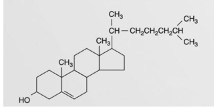 This figure represents an example of a(n)
Given that sodium bicarbonate dissociates to form Na+ and HCO3- when mixed with water, which of these would be part of the explanation for taking bicarbonate (NaHCO3) for excess stomach acid?
(Multiple Choice)
4.8/5 (91)
(91) After a neutral atom accepts an additional electron, it becomes
(Multiple Choice)
4.8/5 (83)
(83) 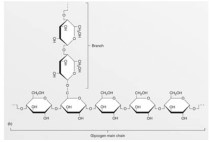 This figure represents an example of a(n)
Which of the following is responsible for most of the mass of an atom?
(Multiple Choice)
4.9/5 (91)
(91) The unequal, asymmetric sharing of electrons which results in one end (pole) of the molecule having a small electrical charge opposite the other end is called
(Multiple Choice)
4.9/5 (82)
(82) The chemical compound that is represented by the acronym ATP
(Multiple Choice)
5.0/5 (87)
(87) Atom X has an atomic number of 20 and has a mass number of 40. The number of protons in atom X is equal to
(Multiple Choice)
4.8/5 (86)
(86) 
Filters
- Essay(0)
- Multiple Choice(0)
- Short Answer(0)
- True False(0)
- Matching(0)