Solved

Use the Given Value of K to Complete the Table y=kx2y = k x ^ { 2 }

Question 26

Multiple Choice

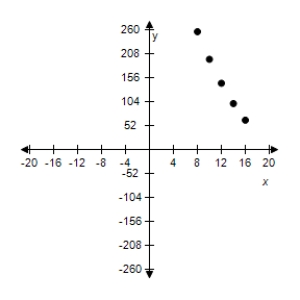
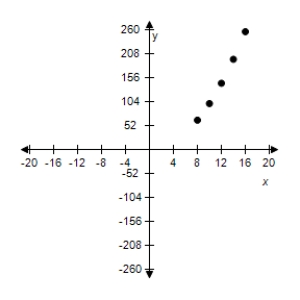
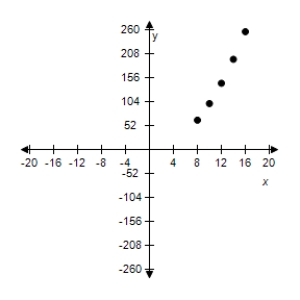
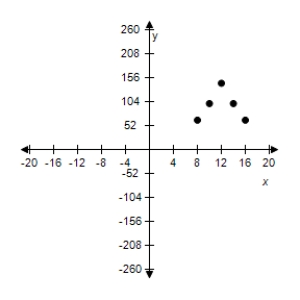
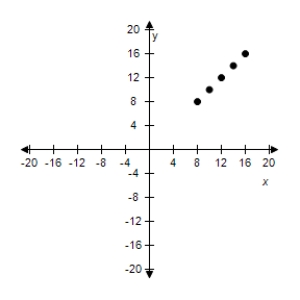
Use the given value of k to complete the table for the direct variation model​ y=kx2y = k x ^ { 2 } . ​
Plot the points on a rectangular coordinate system.
x810121416y=kx2k=1\begin{array}{l}\begin{array} { | l | l | l | l | l | l | } \hline x & 8 & 10 & 12 & 14 & 16 \\\hline y = k x ^ { 2 } & & & & & \\& & & & & \\\hline\end{array}\\k = 1\end{array}


A) ​ x810121416y=kx225619614410064\begin{array} { | c | c | c | c | c | c | } \hline x & 8 & 10 & 12 & 14 & 16 \\\hline y = k x ^ { 2 } & 256 & 196 & 144 & 100 & 64 \\\hline\end{array}
​  Use the given value of k to complete the table for the direct variation model​  y = k x ^ { 2 }  . ​ Plot the points on a rectangular coordinate system.  \begin{array}{l} \begin{array} { | l | l | l | l | l | l | }  \hline x & 8 & 10 & 12 & 14 & 16 \\ \hline y = k x ^ { 2 } & & & & & \\ & & & & & \\ \hline \end{array}\\ k = 1 \end{array}  A) ​  \begin{array} { | c | c | c | c | c | c | }  \hline x & 8 & 10 & 12 & 14 & 16 \\ \hline y = k x ^ { 2 } & 256 & 196 & 144 & 100 & 64 \\ \hline \end{array}  ​   B) ​  \begin{array} { | c | c | c | c | c | c | }  \hline x & 8 & 10 & 12 & 14 & 16 \\ \hline y = k x ^ { 2 } & 64 & 100 & 144 & 196 & 256 \\ \hline \end{array}  ​ ​   C) ​  \begin{array} { | c | c | c | c | c | c | }  \hline x & 8 & 10 & 12 & 14 & 16 \\ \hline y = k x ^ { 2 } & 64 & 64 & 64 & 64 & 64 \\ \hline \end{array}  ​ ​   ​ D) ​  \begin{array} { | c | c | c | c | c | c | }  \hline x & 8 & 10 & 12 & 14 & 16 \\ \hline y = k x ^ { 2 } & 64 & 100 & 144 & 100 & 64 \\ \hline \end{array}  ​ ​   E) ​  \begin{array} { | c | c | c | c | c | c | }  \hline x & 8 & 10 & 12 & 14 & 16 \\ \hline y = k x ^ { 2 } & 8 & 10 & 12 & 14 & 16 \\ & & & & & \\ \hline \end{array}  ​
B) ​ x810121416y=kx264100144196256\begin{array} { | c | c | c | c | c | c | } \hline x & 8 & 10 & 12 & 14 & 16 \\\hline y = k x ^ { 2 } & 64 & 100 & 144 & 196 & 256 \\\hline\end{array}
​
​  Use the given value of k to complete the table for the direct variation model​  y = k x ^ { 2 }  . ​ Plot the points on a rectangular coordinate system.  \begin{array}{l} \begin{array} { | l | l | l | l | l | l | }  \hline x & 8 & 10 & 12 & 14 & 16 \\ \hline y = k x ^ { 2 } & & & & & \\ & & & & & \\ \hline \end{array}\\ k = 1 \end{array}  A) ​  \begin{array} { | c | c | c | c | c | c | }  \hline x & 8 & 10 & 12 & 14 & 16 \\ \hline y = k x ^ { 2 } & 256 & 196 & 144 & 100 & 64 \\ \hline \end{array}  ​   B) ​  \begin{array} { | c | c | c | c | c | c | }  \hline x & 8 & 10 & 12 & 14 & 16 \\ \hline y = k x ^ { 2 } & 64 & 100 & 144 & 196 & 256 \\ \hline \end{array}  ​ ​   C) ​  \begin{array} { | c | c | c | c | c | c | }  \hline x & 8 & 10 & 12 & 14 & 16 \\ \hline y = k x ^ { 2 } & 64 & 64 & 64 & 64 & 64 \\ \hline \end{array}  ​ ​   ​ D) ​  \begin{array} { | c | c | c | c | c | c | }  \hline x & 8 & 10 & 12 & 14 & 16 \\ \hline y = k x ^ { 2 } & 64 & 100 & 144 & 100 & 64 \\ \hline \end{array}  ​ ​   E) ​  \begin{array} { | c | c | c | c | c | c | }  \hline x & 8 & 10 & 12 & 14 & 16 \\ \hline y = k x ^ { 2 } & 8 & 10 & 12 & 14 & 16 \\ & & & & & \\ \hline \end{array}  ​
C) ​ x810121416y=kx26464646464\begin{array} { | c | c | c | c | c | c | } \hline x & 8 & 10 & 12 & 14 & 16 \\\hline y = k x ^ { 2 } & 64 & 64 & 64 & 64 & 64 \\\hline\end{array}
​
​  Use the given value of k to complete the table for the direct variation model​  y = k x ^ { 2 }  . ​ Plot the points on a rectangular coordinate system.  \begin{array}{l} \begin{array} { | l | l | l | l | l | l | }  \hline x & 8 & 10 & 12 & 14 & 16 \\ \hline y = k x ^ { 2 } & & & & & \\ & & & & & \\ \hline \end{array}\\ k = 1 \end{array}  A) ​  \begin{array} { | c | c | c | c | c | c | }  \hline x & 8 & 10 & 12 & 14 & 16 \\ \hline y = k x ^ { 2 } & 256 & 196 & 144 & 100 & 64 \\ \hline \end{array}  ​   B) ​  \begin{array} { | c | c | c | c | c | c | }  \hline x & 8 & 10 & 12 & 14 & 16 \\ \hline y = k x ^ { 2 } & 64 & 100 & 144 & 196 & 256 \\ \hline \end{array}  ​ ​   C) ​  \begin{array} { | c | c | c | c | c | c | }  \hline x & 8 & 10 & 12 & 14 & 16 \\ \hline y = k x ^ { 2 } & 64 & 64 & 64 & 64 & 64 \\ \hline \end{array}  ​ ​   ​ D) ​  \begin{array} { | c | c | c | c | c | c | }  \hline x & 8 & 10 & 12 & 14 & 16 \\ \hline y = k x ^ { 2 } & 64 & 100 & 144 & 100 & 64 \\ \hline \end{array}  ​ ​   E) ​  \begin{array} { | c | c | c | c | c | c | }  \hline x & 8 & 10 & 12 & 14 & 16 \\ \hline y = k x ^ { 2 } & 8 & 10 & 12 & 14 & 16 \\ & & & & & \\ \hline \end{array}  ​
​
D) ​ x810121416y=kx26410014410064\begin{array} { | c | c | c | c | c | c | } \hline x & 8 & 10 & 12 & 14 & 16 \\\hline y = k x ^ { 2 } & 64 & 100 & 144 & 100 & 64 \\\hline\end{array}
​
​  Use the given value of k to complete the table for the direct variation model​  y = k x ^ { 2 }  . ​ Plot the points on a rectangular coordinate system.  \begin{array}{l} \begin{array} { | l | l | l | l | l | l | }  \hline x & 8 & 10 & 12 & 14 & 16 \\ \hline y = k x ^ { 2 } & & & & & \\ & & & & & \\ \hline \end{array}\\ k = 1 \end{array}  A) ​  \begin{array} { | c | c | c | c | c | c | }  \hline x & 8 & 10 & 12 & 14 & 16 \\ \hline y = k x ^ { 2 } & 256 & 196 & 144 & 100 & 64 \\ \hline \end{array}  ​   B) ​  \begin{array} { | c | c | c | c | c | c | }  \hline x & 8 & 10 & 12 & 14 & 16 \\ \hline y = k x ^ { 2 } & 64 & 100 & 144 & 196 & 256 \\ \hline \end{array}  ​ ​   C) ​  \begin{array} { | c | c | c | c | c | c | }  \hline x & 8 & 10 & 12 & 14 & 16 \\ \hline y = k x ^ { 2 } & 64 & 64 & 64 & 64 & 64 \\ \hline \end{array}  ​ ​   ​ D) ​  \begin{array} { | c | c | c | c | c | c | }  \hline x & 8 & 10 & 12 & 14 & 16 \\ \hline y = k x ^ { 2 } & 64 & 100 & 144 & 100 & 64 \\ \hline \end{array}  ​ ​   E) ​  \begin{array} { | c | c | c | c | c | c | }  \hline x & 8 & 10 & 12 & 14 & 16 \\ \hline y = k x ^ { 2 } & 8 & 10 & 12 & 14 & 16 \\ & & & & & \\ \hline \end{array}  ​
E) ​ x810121416y=kx2810121416\begin{array} { | c | c | c | c | c | c | } \hline x & 8 & 10 & 12 & 14 & 16 \\\hline y = k x ^ { 2 } & 8 & 10 & 12 & 14 & 16 \\& & & & & \\\hline\end{array}
​  Use the given value of k to complete the table for the direct variation model​  y = k x ^ { 2 }  . ​ Plot the points on a rectangular coordinate system.  \begin{array}{l} \begin{array} { | l | l | l | l | l | l | }  \hline x & 8 & 10 & 12 & 14 & 16 \\ \hline y = k x ^ { 2 } & & & & & \\ & & & & & \\ \hline \end{array}\\ k = 1 \end{array}  A) ​  \begin{array} { | c | c | c | c | c | c | }  \hline x & 8 & 10 & 12 & 14 & 16 \\ \hline y = k x ^ { 2 } & 256 & 196 & 144 & 100 & 64 \\ \hline \end{array}  ​   B) ​  \begin{array} { | c | c | c | c | c | c | }  \hline x & 8 & 10 & 12 & 14 & 16 \\ \hline y = k x ^ { 2 } & 64 & 100 & 144 & 196 & 256 \\ \hline \end{array}  ​ ​   C) ​  \begin{array} { | c | c | c | c | c | c | }  \hline x & 8 & 10 & 12 & 14 & 16 \\ \hline y = k x ^ { 2 } & 64 & 64 & 64 & 64 & 64 \\ \hline \end{array}  ​ ​   ​ D) ​  \begin{array} { | c | c | c | c | c | c | }  \hline x & 8 & 10 & 12 & 14 & 16 \\ \hline y = k x ^ { 2 } & 64 & 100 & 144 & 100 & 64 \\ \hline \end{array}  ​ ​   E) ​  \begin{array} { | c | c | c | c | c | c | }  \hline x & 8 & 10 & 12 & 14 & 16 \\ \hline y = k x ^ { 2 } & 8 & 10 & 12 & 14 & 16 \\ & & & & & \\ \hline \end{array}  ​

Correct Answer:

verifed

Verified

Unlock this answer now
Get Access to more Verified Answers free of charge

Related Questions