Multiple Choice
.Ackermann and colleagues (2003) investigated senescence in bacteria.What do the following results demonstrate and why are they surprising given evolutionary theory on aging? 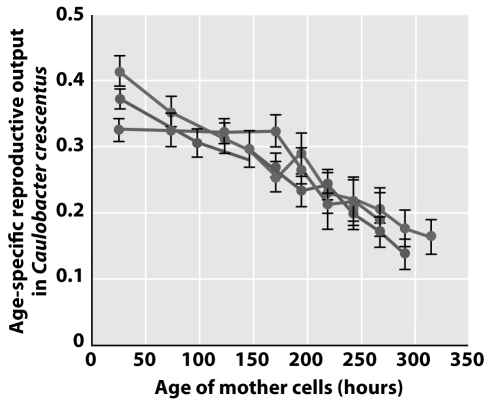
A) Bacteria do not senesce. Every organism should show trade-offs between fitness and longevity.
B) Bacteria do not senesce. Extrinsic mortality is not constant throughout the life of a bacterial cell.
C) Bacteria do senesce. Pleiotropy is the rare exception in simple bacterial genomes.
D) Bacteria do senesce. Cell propagation and reproduction are the same in bacteria.
Correct Answer:

Verified
Correct Answer:
Verified
Q5: Figures A and B show the effect
Q6: What is the likely phylogenetic explanation for
Q7: Patients with severe bacterial sepsis who develop
Q8: Which of the two viral phylogenies below
Q9: The figure below shows the effect of
Q11: Which part of the immune system's "learning
Q12: Which of the following are strategies with
Q14: Under which of the following evolutionary explanations
Q15: Which of the following hypothetical viruses would
Q21: Name three methods that pathogens use to