Solved

Scenario: Suppose the Monopolist Faces the Following Demand, Total Revenue

Question 206

Multiple Choice

Scenario: Suppose the monopolist faces the following demand, total revenue, and marginal revenue curves:
Demand: Qᵈ = 100 - p,
Total Revenue: TR(Q) = 100 ∙ Q - Q²,
Marginal Revenue: MR(Q) = 100 - 2 ∙ Q.
This monopolist's total cost, average total cost, and marginal cost curves are given by
Total Cost: TC(Q) = 10 ∙ Q + Scenario: Suppose the monopolist faces the following demand, total revenue, and marginal revenue curves: Demand: Qᵈ = 100 - p, Total Revenue: TR(Q)  = 100 ∙ Q - Q², Marginal Revenue: MR(Q)  = 100 - 2 ∙ Q. This monopolist's total cost, average total cost, and marginal cost curves are given by Total Cost: TC(Q)  = 10 ∙ Q +   ∙ Q², Average Total Cost: ATC(Q)  = 10 +   ∙ Q, Marginal Cost: MC(Q)  = 10 + Q. The monopolist's profit function is given by Profits: π (P,Q)  = Total Revenue - Total Cost Profits: π (P,Q)  = P ∙ Q - TC(Q) , Profits: π (P,Q)  = Q ∙   , Profits: π (P,Q)  =   ∙ Q, Profits: π (P,Q)  = [P - ATC(Q) ] ∙ Q, so Profits: π (P,Q)  = Total Revenue - Total Cost Profits: π (P,Q)  = [100 ∙ Q - Q²] -   , or Profits: π (P,Q)  =   ∙ Q. These revenue and cost curves are presented in table form below.    -Refer to the scenario above.Given the revenue and cost information,the monopolist will maximize profits by producing ________ units of output. A)  10 B)  20 C)  30 D)  50 ∙ Q²,
Average Total Cost: ATC(Q) = 10 + Scenario: Suppose the monopolist faces the following demand, total revenue, and marginal revenue curves: Demand: Qᵈ = 100 - p, Total Revenue: TR(Q)  = 100 ∙ Q - Q², Marginal Revenue: MR(Q)  = 100 - 2 ∙ Q. This monopolist's total cost, average total cost, and marginal cost curves are given by Total Cost: TC(Q)  = 10 ∙ Q +   ∙ Q², Average Total Cost: ATC(Q)  = 10 +   ∙ Q, Marginal Cost: MC(Q)  = 10 + Q. The monopolist's profit function is given by Profits: π (P,Q)  = Total Revenue - Total Cost Profits: π (P,Q)  = P ∙ Q - TC(Q) , Profits: π (P,Q)  = Q ∙   , Profits: π (P,Q)  =   ∙ Q, Profits: π (P,Q)  = [P - ATC(Q) ] ∙ Q, so Profits: π (P,Q)  = Total Revenue - Total Cost Profits: π (P,Q)  = [100 ∙ Q - Q²] -   , or Profits: π (P,Q)  =   ∙ Q. These revenue and cost curves are presented in table form below.    -Refer to the scenario above.Given the revenue and cost information,the monopolist will maximize profits by producing ________ units of output. A)  10 B)  20 C)  30 D)  50 ∙ Q,
Marginal Cost: MC(Q) = 10 + Q.
The monopolist's profit function is given by
Profits: π (P,Q) = Total Revenue - Total Cost
Profits: π (P,Q) = P ∙ Q - TC(Q) ,
Profits: π (P,Q) = Q ∙ Scenario: Suppose the monopolist faces the following demand, total revenue, and marginal revenue curves: Demand: Qᵈ = 100 - p, Total Revenue: TR(Q)  = 100 ∙ Q - Q², Marginal Revenue: MR(Q)  = 100 - 2 ∙ Q. This monopolist's total cost, average total cost, and marginal cost curves are given by Total Cost: TC(Q)  = 10 ∙ Q +   ∙ Q², Average Total Cost: ATC(Q)  = 10 +   ∙ Q, Marginal Cost: MC(Q)  = 10 + Q. The monopolist's profit function is given by Profits: π (P,Q)  = Total Revenue - Total Cost Profits: π (P,Q)  = P ∙ Q - TC(Q) , Profits: π (P,Q)  = Q ∙   , Profits: π (P,Q)  =   ∙ Q, Profits: π (P,Q)  = [P - ATC(Q) ] ∙ Q, so Profits: π (P,Q)  = Total Revenue - Total Cost Profits: π (P,Q)  = [100 ∙ Q - Q²] -   , or Profits: π (P,Q)  =   ∙ Q. These revenue and cost curves are presented in table form below.    -Refer to the scenario above.Given the revenue and cost information,the monopolist will maximize profits by producing ________ units of output. A)  10 B)  20 C)  30 D)  50 ,
Profits: π (P,Q) = Scenario: Suppose the monopolist faces the following demand, total revenue, and marginal revenue curves: Demand: Qᵈ = 100 - p, Total Revenue: TR(Q)  = 100 ∙ Q - Q², Marginal Revenue: MR(Q)  = 100 - 2 ∙ Q. This monopolist's total cost, average total cost, and marginal cost curves are given by Total Cost: TC(Q)  = 10 ∙ Q +   ∙ Q², Average Total Cost: ATC(Q)  = 10 +   ∙ Q, Marginal Cost: MC(Q)  = 10 + Q. The monopolist's profit function is given by Profits: π (P,Q)  = Total Revenue - Total Cost Profits: π (P,Q)  = P ∙ Q - TC(Q) , Profits: π (P,Q)  = Q ∙   , Profits: π (P,Q)  =   ∙ Q, Profits: π (P,Q)  = [P - ATC(Q) ] ∙ Q, so Profits: π (P,Q)  = Total Revenue - Total Cost Profits: π (P,Q)  = [100 ∙ Q - Q²] -   , or Profits: π (P,Q)  =   ∙ Q. These revenue and cost curves are presented in table form below.    -Refer to the scenario above.Given the revenue and cost information,the monopolist will maximize profits by producing ________ units of output. A)  10 B)  20 C)  30 D)  50 ∙ Q,
Profits: π (P,Q) = [P - ATC(Q) ] ∙ Q, so
Profits: π (P,Q) = Total Revenue - Total Cost
Profits: π (P,Q) = [100 ∙ Q - Q²] - Scenario: Suppose the monopolist faces the following demand, total revenue, and marginal revenue curves: Demand: Qᵈ = 100 - p, Total Revenue: TR(Q)  = 100 ∙ Q - Q², Marginal Revenue: MR(Q)  = 100 - 2 ∙ Q. This monopolist's total cost, average total cost, and marginal cost curves are given by Total Cost: TC(Q)  = 10 ∙ Q +   ∙ Q², Average Total Cost: ATC(Q)  = 10 +   ∙ Q, Marginal Cost: MC(Q)  = 10 + Q. The monopolist's profit function is given by Profits: π (P,Q)  = Total Revenue - Total Cost Profits: π (P,Q)  = P ∙ Q - TC(Q) , Profits: π (P,Q)  = Q ∙   , Profits: π (P,Q)  =   ∙ Q, Profits: π (P,Q)  = [P - ATC(Q) ] ∙ Q, so Profits: π (P,Q)  = Total Revenue - Total Cost Profits: π (P,Q)  = [100 ∙ Q - Q²] -   , or Profits: π (P,Q)  =   ∙ Q. These revenue and cost curves are presented in table form below.    -Refer to the scenario above.Given the revenue and cost information,the monopolist will maximize profits by producing ________ units of output. A)  10 B)  20 C)  30 D)  50 , or
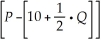
Profits: π (P,Q) = Scenario: Suppose the monopolist faces the following demand, total revenue, and marginal revenue curves: Demand: Qᵈ = 100 - p, Total Revenue: TR(Q)  = 100 ∙ Q - Q², Marginal Revenue: MR(Q)  = 100 - 2 ∙ Q. This monopolist's total cost, average total cost, and marginal cost curves are given by Total Cost: TC(Q)  = 10 ∙ Q +   ∙ Q², Average Total Cost: ATC(Q)  = 10 +   ∙ Q, Marginal Cost: MC(Q)  = 10 + Q. The monopolist's profit function is given by Profits: π (P,Q)  = Total Revenue - Total Cost Profits: π (P,Q)  = P ∙ Q - TC(Q) , Profits: π (P,Q)  = Q ∙   , Profits: π (P,Q)  =   ∙ Q, Profits: π (P,Q)  = [P - ATC(Q) ] ∙ Q, so Profits: π (P,Q)  = Total Revenue - Total Cost Profits: π (P,Q)  = [100 ∙ Q - Q²] -   , or Profits: π (P,Q)  =   ∙ Q. These revenue and cost curves are presented in table form below.    -Refer to the scenario above.Given the revenue and cost information,the monopolist will maximize profits by producing ________ units of output. A)  10 B)  20 C)  30 D)  50 ∙ Q.
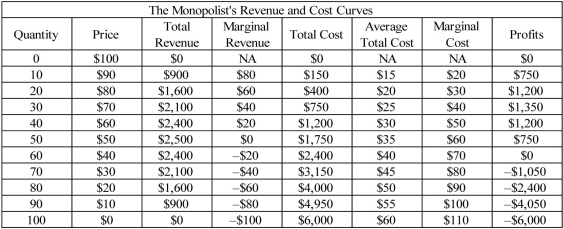
These revenue and cost curves are presented in table form below.
Scenario: Suppose the monopolist faces the following demand, total revenue, and marginal revenue curves: Demand: Qᵈ = 100 - p, Total Revenue: TR(Q)  = 100 ∙ Q - Q², Marginal Revenue: MR(Q)  = 100 - 2 ∙ Q. This monopolist's total cost, average total cost, and marginal cost curves are given by Total Cost: TC(Q)  = 10 ∙ Q +   ∙ Q², Average Total Cost: ATC(Q)  = 10 +   ∙ Q, Marginal Cost: MC(Q)  = 10 + Q. The monopolist's profit function is given by Profits: π (P,Q)  = Total Revenue - Total Cost Profits: π (P,Q)  = P ∙ Q - TC(Q) , Profits: π (P,Q)  = Q ∙   , Profits: π (P,Q)  =   ∙ Q, Profits: π (P,Q)  = [P - ATC(Q) ] ∙ Q, so Profits: π (P,Q)  = Total Revenue - Total Cost Profits: π (P,Q)  = [100 ∙ Q - Q²] -   , or Profits: π (P,Q)  =   ∙ Q. These revenue and cost curves are presented in table form below.    -Refer to the scenario above.Given the revenue and cost information,the monopolist will maximize profits by producing ________ units of output. A)  10 B)  20 C)  30 D)  50
-Refer to the scenario above.Given the revenue and cost information,the monopolist will maximize profits by producing ________ units of output.


A) 10
B) 20
C) 30
D) 50

Correct Answer:

verifed

Verified

Unlock this answer now
Get Access to more Verified Answers free of charge

Related Questions