Multiple Choice
The following regression model was run by a U.S.-based MNC to determine its degree of economic exposure as it relates to the Australian dollar and Sudanese dinar (SDD) :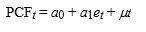 where the term on the leFt-hand side is the percentage change in inflation-adjusted cash flows measured in the firm's home currency over period t, and et is the percentage change in the exchange rate of the currency over period t. The regression was run over two subperiods for each of the two currencies, with the following results:
Based on these results, which of the following statements is probably not true?
A) The MNC was more sensitive to movements in the Australian dollar than in the dinar in the earlier subperiod.
B) The MNC was more sensitive to movements in the dinar than in the Australian dollar in the more recent subperiod.
C) The MNC probably had more outflows than inflows in Australian dollars in the earlier subperiod.
D) The MNC probably had more inflows than outflows denominated in dinar in the more recent subperiod.
E) All of the above are true.
Correct Answer:

Verified
Correct Answer:
Verified
Q7: Yomance Co. is a U.S. company that
Q9: Translation exposure affects an MNC's cash flows.
Q19: If a U.S. firm's cost of goods
Q22: Vermont Co. has one foreign subsidiary. Its
Q23: If a U.S. firm's cost of goods
Q30: Vada, Inc. exports computers to Australia invoiced
Q43: Which of the following operations benefits from
Q69: Because creditors may prefer that firms maintain
Q71: Assume that the British pound and Swiss
Q74: Jenco Co. imports raw materials from Japan,