Multiple Choice
Passage
Black holes have played an important part in astrophysics for the last half-century. A black hole is a region of space where the force of gravity is especially strong and gravitational potential energy U is very large. Analogous to the electrostatic potential energy associated with electrical charges, U is defined as the work required to move an object of mass m from an infinite distance to a point at radial distance r within the gravitational field of a second mass M as given by
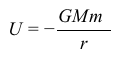 Equation 1where G is the gravitational constant. Near a black hole, the gravitational potential energy can become so negative that not even light has enough energy to escape the black hole's gravity.Escape velocity can be determined by launching an object of mass m with velocity v to an infinite radial distance from the surface of a central mass M (eg, a star or a planet) with radius R. For a black hole to exist, the escape velocity must be equal to the speed of light.Scientists have thoroughly studied the physics of black holes. Stars near the center of our galaxy have been observed to orbit an extremely massive, invisible object (millions of times more massive than our Sun) that is almost certainly a black hole. The orbital angular velocity ω of a star is defined as
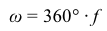 ω=360°⋅fEquation 2where f is the frequency of rotation in hertz (Hz) . Likewise, black holes are not merely static masses but are often observed to rotate about their own axis. The interaction between the rotation of a black hole and matter falling into the hole is suspected to form powerful beams (jets) of ionized matter that project away from the black hole along its axis of rotation. Nevertheless, many aspects of how these jets are formed remains a mystery. Black holes will remain a fruitful area for research far into the future.
-A star orbiting a supermassive black hole makes two approximately circular revolutions around the black hole every 20 hours. What is the approximate angular velocity of the star?
A) 5.0 × 10⁻³ degrees/second
B) 1.0 × 10⁻² degrees/second
C) 3.0 × 10⁻¹ degrees/second
D) 6.0 × 10⁻¹ degrees/second
Correct Answer:

Verified
Correct Answer:
Verified
Q90: Blood flows from Point A to Point
Q91: Passage<br>Osteoporosis is a degenerative bone condition in
Q92: Passage<br>The effects of gravity are effectively negated
Q93: One horsepower (hp) is the amount of
Q94: Suppose that a simple circuit comprising one
Q96: A battery is connected to a circuit
Q97: Which of the following changes will increase
Q98: Passage<br>In mass spectrometry, a sample's molecules are
Q99: Thin-film interference is observed when polychromatic light
Q100: Passage<br>A student performed an experiment to determine