Multiple Choice
Passage
When present in the bloodstream above a threshold partial pressure, a general anesthetic blocks the sensation of pain, induces a state of unconsciousness, and causes muscle paralysis. Many anesthetic agents are administered in their gaseous phase and are absorbed into the bloodstream through the lungs. The rate of diffusion Vgas of an anesthetic across the alveolar membrane with a surface area A and a thickness T is described by the Fick law of diffusion:
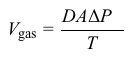 Vgas=DAΔPTEquation 1where D is the diffusion coefficient specific for the gas and ΔP is the partial pressure difference across the membrane.An inhaled anesthetic is described by its blood-gas partition coefficient, the ratio of the anesthetic's concentration in the blood to its concentration in the lungs when the partial pressures are equal. The concentration C of an anesthetic gas dissolved in blood is described by the Henry law of solubility:
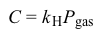 C=kHPgasEquation 2where kH is the solubility constant specific for the gas and Pgas is the partial pressure of the gas.Due to the paralytic effects of general anesthetics, mechanical ventilators are usually necessary to assist a patient's breathing during surgery. Positive-pressure ventilators are noninvasive and use external pumps to induce inspiration by forcing air into the lungs through a ventilation mask. Despite the paralytic effects of general anesthesia, patients are often capable of expiration without the active aid of a mechanical ventilator.
-An inhalational anesthetic administered to a patient has a rate of diffusion Vgas. If the partial pressure difference is doubled and the membrane thickness is also doubled, what will be the new rate of diffusion?
A) Vgas/2
B) Vgas
C) 2Vgas
D) 4Vgas
Correct Answer:

Verified
Correct Answer:
Verified
Q174: Passage<br>When present in the bloodstream above a
Q175: Passage<br>The electric capacitance of biological tissues serves
Q176: Passage<br>Cable theory is a mathematical model used
Q177: Performing a medical examination assessing the conduction
Q178: Passage<br>For a person with perfect vision, light
Q180: A force of 50 N is used
Q181: Passage<br>The humerus bone in the upper arm
Q182: <img src="https://d2lvgg3v3hfg70.cloudfront.net/MD0008/.jpg" alt=" The figure above
Q183: Ultrasonic shock wave devices may be used
Q184: Which unit ratio CANNOT be used to