Multiple Choice
Passage
Abnormal blood lipid levels play a significant role in the development of coronary artery disease (CAD) . The discovery of genomic variations that confer a protective effect against CAD has prompted investigations into the biological impact of these protective alleles. Researchers have observed that specific single-base variations in the ANGPTL4 gene are common among patients with a low occurrence of CAD. ANGPTL4 is located on chromosome 19 and codes for angiopoietin-like 4, a multifunctional glycosylated protein.One of the functions of angiopoietin-like 4 is the regulation of lipid metabolism. The N-terminal domain of angiopoietin-like 4 induces a conformational change in the enzyme lipoprotein lipase (LPL) , forcing the LPL homodimer to dissociate into two inactive 225-residue monomers. LPL functions on the surface of vascular endothelial cells and degrades the triglycerides of chylomicrons and very-low-density lipoproteins (VLDLs) in the blood. Elevated triglyceride levels have been correlated with increased CAD risk.To identify common loss-of-function mutations in ANGPTL4, DNA samples from 43,000 individuals with CAD and 78,000 individuals without CAD were genotyped. A detailed analysis of ANGPTL4 genomic variants was performed, and the results of individuals without CAD were mapped in Figure 1. The lipid profiles of ANGPTL4 mutation noncarriers were also compared to those of mutation carriers (Figure 2) .
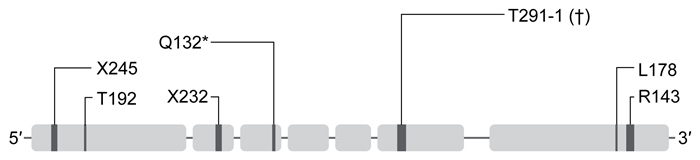 Figure 1 Loss-of-function mutations observed in ANGPTL4 in participants without CAD (Note: * = mutation resulting in a truncated protein; † = substitution of a cytosine for its complementary base.)
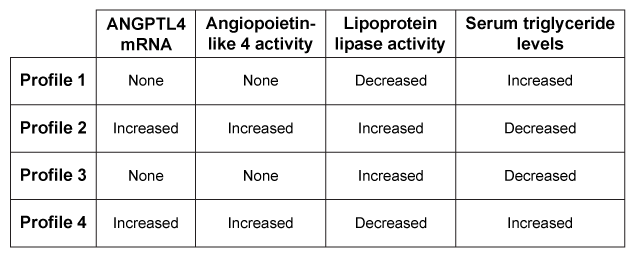
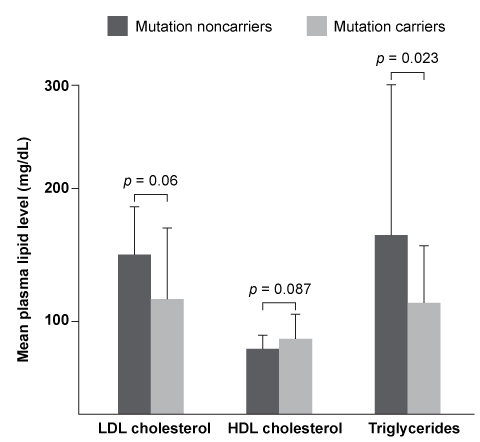 Figure 2 Mean plasma lipid levels for ANGPTL4 mutation carriers and noncarriers (Note: LDL = low-density lipoprotein; HDL = high-density lipoprotein; error bars = standard deviation.) To further analyze the effect of ANGPTL4 on blood lipid levels, ANGPTL4 knockout mice and mice that constitutively express ANGPTL4 were created. Researchers hypothesized that two of the four biological profiles shown in Table 1 would be observed in these mice.Table 1 Predicted Biological Profiles of ANGPTL4 Mouse Models
-Based on Figure 2, ANGPTL4 mutations were found to decrease CAD risk by significantly altering which of the following?LDL cholesterol levelsHDL cholesterol levelsTriglyceride levels
A) I only
B) III only
C) I and II only
D) II and III only
Correct Answer:

Verified
Correct Answer:
Verified
Q29: Cirrhosis of the liver is characterized by
Q30: Passage<br>Domestic pigs have been used as valuable
Q31: Passage<br>Alzheimer disease (AD) is a progressive condition
Q32: Passage<br>A 6-day-old, genotypically normal (46,XX) female patient
Q33: Dehydration caused by frequent loose stools is
Q35: Passage<br>Osteoarthritis (OA) is a disorder marked by
Q36: Passage<br>Endometriosis is a chronic, treatable disease of
Q37: Human sperm and oocytes are substantially different
Q38: Passage<br>Renal reabsorption of glucose is facilitated by
Q39: Passage<br>The lac operon encodes the proteins that