Multiple Choice
Passage
Antimicrobial peptides are an important component of innate immunity. Since their discovery in 1939, over 5,000 peptides with antimicrobial properties have been isolated from organisms in every domain of life. They have demonstrated activity against enveloped viruses, bacteria, fungi, and even tumor cells and have recently gained interest for their potential in fighting antibiotic-resistant bacteria. Most known antimicrobial peptides are positively charged, but some with negative charges have also been discovered.Frogs are known to secrete a variety of antimicrobial peptides as a major source of immunity. Secretions from a new species of frog were collected and the peptides were separated by cation exchange chromatography. Four of the isolated peptides demonstrated strong antibacterial activity and were characterized by isoelectric focusing and sequencing:
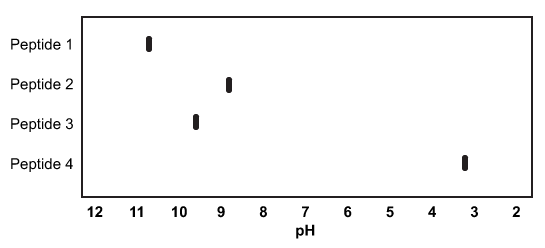 Figure 1 Results of isoelectric focusing of four antimicrobial peptidesTable 1 Amino Acid Compositions of Four Antimicrobial Peptides
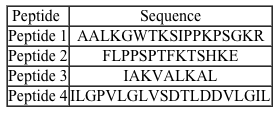 Adapted from Wang Z, Wang G. APD: the Antimicrobial Peptide Database. Nucleic Acids Res. 2004;32(Database issue) :D590-2.
-One of the challenges of antimicrobial peptides is their short physiological half-life. To solve this problem, some researchers have begun investigating synthetic antimicrobial peptides composed of D-amino acids. Why might these peptides have an increased half-life in the body relative to natural antimicrobial peptides?
A) Proteases cannot act on peptides made of D-amino acids.
B) D-amino acids are more soluble at physiological pH.
C) Peptide bonds between D-amino acids require more energy to break.
D) Hydrolysis of D-peptides is catalyzed by acids instead of bases.
Correct Answer:

Verified
Correct Answer:
Verified
Q251: Passage<br>Glycolysis and gluconeogenesis are tightly regulated, opposing
Q252: Which statement accurately describes a substrate in
Q253: Passage<br>Spinocerebellar ataxia 3 (SCA3) is a neurodegenerative
Q254: Passage<br>Leptin signaling is vital for maintaining adequate
Q255: Passage<br>Tumor hypoxia is a marker of resistance
Q257: Which of the following correctly describes the
Q258: Passage<br>Spinocerebellar ataxia 3 (SCA3) is a neurodegenerative
Q259: Consider the following reaction: <img src="https://d2lvgg3v3hfg70.cloudfront.net/MD0008/.jpg" alt="Consider
Q260: Passage<br>The liver plays a central role in
Q261: Passage<br>Tumor hypoxia is a marker of resistance