Multiple Choice
A randomized controlled trial assigned patients with diabetes to a new combination antihypertensive pill or placebo group for blood pressure control. Routine administration of the combination pill was associated with a reduction in the risk for some macrovascular or microvascular events at the end of the trial. The investigators decided to follow-up with patients after the end of the study to see if the benefits of therapy were sustained. They report the following hazard ratio curves comparing the combination pill to placebo from the end of the trial (T1) to 6 years afterward. 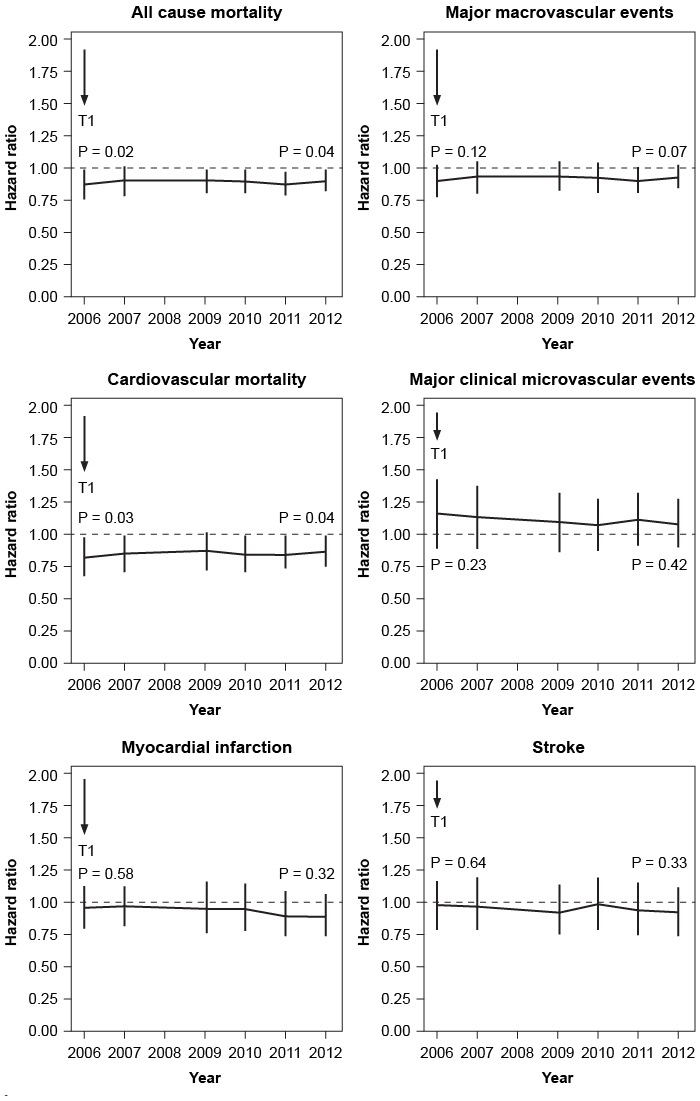 Administration of the combination pill resulted in a statistically significant sustained reduction in events for which of the following outcomes (setting α = 0.05) ?
A) Cardiovascular mortality and all-cause mortality
B) Cardiovascular mortality and stroke
C) Major clinical microvascular events and myocardial infarction
D) Major clinical microvascular events and stroke
E) Major macrovascular events and myocardial infarction
Correct Answer:

Verified
Correct Answer:
Verified
Q127: A 52-year-old man is brought to the
Q128: A 14-year-old girl is brought to the
Q129: A 24-year-old man is evaluated for fatigue
Q130: A 65-year-old man remains hospitalized on the
Q131: A 45-year-old man is diagnosed with dilated
Q133: A 3-month-old girl is brought to the
Q134: A 14-year-old boy is brought to the
Q135: A 65-year-old man with persistent atrial fibrillation
Q136: A 42-year-old woman comes to the clinic
Q137: A 62-year-old man with a history of