Multiple Choice
A 55-year-old man comes to the office for a routine checkup. The patient was diagnosed with type 2 diabetes mellitus 3 years ago, and treatment was initiated with metformin and lifestyle modification. Liraglutide was added to his medical regimen a year ago due to inadequate glycemic control. The patient reports no symptoms other than the occasional "feelings of low blood sugar" when he skips a meal. Blood glucose readings during those episodes have been 60-70 mg/dL. He also takes atorvastatin for hyperlipidemia and low-dose aspirin. The patient smoked a pack of cigarettes daily for 30 years but quit when he was diagnosed with diabetes. He does not use alcohol or recreational drugs. Blood pressure is 128/80 mm Hg, pulse is 76/min, and respirations are 14/min. BMI is 27.5 kg/m2. Physical examination shows normal heart and lung sounds and normal pulses in the extremities. There are no lower extremity ulcers or calluses, and vibration and sensory function is intact. Pressure testing with a 10-g monofilament is normal. Laboratory results are as follows: 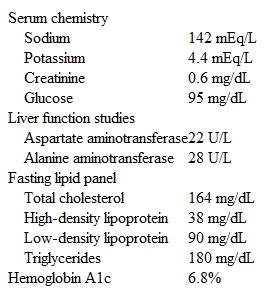 Urinalysis is negative for protein, glucose, cells, or casts, and ECG shows no abnormalities. Which of the following is the most appropriate next step in management of this patient?
A) Begin lisinopril
B) Check urine albumin/creatinine ratio
C) Discontinue liraglutide
D) Initiate niacin
E) Perform exercise stress testing
Correct Answer:

Verified
Correct Answer:
Verified
Q293: A 22-year-old woman comes to the physician
Q294: A newborn boy is evaluated on arrival
Q295: You are the current "on call physician"
Q296: A 25-year-old man comes to the emergency
Q297: An 8-year-old boy is brought to the
Q299: A 4-month-old boy is brought to the
Q300: A 19-year-old woman is brought to the
Q301: A 24-year-old woman comes to the office
Q302: A 19-year-old woman comes to the office
Q303: A 65-year-old man is brought to the